
In This Article
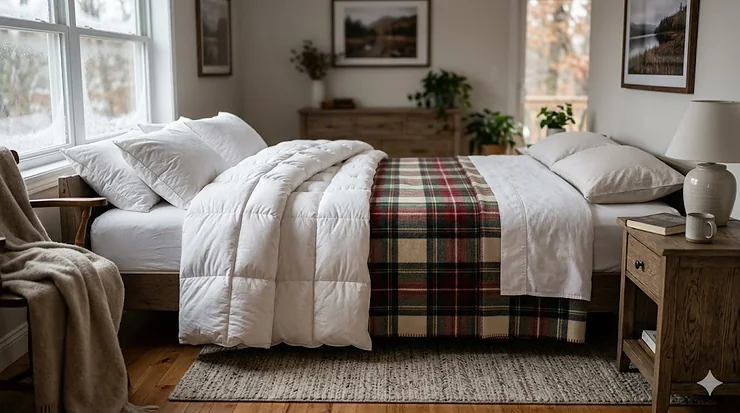
If you’ve ever stood in a bedding aisle — or scrolled endlessly through Amazon.ca at midnight — asking yourself, “Wait, what even IS the difference between a blanket and a comforter?” — you’re in excellent company. The bed blanket vs comforter Canada debate is one of the most searched bedding questions by Canadian shoppers, and honestly? It makes complete sense why it’s confusing.

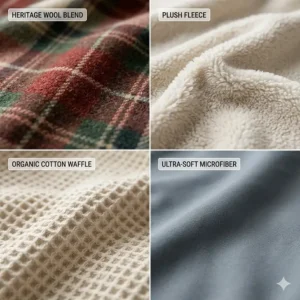
Here’s the short answer before we dig deep: a bed blanket is a single-layer or lightly layered textile, typically made from fleece, cotton, wool, or waffle weave, designed to be used as a top or layering piece. A comforter is a thick, quilted, two-panel bedding item filled with down or synthetic fibre, stitched internally to prevent clumping, and used as your primary warmth layer — no extra cover required.
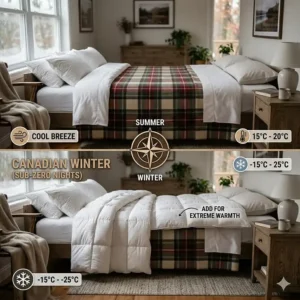
But in Canada, that simple definition gets more complicated fast. With winters that can plunge to -25°C in Saskatchewan, bedrooms regularly cooled to 16–20°C overnight, and summers that push 35°C with brutal humidity in Ontario and Quebec, Canadian shoppers need bedding that does a lot more heavy lifting than what shoppers in milder climates need. A blanket or comforter for winter Canada has to survive -15°C windchill reality — not just look cozy in a catalogue photo.
In this guide, I’ll break down the real-world difference between blanket and comforter options, compare warmth ratings, review 7 of the best products currently available on Amazon.ca (with prices in CAD), and help you decide whether you should use a blanket or comforter — or both — for your specific Canadian lifestyle. Whether you’re a hot sleeper in Vancouver or a freeze-prone apartment dweller in Winnipeg, there’s a clear answer waiting for you here.
Quick Comparison: Bed Blanket vs Comforter Canada at a Glance
| Feature | Bed Blanket | Comforter |
|---|---|---|
| Construction | Single or double layer, various fibres | Quilted two-panel, filled insert |
| Warmth Level | Light to medium (varies by material) | Medium to heavy (fill-dependent) |
| Care Ease | Usually machine washable | Needs large-capacity machine or laundromat |
| Seasonal Use | Spring/summer/layering in winter | All-season (with right fill weight) |
| Covers Needed? | No | No (but some use duvet covers) |
| Best For | Layering, warm sleepers, multi-use | Cold winters, simple one-piece setup |
| CAD Price Range | $30–$120 | $55–$250+ |
| Amazon.ca Available? | ✅ Yes | ✅ Yes |
Looking at this comparison, a blanket wins on versatility and washability — you can toss most onto your couch, use them as a travel layer, or throw them in your standard home washer without a second thought. The comforter, however, wins decisively on warmth-per-piece: during a February cold snap in Edmonton where your overnight thermostat drops to 17°C, one good quality comforter (say, 300–350 GSM down alternative) outperforms stacking two thin blankets. Budget-conscious Canadians should also note that entry-level comforter sets on Amazon.ca start below $60 CAD and include pillow shams — a value that a standalone premium blanket rarely matches.
💬 Just one click — help others make better buying decisions too! 😊
✨ Don’t Miss These Exclusive Deals!
🔍 Take your bedding to the next level with these carefully selected products. Click on any highlighted item to check current pricing and availability on Amazon.ca. These picks will help you create a sleep setup your whole family will love!
Top 7 Bed Blankets & Comforters on Amazon.ca — Expert Analysis
1. Utopia Bedding Queen Comforter Duvet Insert — All Season Down Alternative
The Utopia Bedding Queen Comforter Duvet Insert is the workhorse of the Amazon.ca comforter world, and for good reason — it nails the basics without overcharging Canadian buyers for frills they don’t need.
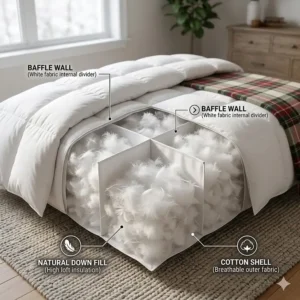
The box-stitch construction is the first thing worth understanding here. Rather than simple through-stitching (which flattens over time and creates cold spots), box stitching creates individual pockets that trap heat evenly across the whole surface. For Canadians sleeping in rooms cooled to 18–20°C overnight, this means no cold patches pulling you out of deep sleep at 3 a.m. The down alternative microfibre fill sits in the 300 GSM range — warm enough for shoulder seasons and cooler Canadian interiors, but breathable enough that it won’t leave hot sleepers kicking covers off by midnight.
What most Canadian buyers overlook about this model is the corner tabs. They’re small loops sewn into each corner that let you clip the comforter inside a duvet cover — meaning you can extend its lifespan and transform its look seasonally without buying a new comforter. For a condo dweller in Toronto who wants bedroom aesthetics to match the season, that’s genuinely useful. The microfibre fill is also fully hypoallergenic, making this the default recommendation for anyone in Canada with dust mite sensitivities — which, given our well-insulated but sometimes poorly ventilated older homes, is more Canadians than you’d think.
Canadian reviews consistently praise the loft, with several Prime members in Ontario noting it held up well after multiple home machine-wash cycles — critical for families with kids or pets.
✅ Genuinely warm for a synthetic fill
✅ Corner tabs for duvet cover use
✅ Machine washable at home (large capacity)
❌ Not warm enough for extreme cold (below -20°C environments with poor insulation)
❌ White colour shows stains without a cover
Price range: $45–$65 CAD (Queen) — outstanding value for a Canadian all-season setup.
2. Bare Home Reversible Comforter — Premium 1800 Series, Goose Down Alternative
The Bare Home Reversible Comforter is the go-to recommendation for Canadians who want a stylish bedroom setup without the premium price tag of genuine goose down. This is the comforter I’d suggest to someone furnishing a new home in Calgary who needs warmth, visual appeal, and easy maintenance all in one package.
The 1800 Series microfibre outer shell is noticeably softer than bargain-bin alternatives — it mimics the feel of brushed cotton at a fraction of the cost. The reversible design (available in colour combinations like Black/Grey and Navy/White) means one comforter actually gives you two looks, which is genuinely handy if you rotate your bedroom decor between seasons. The fill is plush and lofty without being oppressively heavy, hitting that sweet spot for Canadians who run warm but still want warmth on cool September nights.
What stands out from a Canadian perspective is the hypoallergenic certification. Health Canada does not currently have a blanket certification program for bedding allergen claims, but OEKO-TEX certified fills (which this uses) indicate the materials are tested for harmful substances — reassuring for parents buying for children’s rooms. The oversized king option is particularly popular with Canadian buyers who prefer their comforter to drape generously over the sides of a taller mattress-and-box-spring setup common in older Canadian homes.
Customer feedback from Canadian reviewers highlights the generous overhang and the softness that improves after the first wash cycle. A few reviews mention it runs slightly warm — good news for cold sleepers in Winnipeg, something to keep in mind for warm sleepers in coastal BC.
✅ Reversible design — two aesthetics in one
✅ Hypoallergenic fill (OEKO-TEX materials)
✅ Excellent overhang for Canadian queen and king bed setups
❌ Runs slightly warm — not ideal for hot sleepers in summer
❌ Solid colour options only (no prints)
Price range: $55–$90 CAD depending on size — excellent mid-range value on Amazon.ca.
3. Bedsure Queen Comforter Set — 3-Piece All Season Prewashed Bedding
The Bedsure Queen Comforter Set solves one of the most frustrating things about new bedding in Canada: that stiff, fresh-from-the-factory feel that takes weeks to break in. Bedsure pre-washes this comforter before it ships, which means the 90″x90″ comforter arrives soft, broken-in, and genuinely cozy from night one.
The 300 GSM down alternative fill strikes a balance that works well across Canada’s variable indoor climates. In a well-insulated Ontario condo where the thermostat sits at 21°C overnight, this comforter provides comfortable warmth without overheating. If you’re in a drafty older home in Halifax where the bedroom dips to 17°C, it’s still warm enough on its own through October — though you may want to layer a blanket overtop by December.
The three-piece set includes the comforter (90″x90″) plus two standard pillowcases (50 cm x 66 cm), making it one of the best CAD-per-piece values on Amazon.ca. What I particularly appreciate about this set for Canadian buyers is the colour range — the beige and grey tones hold their colour through repeated machine washes, which matters when you’re washing bedding in cold-water cycles to save on your Hydro bill. The microfibre fabric also resists pilling significantly better than similarly priced alternatives.
Canadian feedback is strongly positive, with several Quebec reviewers noting the packaging arrived undamaged and well-sealed — Amazon.ca shipping to Quebec has occasionally been flagged for rough handling, so that’s worth noting.
✅ Pre-washed — soft from day one
✅ 3-piece set with pillowcases included
✅ Resists pilling through multiple washes
❌ Lighter fill than ideal for Manitoba or Alberta winters without layering
❌ Standard sizing only — no oversized option in this set
Price range: $50–$75 CAD for the 3-piece queen set — superb everyday value.
4. Amazon Basics Ultra-Soft Micromink Sherpa Comforter Set — Reversible Warmth
If there’s one comforter on this list that’s built specifically for cold Canadian winters, it’s the Amazon Basics Ultra-Soft Micromink Sherpa Comforter Set. One side is silky micromink; flip it over and you get faux Sherpa — think the lining of your favourite winter jacket, but for your entire bed.
That Sherpa side is the selling point here, and it’s not marketing hype. Sherpa fabric traps a layer of air close to the body, functioning much like thermal underwear for your sleeping environment. For Canadians in colder zones — northern Ontario, Alberta foothills, rural Quebec — who keep their homes at 18°C overnight to manage heating costs, the Sherpa side provides a meaningful warmth upgrade over standard microfibre alternatives. It’s the bedding equivalent of turning up the thermostat by two degrees without paying for it on your utility bill.
The reversibility is genuinely useful here rather than just a styling gimmick. On milder autumn nights, micromink side up; when January arrives and your bedroom feels more like a ski chalet than a bedroom, Sherpa side up. Multiple colour options — Navy, Burgundy, Grey, and more — mean it integrates into most Canadian bedroom aesthetics.
Canadian reviewers love this set for winter use, with consistent comments praising the warmth and the value compared to branded alternatives. A few note that the Sherpa side can mat slightly after repeated washing — tumble dry on low with dryer balls to keep it fluffy.
✅ Sherpa side delivers genuine winter warmth
✅ Reversible for seasonal adjustment
✅ Wide colour range for varied Canadian décor styles
❌ Sherpa can mat after washing without proper dryer care
❌ Heavier weight — not ideal for warm sleepers
Price range: $55–$85 CAD — excellent winter-season value on Amazon.ca.
5. Utopia Bedding 100% Cotton Waffle Weave Blanket — Queen Size
Here’s where we cross firmly into blanket territory, and the Utopia Bedding 100% Cotton Waffle Weave Blanket earns its spot at the top of the blanket category for one underappreciated reason: it’s the perfect year-round Canadian bedding companion.
The waffle weave construction — those distinctive grid-pattern indentations — does something clever. It creates tiny air pockets that provide lightweight insulation in cool rooms while allowing airflow that prevents overheating. In practical terms: this blanket is warm enough for a May night in Vancouver (overnight lows around 10°C) but breathable enough for a humid July night in Toronto if you’ve got a window fan going. That year-round utility is rare in a single piece of bedding.
The 100% cotton construction is worth noting for Canadian buyers specifically. Unlike polyester fleece (which can trap heat and static electricity, especially in Canada’s dry winter air), cotton is naturally breathable and anti-static. It’s also the bedding material most compatible with Canadian skin in dry winter conditions — anyone who’s experienced the shock of static discharge from synthetic bedding in a -30°C Edmonton winter knows exactly what I mean.
At 90″x90″ for queen, it drapes generously, and the weight (around 350 GSM) gives it enough substance to feel like real bedding rather than a glorified throw. Machine washable and tumble-dry safe. Canadian reviewers consistently use words like “my everyday go-to” and “replaced three cheaper blankets.”
✅ Year-round versatility — warm but breathable
✅ 100% cotton — anti-static in Canada’s dry winter air
✅ Machine washable, tumble-dry safe
❌ Light enough that it needs a comforter layer in deep winter
❌ Fewer colour options than fleece alternatives
Price range: $35–$55 CAD (Queen) — outstanding value as an everyday Canadian bedding layer.
6. Elegear Cooling Comforter Queen — Arc-Chill 3.0 Double-Sided
The Elegear Cooling Comforter addresses a niche but very real problem for Canadian sleepers: the shoulder-season dilemma. When May arrives and your heavy winter comforter is oppressively hot but June nights still drop to 12°C, most Canadians resort to kicking their legs out from under the covers or wrestling with the thermostat. The Arc-Chill 3.0 technology on one side of this comforter actively pulls heat away from your body on contact — it’s a Q-max rating above 0.5, which means it genuinely feels cool to the touch when you first get in, rather than that clammy microfibre warmth most budget comforters deliver.
The double-sided design — cooling Arc-Chill on one face, softer standard fabric on the reverse — makes this more versatile than it first appears. Use the cool side facing you during Canada’s hot months (June through August in most regions), and flip it in September when nights start cooling but you’re not ready to bring out the heavy winter comforter yet.
For hot sleepers across Canada — particularly those in humid southern Ontario or BC’s lower mainland — this is a genuine quality-of-life improvement. The 79″x86″ queen size provides appropriate coverage, and the lightweight construction (under 200 GSM) means it folds compactly for storage during the months you don’t need it. Prime-eligible on Amazon.ca for quick delivery.
✅ Arc-Chill 3.0 — genuinely cool-to-touch, not marketing hype
✅ Double-sided for versatility across Canadian shoulder seasons
✅ Lightweight and compact for off-season storage
❌ Not warm enough as a standalone for Canadian winter use
❌ Higher price point than standard comforters
Price range: $75–$110 CAD (Queen) — worth the premium for hot sleepers in Canadian summers.
7. HIG 3pc Down Alternative Comforter Set — All Season Reversible
The HIG 3pc Down Alternative Comforter Set rounds out our list as the best-value option for budget-conscious Canadian families — particularly households managing multiple beds (kids’ rooms, guest rooms) who need reliable, comfortable bedding without spending $100+ per set.
This three-piece set includes the comforter plus two shams, and the reversible construction means you effectively get two colour options built in. The quilted duvet insert design with corner tabs gives it more in common with a proper duvet insert than a basic comforter, which is genuinely useful if you already own duvet covers and want to swap them seasonally. The box-stitch quilting holds the hypoallergenic fill in place reliably — I’ve seen cheaper comforters develop lumpy cold spots after a few washes, but the HIG holds its shape consistently.
For Canadian parents specifically: this comforter handles twin and twin-XL sizes well, making it ideal for children’s beds in cooler climates. The hypoallergenic fill is important here — Canadian homes with forced-air heating circulate a significant amount of dust during winter months, and children with respiratory sensitivities benefit from allergen-resistant bedding. Machine washable in a standard large-capacity home washer is another family-friendly win.
Shipping to most Canadian provinces is Prime-eligible, though buyers in northern territories should anticipate extended delivery windows.
✅ 3-piece set — excellent CAD value for families
✅ Reversible, with corner tabs for duvet cover use
✅ Box-stitch holds fill in place through machine washing
❌ Lighter warmth — not sufficient as a winter standalone in colder Canadian regions
❌ Sham sizes may not fit non-standard Canadian pillows
Price range: $40–$65 CAD — the best budget pick for Canadian family bedrooms on Amazon.ca.
How to Choose Between a Bed Blanket and Comforter in Canada: A Decision Framework
Choosing between a blanket or comforter for winter Canada — or any Canadian season — doesn’t have to be complicated. Think of it as matching your bedding to your climate zone and sleep style. Here’s how I’d approach it:
If you live in Atlantic Canada or coastal BC (mild winters, damp springs): A medium-weight comforter (250–300 GSM) paired with a lightweight cotton waffle blanket as a secondary layer gives you flexibility across the year without overspending. Coastal humidity means choosing materials that wick moisture — cotton and bamboo-derived fills handle this better than straight polyester.
If you live in Ontario or Quebec (humid summers, genuine winters): The dual-season approach works best here. A lightweight or cooling comforter for May through September, and a sherpa or higher-fill comforter from October through April. Keep a quality cotton blanket as a bridge layer during the shoulder months (April and November) when temperatures are wildly unpredictable.
If you live in Prairie provinces or northern regions (extreme cold, dry winters): Don’t rely on a single layer. A quality comforter (350+ GSM or 600+ fill power down) paired with a wool or high-GSM fleece blanket on top is the correct setup for -25°C outdoor temperatures translating to 16–18°C bedrooms overnight. Down is the warmth-to-weight champion in these conditions — synthetic alternatives need to be significantly heavier to deliver comparable insulation.
If you sleep hot regardless of season: The Elegear Arc-Chill Cooling Comforter or a lightweight cotton waffle blanket is your answer. Don’t fight your body’s thermostat with a heavy comforter and then manage it by sticking a leg out — just buy the right bedding.
If you have allergies or respiratory sensitivities: Any hypoallergenic down-alternative comforter beats a down-filled one. Canada’s forced-air heating systems recirculate allergens aggressively in winter — microfibre and OEKO-TEX certified fills reduce your nightly exposure meaningfully.
Real-World Canadian Bedding Scenarios: Who Should Buy What
Scenario A: The Toronto Condo Dweller
Meet Priya, a 34-year-old in a downtown Toronto condo. Her building’s forced-air heating keeps the apartment at 22°C in winter — sometimes warmer. She shares a queen bed with a partner who runs hot. She’s tried three comforters in two years and still kicks covers off by 1 a.m.
Best pick: Elegear Cooling Comforter (Arc-Chill side facing up October through April) paired with a lightweight Utopia Cotton Waffle Blanket for nights when the thermostat dips. Total investment: $110–$165 CAD for two pieces that cover the whole year. The Arc-Chill surface means Priya stops fighting her comforter and actually sleeps through the night.
Scenario B: The Suburban Calgary Family
Meet the Okonkwos: two adults, two kids aged 7 and 10, in a detached home where they keep overnight temperatures at 19°C to manage their energy bill. The kids’ rooms are slightly cooler. Mom has dust mite allergies.
Best pick: HIG 3pc Down Alternative Set in twin for the kids’ rooms (hypoallergenic, machine washable, budget-friendly at $40–65 CAD each), and Bare Home Reversible Comforter in king for the master bedroom. The hypoallergenic fills protect the whole family, the machine-washable construction handles Calgary’s dry winter (and the inevitable hot chocolate spillage), and the Bare Home’s loft gives the parents the warmth they need in a home cooled to 19°C.
Scenario C: The Nova Scotia Retiree
Meet Jean, 68, in a heritage home in Lunenburg where the ocean wind makes the bedroom feel colder than the thermostat suggests. She uses electric baseboard heat and is mindful of her power bill. She needs warmth but hates heavy bedding.
Best pick: Amazon Basics Ultra-Soft Micromink Sherpa Comforter Set — the Sherpa side provides the warmth of a heavier fill without the weight Jean finds uncomfortable. The micromink side works for milder nights. At $55–85 CAD, it fits her budget, and it’s Prime-eligible for delivery even to rural Nova Scotia. A secondary Utopia Cotton Waffle Blanket at the foot of the bed handles those unpredictable Atlantic shoulder-season nights.
What to Expect: Real-World Warmth Ratings for Canadian Bedrooms
The bedding industry uses a few different warmth measurement systems that Canadian buyers should understand before shopping on Amazon.ca:
GSM (Grams per Square Metre): The most common fill weight measurement for synthetic comforters. Under 200 GSM is summer weight; 200–300 GSM is all-season; 300–400 GSM is winter weight; above 400 GSM is cold-climate weight for poorly insulated spaces.
Fill Power (for down products): Measures how much space one ounce of down occupies in cubic inches. Higher fill power = better insulation per unit of weight. For Canadian winters, you want 600+ fill power for rooms below 18°C overnight. As noted by sleep researchers at the Sleep Foundation, fill power above 700 is premium territory — genuinely warm without being heavy.
TOG (Thermal Overall Grade): More common in European bedding (you may see it on products that import from UK brands sold on Amazon.ca). For reference: 4.5 TOG is summer weight; 10.5 TOG is winter weight; 13.5 TOG is extreme cold rating.
For most Canadian households in heated homes, an all-season comforter in the 250–350 GSM range (or 550–650 fill power down) handles 9–10 months of the year. Keep a lightweight cooling blanket for July and August, and layer a heavy fleece or sherpa blanket on top of your comforter during the deepest winter weeks.
According to Health Canada’s sleep environment guidelines, an ideal bedroom temperature for sleep is 15–19°C — which means your bedding needs to bridge the gap between that room temperature and your body’s comfort zone without either overheating or underperforming.
Duvet vs Comforter Canada: The Terminology Overlap Explained
Here in Canada, “duvet” and “comforter” are used interchangeably in everyday speech, but they’re technically different things — and understanding the distinction helps you shop smarter on Amazon.ca.
A comforter is a self-contained, ready-to-use piece: the fill and outer fabric are permanently stitched together, and you put it directly on your bed. What you see is what you sleep under.
A duvet (pronounced “doo-VAY,” borrowed from French — which explains why Quebec shoppers may encounter this term more frequently) is a plain insert that goes inside a separate duvet cover. Think of it as two-piece system: the insert handles warmth, the cover handles aesthetics and protection.
As noted by Wikipedia’s entry on duvets, the system originated in Europe and is popular in Scandinavia, where the practice of each sleeper having their own duvet is common — a useful arrangement for Canadian couples with different warmth preferences.
Practical difference for Canadian buyers:
- Duvet system: Higher upfront cost (you buy insert + cover), but cheaper long-term (covers are easier/cheaper to clean and replace than the whole insert)
- Comforter: Lower upfront cost, simpler setup, but the whole thing needs cleaning each time
For Canadians who wash bedding frequently (monthly or more), the duvet system is the smarter long-term investment. For those who prefer simplicity and lower upfront cost, a quality comforter from the list above is the right answer.
Common Mistakes When Choosing Blankets and Comforters in Canada
Canadian shoppers make a few consistent mistakes when buying bedding — most of them avoidable with a little context.
Mistake 1: Buying one fill weight for all seasons. Canada’s 50°C temperature swing between January and July (genuine for most of the country) means one comforter cannot perform optimally year-round. The industry-standard advice from experienced Canadian retailers like Mattress Miracle in Brantford is to own at least two inserts or rotate a comforter with a lightweight summer blanket.
Mistake 2: Ignoring GSM/fill power ratings entirely. Most Amazon.ca shoppers read reviews but skip the specs. A 150 GSM comforter marked “all-season” will leave you cold in a 17°C Ottawa bedroom in November. Always match the fill weight to your actual indoor sleeping temperature, not the season label on the packaging.
Mistake 3: Buying American-centric products that don’t ship to Canada. Some products that appear on Amazon search results are Amazon.com listings that either don’t ship to Canada or charge excessive cross-border fees. Always verify Amazon.ca availability before purchasing — the seven products in this guide are all confirmed available on Amazon.ca as of 2026.
Mistake 4: Choosing synthetic fills in regions with extreme dry heat. Alberta and Saskatchewan winters are brutally dry due to forced-air heating. Synthetic microfibre can generate significant static electricity in low-humidity environments. Cotton-shell comforters or natural-fill options reduce this meaningfully.
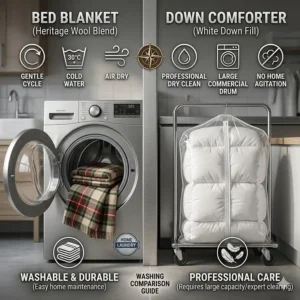
Mistake 5: Overlooking washing capacity. A queen-sized comforter typically requires a front-loading washer with 4.5+ cubic feet of capacity. Many older Canadian apartments have stacking washer-dryer units in the 2.5–3.5 cubic foot range. If you can’t wash your comforter at home, you’ll be making laundromat trips — factor that into your buying decision. Blankets, being smaller and thinner, almost universally fit in standard home machines.
Long-Term Cost & Maintenance of Bedding in Canada
The true cost of Canadian bedding isn’t the purchase price — it’s the total cost of ownership over two to five years. Here’s how blankets and comforters compare in real CAD terms:
Blankets typically last 5–10 years with proper care. At $35–$55 CAD for a quality cotton waffle blanket, that’s $7–$11 per year of bedding coverage — outstanding value. Machine washable at home means no ongoing laundromat cost. Replace when pilling or thinning becomes noticeable.
Comforters vary more by fill type. Synthetic down-alternative comforters in the $50–$90 CAD range typically perform well for 3–5 years before the fill compresses and loses loft. That’s $10–$30 per year. Genuine down comforters cost more upfront ($150–$300+ CAD) but can last 10–15 years with proper care, bringing the annual cost below synthetic alternatives.
Washing costs: If your comforter requires a laundromat trip (commercial machines run $4–$7 per cycle in Canada), budget for 4–6 washes per year — that’s $16–$42 CAD annually in laundry costs alone. Blankets, washing at home for cents per cycle, win this comparison decisively.
Storage: Canadian homes — particularly in cities where storage space is at a premium — should factor in off-season storage. Quality comforters need breathable cotton storage bags (never plastic, which promotes mildew in humid Canadian summers). These cost $15–$25 CAD and are a one-time investment worth making.
The Canadian Government’s consumer protection resources recommend thinking in total cost of ownership rather than sticker price — advice that directly applies to bedding purchases.
Features That Actually Matter (And Ones That Don’t)
ACTUALLY matters:
- Fill weight (GSM or fill power) — Directly determines warmth. Match to your actual sleeping temperature.
- Construction type — Baffle-box or box-stitch construction prevents cold spots and fill clumping. Through-stitching is a cost-cutting measure that hurts performance.
- Shell material — Cotton shells breathe and resist static. Polyester shells are cheaper but trap heat and create static in dry Canadian winters.
- Corner tabs — Useful if you own or plan to own duvet covers. Lets you repurpose a comforter as a duvet insert.
- Machine washability — Non-negotiable for Canadian families. Anything that requires dry cleaning adds $15–$40 per cleaning visit.
Doesn’t matter as much as marketing suggests:
- “1800 Series” or “2000 Series” thread count claims — These numbers are not standardized for bedding fills and are largely marketing language. Focus on GSM and construction instead.
- “Hotel quality” — Widely used and entirely meaningless as a quality indicator on Amazon.ca.
- Thread count on the outer shell — For comforters, what matters is the weave tightness (to prevent fill escape) and breathability, not thread count.
FAQ: Bed Blanket vs Comforter Canada
❓ What is the main difference between blanket and comforter in Canada?
❓ Should I use a blanket or comforter for winter in Canada?
❓ What is the warmth rating for blankets in Canada — what do I look for?
❓ Is a duvet vs comforter better for Canadian winters?
❓ Do Amazon.ca comforters ship to all Canadian provinces, including remote areas?
Conclusion: Your Canadian Bedding Decision, Made Simple
The bed blanket vs comforter Canada question doesn’t have one universal answer — but it has a clear answer for you once you know your climate zone, sleep temperature, and lifestyle priorities.
If you want simplicity and one-piece warmth for Canadian winters, a comforter in the 300 GSM or higher range — like the Utopia Bedding Duvet Insert or the Bare Home Reversible Comforter — gives you everything you need without fuss. If you run warm, sleep in a heated condo, or want versatility across Canada’s extreme seasonal range, a quality cotton waffle blanket paired with a cooling or lightweight comforter is the smarter long-term investment.
The biggest takeaway from this bedding guide Canada? Stop treating bedding as a one-size-fits-all purchase. A shopper in Kelowna and a shopper in Thunder Bay have completely different bedding needs, even in the same calendar month. Buy for your actual sleeping environment — your indoor temperature, your body’s thermostat, and your willingness to wash or store seasonal layers — not for a generic seasonal label on a product page.
All seven products reviewed here are confirmed available on Amazon.ca in 2026. Prime members across most Canadian provinces can expect fast delivery. Check current pricing directly on Amazon.ca as CAD prices shift frequently.
✨ Ready to Sleep Better Tonight?
🔍 Click any highlighted product name in this guide to check current pricing and availability on Amazon.ca. Whether you’re upgrading from a worn-out comforter or building your first proper adult bedding setup, these picks will serve you well through every Canadian season!
Recommended for You
- 7 Best Bed Blankets in Canada for Winter 2026
- 7 Best Cozy Lap Blankets for TV Watching in Canada (2026)
- Best Travel Lap Blankets in Canada 2026: 7 Top Picks Reviewed
Disclaimer: This article contains affiliate links. As an Amazon Associate, I earn from qualifying purchases. If you purchase products through these links, we may earn a small commission at no additional cost to you.
✨ Found this helpful? Share it with your friends! 💬🤗
