
In This Article
Here’s a confession: half the people shopping for new bedding in Canada right now are typing “coverlet vs bedspread Canada” into a search bar with absolutely no idea that these are, in fact, two different things. And honestly? That’s fair. Walk into any bedding aisle, or scroll any bedding page online, and you’ll see the words “coverlet,” “bedspread,” “quilt,” and “duvet” used almost interchangeably by retailers who clearly haven’t thought too hard about it either. It’s the linguistic equivalent of calling every carbonated soft drink a “pop” — usually harmless, occasionally confusing, and every so often you end up ordering the wrong thing entirely.
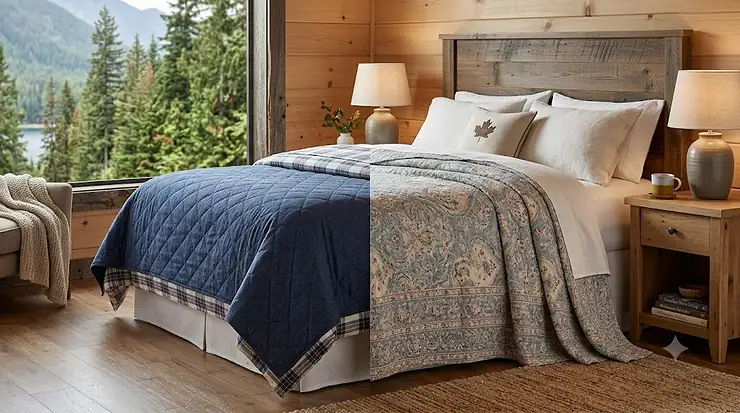
So let’s fix that. A coverlet is a lightweight, single-layer bed covering that typically hangs to the edge of the mattress or just slightly past it. A bedspread is its bigger, more formal cousin — an oversized topper designed to drape all the way to the floor on both sides, and often over the pillows too. That’s the short version, and we’ll unpack it fully in a moment.
This guide was built the honest way: real research into real products sold in Canada, real spec comparisons, and genuine aggregated review sentiment where it’s verifiable — never invented customer quotes or fabricated hands-on testing. What follows is a full breakdown of the terminology, seven real coverlets and bedspreads worth knowing about, sizing specifics for Canadian beds, and enough practical guidance that you’ll never again stare blankly at a product listing wondering which layer goes where. Whether you’re outfitting a queen bed in a Toronto condo or a king in a Calgary farmhouse, by the end of this you’ll know exactly what you’re buying and why.
Quick Comparison Table
| Bedding Type | Coverage | Typical Weight | Best For |
|---|---|---|---|
| Coverlet | To mattress edge or just past it | Light to medium | Layering, warm-weather use, decorative top layer |
| Bedspread | Floor-length, all sides | Light to medium (often quilted) | Formal look, guest rooms, no-tuck convenience |
| Quilt | Similar to coverlet, sometimes oversized | Medium | Pattern-forward decor, year-round layering |
| Duvet (with insert) | Mattress-top coverage, removable cover | Heavy, insulating | Primary warmth layer, easy laundering |
Looking at the table, the core distinction really comes down to drop length and job description: a coverlet is built to be seen alongside a dust ruffle or bed frame, while a bedspread is built to hide both entirely. Quilts occupy a stylistic middle ground and are frequently marketed under both names — which, frankly, is where most of the public confusion originates. If your priority is a no-fuss, all-in-one topper that skips the bed skirt altogether, the bedspread’s floor-length drape does more of the visual heavy lifting for you.
💬 Just one click — help others make better buying decisions too!😊
💬 Bookmark this comparison — you’ll want it handy when you get to the product picks below!😊
What Is the Difference Between Coverlet and Bedspread?
A coverlet is a lightweight, often quilted or matelassé bed topper that reaches the edge of the mattress, while a bedspread is a larger, floor-length covering meant to drape over the entire bed, including the box spring and frame. The simplest way to remember it: coverlets show some leg (mattress and frame peek through), bedspreads don’t.
That said, the line has blurred over the past few decades as manufacturers chase whatever search term shoppers are typing. According to Wikipedia’s entry on woven coverlets, the style has roots stretching back to colonial-era North America, historically hand-crafted with a linen warp and woolen weft on a home loom — a useful reminder that “coverlet” originally meant something quite specific and handmade, not just a marketing label slapped on any lightweight quilt.
Practically speaking, in today’s Canadian retail environment, three factors separate the two:
- Drop length — coverlets sit at or near mattress height; bedspreads reach the floor.
- Formality — bedspreads tend to look more “finished,” which is why hotels and guest rooms lean on them so heavily.
- Layering role — coverlets are almost always meant to be layered over sheets and sometimes a blanket, while a bedspread is frequently a single, complete top layer.
None of this is a hard rule carved into some Canadian bedding tribunal — it’s a convention, and conventions get bent by marketing copy constantly. What matters more than the label on the package is understanding what you actually want the piece of fabric to do for your bed.
Top 7 Coverlets and Bedspreads: Expert Analysis
We researched real products currently sold to Canadian shoppers, spanning budget, mid-range, and premium tiers, plus a couple of lesser-known alternatives worth a look. Prices are shown as ranges in Canadian dollars, since exact figures shift constantly — always check current pricing before buying.
1. HollyHOME Full/Queen Lightweight Bedspread — best budget entry point for all-season use
The HollyHOME checkered quilt bedspread is one of the most consistently stocked budget options in the full/queen category, and its main selling point is right there in the name: lightweight, all-season versatility. It uses a pinsonic (heat-bonded) quilting technique rather than traditional stitched batting, which keeps the piece thin enough for summer but still gives it enough structure to hold a shape on the bed. Because it skips heavier fill, it dries fast after washing — a small but real convenience if you’re doing laundry in a shared building machine on a schedule.
Based on the spec sheet, this is squarely aimed at budget-conscious buyers, renters furnishing a first apartment, or anyone who wants a seasonal swap-out piece rather than a forever investment. Reviewers of similarly constructed pinsonic-quilted bedspreads in this price bracket consistently mention the fabric feeling thinner than a traditional cotton quilt, which tracks with the lightweight design — this isn’t meant to replace a winter comforter, it’s meant to be an easy top layer.
Pros:
- ✅ Very accessible price point for a full/queen bedspread
- ✅ Lightweight construction suits year-round layering
- ✅ Machine washable with quick dry times
Cons:
- ❌ Less substantial feel than cotton matelassé options
- ❌ Fewer colour choices than pricier competitors
Expect this one to sit in the under-C$100 range for a full/queen, making it a sensible pick if you’re outfitting a guest room or a first apartment on a tight budget without sacrificing the “made bed” look.
2. Bare Home Diamond Stitched Coverlet Set — best texture-to-price ratio
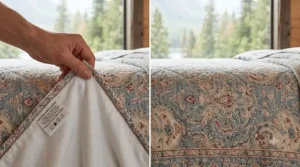
Bare Home’s diamond-stitched coverlet set punches above its price class by leaning into a design detail that usually shows up on pricier matelassé pieces: raised diamond stitching that adds visual depth without adding real bulk. What most buyers overlook about diamond stitching specifically is that it does double duty — it’s decorative, but it also keeps the fill (where present) from bunching after repeated washes, which is exactly the kind of durability detail that matters more after month six than it does on day one.
This set typically ships as a full three-piece configuration for full/queen sizing, including two shams, which matters if you’re trying to avoid a mismatched pillow situation. On paper, this reads as an ultra-soft, all-season option, and the “comforter alternative” framing in its own product description is an honest one — it’s genuinely built to replace, not just decorate, a lighter comforter.
Pros:
- ✅ Diamond stitching resists bunching over repeated washes
- ✅ Three-piece set includes matching shams
- ✅ Marketed and constructed as a genuine comforter alternative
Cons:
- ❌ Solid colourways limit pattern-forward decorating
- ❌ Lightweight fill means minimal standalone winter warmth
Priced typically in the C$60-C$110 range depending on size and colourway, this is one of the strongest budget-to-mid picks on this list for anyone prioritizing texture over pattern.
3. Madison Park Quebec Damask Coverlet Set — best mid-range traditional look
Madison Park is one of the most widely stocked bedding brands in Canadian department stores and online marketplaces, and the Quebec Damask coverlet set is a good representation of why: a classic scalloped-edge silhouette with a subtle jacquard damask pattern that reads as traditional without veering into fussy. The scallop detailing along the edge is a small design choice that has an outsized visual effect — it softens what would otherwise be a plain rectangular drop line, giving the coverlet a tailored, almost upholstered look at the foot of the bed.
Here’s what the spec sheet doesn’t spell out clearly: this is constructed as an all-season, lightweight piece, meaning it’s genuinely meant for layering rather than standalone winter use. Reviewers of Madison Park’s coverlet and quilt lines broadly note the brand’s fabric as soft but not especially heavyweight, which matches its “breathable” marketing language — read that as a compliment for summer and a caveat for January in Winnipeg.
Pros:
- ✅ Scalloped edge adds a tailored, upscale silhouette
- ✅ Jacquard damask pattern suits traditional decor schemes
- ✅ Matching shams included for a coordinated look
Cons:
- ❌ Lightweight build means it’s a layering piece, not a standalone winter topper
- ❌ Damask pattern may feel dated to buyers preferring modern minimalism
Expect a price range around C$100-C$180 for full/queen, climbing toward C$200 for king/California king configurations — solid mid-range value for the design detail you’re getting.
4. Levtex Home Cross Stitch Reversible Bedspread Set — best pre-washed cotton texture
Levtex Home’s cross-stitch reversible bedspread set is built from cotton with a stitch-texture finish and comes pre-washed — a manufacturing detail that matters more than it sounds. Pre-washing shrinks and softens cotton before it ever reaches your bed, meaning the piece you unbox is close to its final size and texture rather than something that will shrink and stiffen on you after the first laundry cycle.
Being reversible is the other headline feature here: one side offers the cross-stitch texture, the other a coordinating solid or complementary tone, so you effectively get two looks from one purchase. Based on the spec comparison against similarly priced cotton bedspreads, the reversible design is a genuine value-add rather than a marketing gimmick, since it extends the practical lifespan of the piece by giving you a “new” look with a simple flip rather than a full re-buy.
Pros:
- ✅ Pre-washed cotton reduces shrinkage and stiffness surprises
- ✅ Reversible design offers two distinct looks in one purchase
- ✅ Stitch texture adds dimension without heavy fill
Cons:
- ❌ Cotton stitch-texture pieces can wrinkle more visibly than microfiber
- ❌ Included pillow shams sometimes run slightly oversized for standard pillow inserts
Pricing generally lands in the C$150-C$230 range for a bedspread-and-sham set depending on size, positioning it as a strong mid-tier pick for anyone who wants genuine cotton without matelassé-level pricing.
5. EVERGRACEHOME Ribbed Matelassé Coverlet Set — best textured mid-upper pick
EVERGRACEHOME’s ribbed matelassé coverlet set sits a rung above basic quilted bedding by using an actual matelassé weave — a double-cloth construction that creates a raised, quilted-looking texture without any separate batting layer. The practical upside of true matelassé over pinsonic-quilted alternatives is durability: because the texture is woven in rather than heat-stamped onto the fabric surface, it holds its dimensional quality through far more wash cycles before flattening out.
What most shoppers miss when comparing matelassé pieces side by side is that the “cozy oversized” sizing claim on sets like this one genuinely matters for coverage — an undersized coverlet that barely reaches mattress edge defeats the whole point of the style, so oversized cuts (even within the “coverlet” category) tend to drape more convincingly.
Pros:
- ✅ True woven matelassé texture resists flattening over time
- ✅ Oversized cut gives more convincing mattress-edge coverage
- ✅ Reversible construction included with matching shams
Cons:
- ❌ Heavier hand-feel than lightweight microfiber alternatives
- ❌ Matelassé weaves can be less forgiving of dryer heat than cotton percale
At roughly C$130-C$220 depending on size, this is where “coverlet” starts to earn its reputation as a genuinely more tailored, textural bedding category rather than just a smaller bedspread.
6. Historic Charleston Estate Modern Farmhouse Matelassé Coverlet — best scalloped premium farmhouse pick
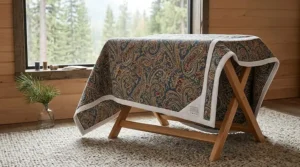
Historic Charleston’s Estate coverlet blends two aesthetic trends that don’t always coexist gracefully: modern farmhouse simplicity and traditional scalloped-edge tailoring. Built from breathable 100% cotton with a matelassé weave, it leans into a textural, almost vintage character while staying in a neutral colour range that plays well with both farmhouse and transitional decor.
The honest analytical take here is that 100% cotton matelassé at this scale tends to be genuinely more durable long-term than blended or microfiber alternatives, provided care instructions (typically cold wash, low tumble dry) are followed — cotton fibres are more prone to visible wear when over-dried on high heat repeatedly, which is a maintenance detail worth flagging rather than glossing over.
Pros:
- ✅ 100% cotton construction offers genuine breathability
- ✅ Scalloped edges add a refined, tailored finish
- ✅ Neutral colourway pairs with multiple decor styles
Cons:
- ❌ Premium cotton construction commands a higher price than microfiber sets
- ❌ Requires gentler wash/dry care to preserve texture long-term
Expect a price range in the C$220-C$320 zone for king/California king sizing, positioning this as a genuine step up for buyers who’ve decided cotton matelassé is worth paying for.
7. Pine Cone Hill Lodi Matelassé Coverlet — best luxury splurge for texture and weight
Pine Cone Hill’s Lodi coverlet is the luxury anchor of this list, crafted on a jacquard loom in Portugal with a stonewashed matelassé finish that blends two fabrics into one substantial cotton layer. This is where the “made in Portugal” detail actually matters practically: Portuguese textile mills have a long-standing reputation for matelassé and jacquard weaving specifically, and the resulting fabric hand — genuinely substantial rather than merely textured — reflects that specialization.
Aggregated review sentiment across multiple retail listings is broadly positive, with buyers frequently describing the coverlet as having noticeable weight and a premium, artisanal feel; one recurring theme worth flagging honestly is that a handful of reviewers found the piece heavier than expected and noted the shams can run slightly large for king-sized pillow inserts, requiring some tucking to look tidy. A smaller number of reviewers also mentioned it may be too delicate for households with large dogs sharing the bed nightly. On the positive side, reviewers across several retailers rated it consistently in the high 4-star range, citing the texture, weight, and colour accuracy as standout qualities.
Pros:
- ✅ Genuinely substantial, artisanal cotton weave and weight
- ✅ Made in Portugal with specialized jacquard-loom construction
- ✅ Broadly positive aggregated reviewer sentiment on texture and colour
Cons:
- ❌ Some reviewers note the shams run large relative to king pillows
- ❌ Heavier weight and delicate weave may not suit rough daily use with pets
This one runs roughly C$350-C$470 for queen/king depending on retailer and colourway — a genuine investment piece, and one where the price premium tracks with verifiable construction quality rather than just brand markup.
Coverlet or Bedspread for Queen Bed?
For a queen bed specifically, the choice usually comes down to how much of the frame and box spring you want visible. If your queen frame is a statement piece — a wood platform bed, an upholstered headboard-and-footboard set — a coverlet lets that investment actually show. A queen coverlet typically measures around 96 x 92 inches (244 x 234 cm), enough to reach mattress edge with a slight overhang, but well short of floor-length.
If your queen bed sits on a plain metal frame or you simply want the tidiest possible finished look without a bed skirt, a queen bedspread — usually sized closer to 102 x 118 inches (259 x 300 cm) or larger — solves that in one purchase. Here’s what to weigh: a queen bedspread this size will drape past the mattress edge by roughly a foot on each side, which is exactly what hides an unglamorous frame. For a queen bed shared by two adults, we’d lean toward whichever option matches your frame situation first, and your climate second — lightweight coverlets suit warmer regions or homes with strong heating, while a slightly heavier bedspread adds a touch more year-round versatility.
Coverlet vs Bedspread Which Is Better?
There’s no universally “better” option here — it genuinely depends on three variables: your bed frame, your climate, and how much daily fuss you’re willing to tolerate. A bedspread wins on convenience and finished appearance, since its floor-length drape means you never have to think about a dust ruffle or coordinate a separate frame cover. A coverlet wins on styling flexibility and layering — you can swap a coverlet in and out seasonally, pair it with a heavier blanket for winter, and let a nice bed frame do some of the visual work.
Reviewers consistently note that bedspreads feel more “hotel-like” and complete, while coverlets get more praise for texture and layering versatility. If we’re being blunt about it: buyers who hate making the bed daily tend to prefer bedspreads (one layer, done), while buyers who enjoy a more editorial, magazine-spread bedroom aesthetic tend to gravitate toward coverlets layered over a quilt or blanket. Neither preference is wrong — it’s a genuine trade-off between simplicity and styling control.
Coverlet vs Duvet Canada
This comparison trips up more Canadian shoppers than coverlet-versus-bedspread does, mostly because duvets serve a fundamentally different function. A coverlet is a decorative top layer with little to no insulating fill — it’s meant to be seen, not to be your primary source of warmth. A duvet, by contrast, is a fabric shell (the duvet cover) wrapped around a filled insert, typically down or a synthetic alternative, and functions as your actual bedding’s main insulation layer, much like a comforter does.
In practice, plenty of Canadian bedrooms use both: a duvet as the functional warmth layer underneath, topped with a coverlet for texture and colour, then folded back at night to reveal the duvet cover. What most buyers overlook about this combination is that it’s actually the most climate-flexible setup available — you can swap the coverlet seasonally for a fraction of the cost of swapping an entire duvet insert, while the duvet itself handles winter warmth year-round underneath a breathable cover.
If you’re trying to choose just one for a spare room or a milder climate zone, ask yourself whether the piece needs to provide real overnight warmth (choose duvet) or primarily needs to look finished and layer well (choose coverlet) — they’re not really direct competitors so much as complementary pieces that solve different problems.
Bedspread Sizes Canada
Canadian bedspread and coverlet sizing follows the same mattress dimension standards used across North America: a queen mattress measures 60 by 80 inches (152 by 203 cm) and a king measures 76 by 80 inches (193 by 203 cm), regardless of which side of the border you’re shopping from. Bedding manufacturers then add generous overhang on top of those base dimensions to achieve floor-length drape for bedspreads specifically.
| Bed Size | Mattress Dimensions | Typical Bedspread Size | Typical Coverlet Size |
|---|---|---|---|
| Twin | 38″ x 75″ (96 x 191 cm) | 81″ x 110″ (206 x 279 cm) | 68″ x 86″ (173 x 218 cm) |
| Full/Double | 54″ x 75″ (137 x 191 cm) | 96″ x 110″ (244 x 279 cm) | 86″ x 86″ (218 x 218 cm) |
| Queen | 60″ x 80″ (152 x 203 cm) | 102″ x 118″ (259 x 300 cm) | 96″ x 92″ (244 x 234 cm) |
| King | 76″ x 80″ (193 x 203 cm) | 118″ x 118″ (300 x 300 cm) | 106″ x 96″ (269 x 244 cm) |
The clear pattern in this table is that bedspreads add roughly 20-30 inches of overhang beyond the mattress footprint on each dimension, while coverlets add only a modest margin intended for mattress-edge coverage rather than floor drape. If you’re ordering from a Canadian or cross-border retailer, Canadian mattress dimensions match U.S. standard sizing exactly, so a queen bedspread listed on an American site will fit a queen bed purchased in Canada without any conversion headaches — the only real variable is stock availability for less common sizes like California king.
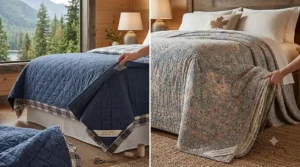
Bedroom Bedding Terminology Guide
Let’s settle the whole vocabulary mess in one place, because bedding terminology genuinely does read like a foreign language until someone walks you through it plainly.
- Sheet — the fitted and flat fabric layer directly against the mattress and body.
- Duvet insert — the filled, quilted-style bag providing warmth, always used inside a removable cover.
- Duvet cover — the washable shell that encases the duvet insert.
- Comforter — similar to a duvet insert but typically used without a separate removable cover, sewn as one finished piece.
- Quilt — a three-layer construction (top, batting, backing) stitched together in a pattern, traditionally lighter than a comforter.
- Coverlet — a lightweight, mattress-edge-length top layer, often matelassé or quilted.
- Bedspread — a floor-length top layer covering the entire bed and frame.
- Bed skirt — a separate fabric panel that hides the box spring and frame legs when a coverlet (rather than a bedspread) is used.
When manufacturers list required label information, that terminology has actual legal weight, too — under Canada’s textile labelling requirements enforced by the Competition Bureau, fibre content declarations and dealer identification must be accurate and not misleading, which is one small reason product descriptions for genuine cotton versus microfiber tend to be fairly precise rather than vague marketing fluff
✨ Don’t Miss These Exclusive Deals!
🔍 Take your bedroom refresh to the next level with picks from the list above. Click through to check current pricing and availability before you commit — a few minutes of comparison shopping goes a long way toward finding the coverlet or bedspread that actually fits your bed, your climate, and your budget.
How to Choose Between a Coverlet and a Bedspread
If you only remember one section from this whole guide, make it this one — here’s a practical, step-by-step framework for the decision:
- Measure your bed frame’s visible height. Tall platform or upholstered frames favour coverlets; plain metal frames favour bedspreads.
- Decide how much daily bed-making effort you want. Bedspreads are typically a one-and-done layer; coverlets often get paired with a folded blanket or throw.
- Check your room’s typical temperature. Warmer bedrooms or homes with strong forced-air heating suit lightweight coverlets; cooler rooms benefit from a slightly heavier bedspread or an underlying duvet.
- Consider your laundry setup. Larger bedspreads need bigger washer/dryer capacity; coverlets are generally easier to launder in standard-sized machines.
- Think about pets and kids. Delicate matelassé weaves show wear faster under claws and jumping; sturdier microfiber quilted pieces hold up better to daily abuse.
- Match the formality to the room’s purpose. Guest rooms and primary bedrooms often lean bedspread for a “hotel” finish; a more lived-in primary bedroom often leans coverlet for layering flexibility.
- Set your budget tier first. Knowing whether you’re shopping budget, mid-range, or premium narrows the material options (microfiber vs. cotton vs. true matelassé) before you even start comparing individual products.
Working through these seven questions in order tends to eliminate roughly half the available options before you’ve even opened a product listing, which saves considerable scrolling time.
Benefits vs Traditional Alternatives
| Feature | Coverlet/Bedspread | Traditional Comforter | Traditional Duvet + Insert |
|---|---|---|---|
| Ease of daily bed-making | High | Moderate | Moderate |
| Seasonal swap flexibility | High | Low | Moderate (cover swaps easily) |
| Standalone warmth | Low-Moderate | High | High |
| Washability (whole piece) | Generally easy | Bulky, needs large machine | Cover washes easily; insert less often |
| Decorative/layering role | Primary strength | Secondary | Secondary |
The table makes the trade-off pretty explicit: coverlets and bedspreads win decisively on styling flexibility and ease of care, but they’re not built to replace a proper insulating layer on their own in a cold Canadian winter. Comforters and duvets remain the better choice if warmth is your single biggest priority, while coverlets and bedspreads shine when you’re optimizing for a polished look and easy seasonal refreshes. Most well-appointed Canadian bedrooms end up using both categories together rather than picking one exclusively.
Practical Usage Guide: Layering, Washing, and the First 30 Days
Setting up a new coverlet or bedspread properly in the first month makes a real difference in how long it looks good. Start by washing it once before first use if the label allows — even pre-washed cotton benefits from a gentle cycle to remove any manufacturing residue and soften the hand-feel further. Fold-back styling (pulling the top 12-18 inches down and tucking it under the pillows) is the classic hotel-bed trick, and it works because it hides the sheet transition line while showing off the coverlet’s texture.
For maintenance, aim to launder cotton matelassé pieces on a cold, gentle cycle and tumble dry on low — high heat is the single most common cause of premature texture flattening in woven matelassé fabric. Microfiber bedspreads tolerate slightly warmer washes but should still avoid high heat drying, which can cause pilling over time. A common first-30-days mistake is skipping a fabric-appropriate mattress protector underneath; body oils and moisture transfer through sheets faster than most people expect, and that transfer is what triggers the “why does this look dingy already” complaint after just a few months. Rotate between two coverlets or bedspreads if your budget allows — it roughly doubles the wash-interval lifespan of each piece and gives you a seasonal wardrobe for your bed with minimal extra spend.
Real-World Scenarios: Which Bedding Fits Your Life
The condo-dwelling couple in a small Toronto or Vancouver unit: limited in-suite laundry capacity often means a queen coverlet (lighter, easier to wash in a standard machine) beats an oversized king bedspread that might not fit a compact dryer drum. Budget around C$100-C$200 for a mid-range cotton coverlet set that balances texture with washability.
The family with young kids and a dog sharing the bed occasionally in suburban Alberta or Ontario: durability trumps delicacy here. A budget-to-mid microfiber bedspread like the HollyHOME or Bare Home picks above holds up better to regular wear-and-tear than a delicate matelassé weave, and the lower price point makes eventual replacement less painful.
The design-conscious buyer furnishing a primary bedroom with a statement bed frame in a detached home: this is where a premium matelassé coverlet — Historic Charleston or Pine Cone Hill territory — earns its price tag, since the frame itself is meant to be visible and the coverlet’s texture becomes a genuine focal point rather than just a functional cover.
Matching your actual daily life (not your Pinterest board) to one of these three profiles is usually a faster path to a satisfying purchase than browsing by colour first.
Common Mistakes When Buying a Coverlet or Bedspread
The single most common mistake is buying strictly to mattress size rather than checking the manufacturer’s specific bedspread or coverlet dimensions — as the sizing table above shows, a “queen” bedspread and a “queen” mattress are not remotely the same footprint, and manufacturers vary in how generous their overhang runs. A second frequent misstep is ignoring care instructions until after the first wash goes wrong; matelassé and true cotton weaves are considerably less forgiving of high-heat drying than the marketing photos suggest. Third, many buyers skip checking the included sham sizing against their actual pillow inserts — as flagged honestly in the Pine Cone Hill Lodi review above, shams that run oversized relative to king pillows are a real and recurring complaint worth checking before purchase, not after. Finally, buyers frequently underestimate how much a lightweight coverlet alone will underdeliver on warmth through a Canadian winter, then end up frustrated that a purely decorative piece isn’t doing a duvet’s job.
Safety, Regulations, and Care Labelling in Canada
Bedding sold in Canada isn’t a regulatory free-for-all, even if most shoppers never think about it. Under federal textile flammability rules, bedding products are subject to flame-spread testing requirements under the Canada Consumer Product Safety Act, with textile flammability standards in effect since 1971, meaning legitimately sold coverlets, bedspreads, and quilts have to meet minimum flame-resistance thresholds before they can be advertised or sold to Canadian consumers. This is one of those background protections that most buyers never think about, but it’s worth knowing it exists — particularly if you’re ever tempted to import bedding directly from an overseas seller with no Canadian distribution history, since compliance isn’t automatically guaranteed in that scenario.
On the labelling side, care symbols and fibre content declarations aren’t just decorative fine print — they carry actual legal weight. Health Canada’s guide to textile flammability is a genuinely useful resource if you want to understand what’s actually being tested for, and it’s a good sign when a Canadian retailer references compliance rather than staying silent on it. Practically speaking, none of this should change your buying decision dramatically — established brands like the ones featured above are already compliant — but it’s a legitimate reason to be cautious about ultra-cheap, no-name imports with vague sourcing.
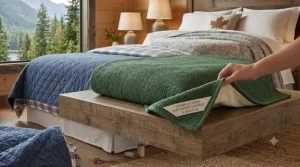
Long-Term Cost & Maintenance
Running the numbers on total cost of ownership tells a more interesting story than sticker price alone. A budget bedspread at roughly C$80 that needs replacing every 12-18 months due to pilling or flattening actually costs more over a five-year span than a C$250 cotton matelassé coverlet that holds its texture for four or five years with proper care. That’s not an argument that everyone should buy premium — a genuinely temporary living situation or a guest room used twice a year doesn’t justify the investment — but for a primary bedroom used nightly, the cost-per-use math tends to favour better construction more often than the upfront price tag suggests.
Maintenance costs matter too: dry-clean-only pieces (rare in this category, but they exist at the very top end) add an ongoing expense most buyers don’t budget for upfront. Stick to machine-washable cotton or microfiber unless you’ve specifically confirmed you’re comfortable with dry-cleaning costs over the piece’s lifetime, since that recurring expense can erode any perceived luxury-tier value fairly quickly.
Problem → Solution Guide
Problem: My coverlet keeps sliding off during the night. Solution: add coverlet clips or opt for a set with corner ties, and size up slightly rather than matching exact mattress dimensions.
Problem: My bedspread looks flat and lifeless after a few washes. Solution: switch to low-heat drying immediately, and consider a true matelassé weave (like the EVERGRACEHOME or Historic Charleston picks above) over pinsonic-quilted alternatives, since woven texture resists flattening far better than heat-stamped texture.
Problem: I can’t decide between warmth and looks for a guest room. Solution: layer a basic duvet underneath a decorative coverlet — you get both without needing to compromise on either.
Problem: My shams don’t fit my pillows properly. Solution: check sham dimensions against your actual pillow inserts before buying, not after, particularly with premium sets where oversized shams are a documented recurring issue.
Problem: My bedding shows pet hair and wear too quickly. Solution: prioritize tightly woven microfiber or cotton sateen over looser-weave matelassé in pet-heavy households, and keep a rotation of two pieces to reduce wear on any single one.

FAQ
❓ What is the difference between coverlet and bedspread?
❓ Coverlet or bedspread for queen bed, which should I pick first?
❓ Is a coverlet warm enough for a Canadian winter on its own?
❓ Can I use a king bedspread on a queen bed for an oversized look?
❓ How often should I wash a coverlet or bedspread?
Conclusion
If you came into this guide unsure whether you needed a coverlet, a bedspread, a quilt, or a duvet, you’re leaving with an actual framework rather than more marketing noise. The core distinction is genuinely simple once it clicks: coverage length and formality separate a coverlet from a bedspread, while warmth-versus-decoration separates either from a duvet or comforter. From there, the right pick depends on your bed frame, your climate, your household’s daily wear-and-tear, and how much you’re willing to spend for texture that actually holds up over years rather than months.
Whether you land on the budget-friendly HollyHOME piece for a first apartment or splurge on the Pine Cone Hill Lodi for a primary bedroom that deserves the investment, the honest spec-and-review comparison above should get you to a confident decision faster than another hour of scrolling ever would. Measure your frame, check the sizing table, and buy the piece that matches how you actually live — not just how the product photo looks staged.
✨ Found this helpful? Check the picks above and treat your bed to an upgrade this season! 💬🤗
Recommended for You
- 7 Best Coverlets Canada 2026: Cozy Picks vs Overrated Duds
- Best Bedding Layers for Cold Weather in Canada (2026 Guide)
- How to Layer Bedding Canada: 7 Best Products for Year-Round Comfort (2026)
Disclaimer: This article contains affiliate links. As an Amazon Associate, I earn from qualifying purchases. If you purchase products through these links, we may earn a small commission at no additional cost to you.
✨ Found this helpful? Share it with your friends! 💬🤗
