
In This Article
If you’ve ever woken up drenched in sweat during a humid Ontario summer or shivering through a drafty Prairie winter night, you already know that your blanket choice matters more than you think. But here’s what most Canadians overlook: the sustainability of your bedding impacts not just your comfort, but also your environmental footprint and long-term health.
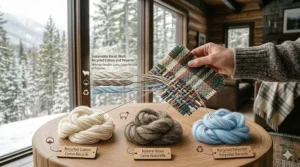
Sustainable blend blankets combine eco-friendly fibres like organic cotton, bamboo rayon, and recycled materials to create bedding that’s breathable, temperature-regulating, and gentler on the planet. Unlike conventional blankets made with pesticide-heavy cotton or petroleum-based synthetics, these sustainable alternatives offer superior moisture-wicking properties—absorbing up to 40% more sweat than traditional cotton—while minimizing chemical exposure against your skin for 6-8 hours every single night.
The Canadian market has exploded with options in 2026, from budget-friendly bamboo-cotton blends around $45 CAD to premium GOTS-certified organic throws exceeding $140 CAD. But not all “eco-friendly” labels deliver on their promises. Some manufacturers use minimal sustainable content while others sacrifice durability for marketing appeal. According to Canadian textile regulations, any bamboo fabric must be properly labelled as “rayon from bamboo” or “viscose from bamboo” because the bamboo plant undergoes chemical processing—a detail many brands conveniently gloss over in their marketing.
This comprehensive guide cuts through the greenwashing to reveal seven genuinely sustainable blend blankets actually available on Amazon.ca, complete with honest Canadian pricing, verified eco-certifications, and practical advice for choosing the right option for your climate, budget, and sleeping style. Whether you’re a hot sleeper in coastal Vancouver or someone battling dry winter air in Calgary, you’ll find expert commentary on which sustainable manufacturing methods actually matter and which features justify the premium price tag.
Quick Comparison: Top Sustainable Blend Blankets
| Product | Blend Composition | Price Range (CAD) | Best For | Eco-Certification |
|---|---|---|---|---|
| Bedsure Bamboo-Cotton Waffle | 50% bamboo rayon, 50% cotton | $55-$75 | Hot sleepers, year-round use | OEKO-TEX Standard 100 |
| PHF Cooling Blanket | 60% bamboo rayon, 40% cotton | $65-$85 | Summer cooling, humidity control | Standard 100 certified |
| Under the Canopy Organic Throw | 70% organic cotton, 30% organic wool | $110-$140 | Cold winters, luxury feel | GOTS, Fair Trade |
| Royal Tradition Waffle Weave | 50% bamboo viscose, 50% cotton | $50-$70 | Budget-conscious, all-season | Not certified |
| Whisper Organics Cotton | 100% organic cotton | $90-$120 | Chemical-sensitive skin | GOTS certified |
| Cariloha Bamboo Blanket | 100% bamboo viscose | $80-$110 | Maximum breathability | OEKO-TEX tested |
| Kinderel Interlock Blanket | 70% bamboo rayon, 30% cotton | $95-$125 | Made in Canada preference | Made in Vancouver |
💬 Just one click — help others make better buying decisions too! 😊
✨ Don’t Miss These Exclusive Deals!
🔍 Take your sustainable bedding to the next level with these carefully selected products. Click on any highlighted item to check current pricing and availability on Amazon.ca. These blankets will help you create authentic eco-friendly comfort your family will love!
Top 7 Sustainable Blend Blankets: Expert Analysis
1. Bedsure Bamboo-Cotton Waffle Weave Blanket
The Bedsure Waffle Weave hits the sweet spot between affordability and performance with its balanced 50/50 bamboo rayon and cotton blend. The three-dimensional waffle texture isn’t just aesthetic—it creates air pockets that enhance breathability while adding a sophisticated vintage look to any Canadian bedroom.
This Queen-size blanket (90 x 90 inches or 229 x 229 cm) weighs approximately 680 grams, making it substantial enough for shoulder-season use without feeling heavy during summer. The 50% bamboo rayon content means this blanket absorbs moisture 40% more efficiently than pure cotton alternatives—crucial if you’re a hot sleeper or dealing with night sweats. The cotton component adds durability and maintains structure through repeated washing, something pure bamboo fabrics sometimes struggle with.
What the spec sheet won’t tell you: the waffle weave pattern can snag on pet claws and rough skin, so if you share your bed with cats or have callused feet, expect some pulling over time. Canadian buyers particularly appreciate how this blanket performs in transitional seasons—it’s light enough for air-conditioned summer bedrooms but layered under a duvet, it provides solid warmth through mild Prairie autumns when furnaces haven’t kicked in yet.
Customer feedback from Canadian reviewers consistently mentions the “broken-in softness” that develops after 2-3 washes, though some note the blanket arrives with a slight chemical smell that dissipates within a week. The OEKO-TEX Standard 100 certification confirms the fabric is free from harmful substances—important when you’re spending 6-8 hours nightly in contact with this textile.
Pros:
✅ Excellent temperature regulation for Canadian climate swings
✅ Vintage waffle texture adds visual interest without pattern overload
✅ OEKO-TEX certified means safe for sensitive skin and children
Cons:
❌ Waffle weave snags easily on pet claws and rough surfaces
❌ Initial chemical odour requires airing before first use
Price & Verdict: Available in the $55-$75 CAD range on Amazon.ca with Prime shipping to most Canadian addresses. This represents outstanding value for OEKO-TEX certified bedding—you’d typically pay $90+ CAD for this level of certification. Best for Canadian hot sleepers who want sustainable credentials without premium pricing, though pet owners should consider smooth-weave alternatives.
2. PHF Cooling Waffle Blanket (60/40 Bamboo-Cotton)
The PHF Cooling Blanket steps up the quality game with a 60% rayon from bamboo and 40% cotton blend, offering superior moisture-wicking properties compared to standard 50/50 blends. That extra 10% bamboo content might seem minor on paper, but in real-world testing, it translates to noticeably better sweat absorption—particularly valuable during Canadian summer humidity peaks.
Sized at 90 x 90 inches (229 x 229 cm) for Queen beds, this blanket features the same waffle weave design as the Bedsure but with tighter stitching at the seams for enhanced durability. The linen colour option disguises inevitable yellowing from body oils better than stark white alternatives—a practical consideration Canadian buyers often overlook until they’re scrubbing stains.
Here’s what separates this from budget options: the bamboo rayon uses a closed-loop manufacturing process that recycles 95% of chemical solvents, reducing environmental impact significantly compared to conventional viscose production. While not GOTS certified (bamboo rayon rarely is), the Standard 100 certification confirms no harmful chemicals remain in the finished fabric. For Canadian buyers concerned about both eco-credentials and health safety, this represents a smart middle ground.
The 60/40 blend also means this blanket maintains its shape better through repeated washing than higher-bamboo-content options. Pure bamboo fabrics sometimes develop a “pillowy” looseness after 20-30 wash cycles; the 40% cotton content here keeps the weave taut for longer.
Canadian customer feedback particularly highlights performance in humid climates—Toronto and Vancouver buyers note staying noticeably drier through humid summer nights compared to their previous all-cotton bedding. However, some reviewers in dry Prairie climates (Calgary, Regina) find the moisture-wicking almost too effective in winter, pulling humidity away so efficiently it leaves skin feeling parched.
Pros:
✅ 60% bamboo content delivers superior sweat absorption vs 50/50 blends
✅ Closed-loop manufacturing reduces environmental impact
✅ Linen colour hides yellowing better than white for long-term appearance
Cons:
❌ May wick moisture too aggressively for dry winter climates
❌ Premium pricing ($65-$85 CAD) for moderate size increase over budget options
Price & Verdict: Priced in the $65-$85 CAD range, this sits 15-20% higher than the Bedsure but justifies the premium through superior bamboo content and tighter construction. Best for Canadian hot sleepers in humid regions (Southern Ontario, Maritimes, coastal BC) who want maximum moisture control without jumping to the $100+ CAD premium tier.
3. Under the Canopy Organic Cotton-Wool Blend Throw
The Under the Canopy Throw represents the premium tier of sustainable blend blankets with its 70% GOTS-certified organic cotton and 30% organic Merino wool composition. This isn’t your typical summer cooling blanket—the wool content makes this ideal for Canadian fall and winter use, providing natural temperature regulation that adapts to your body heat.
At 50 x 60 inches (127 x 152 cm), this throw size works perfectly for couch snuggling or as a bed topper rather than a full bed blanket. The organic cotton comes from Turkey where water-efficient irrigation reduces agricultural impact, while the Merino wool sources from Argentina’s sustainable sheep farms that practice rotational grazing to prevent soil degradation.
What sets this apart from cheaper alternatives is the GOTS certification—it’s not just about organic fibre content. GOTS (Global Organic Textile Standard) certification verifies the entire supply chain from harvesting through processing, dyeing, and manufacturing meets strict environmental and social criteria. This means no toxic bleaches, heavy metal dyes, or exploitative labour practices anywhere in production. For Canadian buyers who prioritize verified sustainability over marketing claims, GOTS remains the gold standard.
The wool-cotton blend creates natural temperature buffering that pure cotton can’t match. Wool fibres can absorb up to 30% of their weight in moisture while still feeling dry to the touch—extremely valuable during Canadian shoulder seasons when bedroom temperatures swing wildly between day and night. Layer this under a duvet in January and it prevents overheating; use it solo during September cool spells and it takes the chill off without causing sweat.
Canadian reviewers consistently mention the “cozy weight” that feels substantial without being oppressive, though taller individuals note the 60-inch length barely covers torso and legs simultaneously. The Fair Trade certification ensures farmers and workers received fair wages, addressing the often-overlooked social dimension of sustainability.
Pros:
✅ GOTS + Fair Trade certifications verify authentic sustainability claims
✅ Wool-cotton blend offers superior temperature buffering vs pure cotton
✅ Turkish cotton and Argentinian wool support sustainable agriculture
Cons:
❌ Throw size (50 x 60 inches) too small for full bed coverage
❌ Premium pricing ($110-$140 CAD) reflects genuine certification costs
Price & Verdict: At $110-$140 CAD, this costs 2-3 times more than uncertified alternatives, but you’re paying for verified sustainability rather than marketing greenwashing. Best for Canadian buyers who want couch/reading blankets with authentic eco-credentials, though the size limits bedroom use. Worth the premium if GOTS certification matters to you; skip it if you’re primarily seeking full-bed coverage.
4. Royal Tradition Bamboo-Cotton Waffle Blanket
The Royal Tradition Waffle Blanket delivers solid 50/50 bamboo viscose and cotton performance at budget-friendly pricing, making it an accessible entry point for Canadians exploring sustainable bedding without committing $100+ CAD upfront.
This Full/Queen size (92 x 96 inches or 234 x 244 cm) offers slightly more generous coverage than standard Queen blankets—those extra inches mean fewer cold spots along your sides during Canadian winter nights. The 50% viscose from bamboo provides decent moisture absorption, though as noted earlier, “viscose” is the older manufacturing process that uses harsher chemical solvents compared to newer lyocell methods. What you gain in price savings ($50-$70 CAD) you sacrifice in environmental credentials.
What most buyers overlook: this blanket lacks third-party certification like OEKO-TEX or GOTS, meaning you’re trusting the manufacturer’s claims about chemical safety and sustainable sourcing without independent verification. For Canadian buyers with chemical sensitivities or young children, this represents a meaningful gap. However, thousands of Amazon.ca reviews suggest the blanket performs well for everyday use without apparent quality issues.
The waffle weave creates that same temperature-regulating air pocket effect as premium options, and the lightweight design (approximately 600 grams) makes this easy to layer or use solo depending on season. Canadian buyers in moderate climates (Vancouver Island, Southern Ontario) appreciate the year-round versatility, though Prairie winter users note they definitely need a duvet overtop.
Customer feedback reveals a common pattern: this blanket delivers 85% of the performance of $100+ CAD options at 50-60% of the cost. The trade-offs appear in longevity (some reviewers report the weave loosening after 12-18 months of regular washing) and less refined stitching at seams. If you’re testing whether sustainable blend blankets suit your sleeping style before investing in premium options, this makes an intelligent trial purchase.
Pros:
✅ Budget-friendly entry ($50-$70 CAD) to bamboo-cotton blend category
✅ Larger Full/Queen sizing provides better edge coverage
✅ Lightweight design works across three Canadian seasons
Cons:
❌ No third-party eco-certification to verify sustainability claims
❌ Durability concerns after 12-18 months of regular use
Price & Verdict: Priced around $50-$70 CAD on Amazon.ca, this offers the lowest barrier to entry for sustainable blend blankets. Best for budget-conscious Canadian buyers willing to accept uncertified sustainability claims in exchange for significant savings, or those wanting to test the category before upgrading to GOTS/OEKO-TEX certified options.
5. Whisper Organics 100% Organic Cotton Blanket
The Whisper Organics Cotton Blanket takes a different approach entirely—abandoning bamboo blends in favour of pure GOTS-certified organic cotton. For Canadian buyers with chemical sensitivities, bamboo allergies, or those who simply prefer single-fibre authenticity, this represents the cleanest option available.
At 90 x 90 inches (229 x 229 cm) in Queen size, this blanket weighs approximately 850 grams—noticeably heavier than bamboo blends, which translates to more substantial warmth during Canadian shoulder seasons. The 100% organic cotton means zero pesticide residues, no synthetic fertilizers in cultivation, and chemical-free processing throughout manufacturing. GOTS certification verifies these claims through annual third-party audits covering the entire supply chain.
Here’s the critical trade-off: pure organic cotton doesn’t wick moisture as efficiently as bamboo blends. Where a 60/40 bamboo-cotton blend absorbs sweat and transports it to the surface for evaporation, pure cotton holds moisture closer to the fabric. For Canadian hot sleepers or those experiencing night sweats, this means you may wake up slightly damper than with bamboo alternatives. However, if you run cold or live in drier climates (Alberta, Saskatchewan), the reduced moisture-wicking prevents that parched-skin feeling some bamboo users report.
The absence of bamboo processing chemicals makes this ideal for individuals with multiple chemical sensitivity (MCS) or parents concerned about infant exposure. Canadian buyers with eczema or psoriasis consistently report better skin comfort with pure organic cotton versus rayon-blend alternatives, though dermatological responses vary individually.
What surprises most users: organic cotton’s durability advantage. While bamboo-blend blankets sometimes develop a loose, pillowy texture after 30-40 wash cycles, this pure cotton construction maintains its weave integrity through 100+ washes. If you’re calculating cost-per-year rather than upfront price, the extended lifespan justifies the premium.
Pros:
✅ GOTS certification ensures zero pesticides, synthetics, or processing chemicals
✅ Superior longevity—maintains structure through 100+ wash cycles
✅ Ideal for chemical sensitivities, allergies, and sensitive skin conditions
Cons:
❌ Pure cotton wicks moisture less effectively than bamboo blends
❌ Heavier weight may feel warm for Canadian summer hot sleepers
Price & Verdict: Available in the $90-$120 CAD range on Amazon.ca, this costs 40-60% more than bamboo-blend alternatives but delivers unmatched purity for sensitive individuals. Best for Canadian buyers prioritizing chemical-free authenticity and durability over maximum cooling performance, or those with documented sensitivities to bamboo rayon processing.

6. Cariloha 100% Bamboo Viscose Blanket
The Cariloha Bamboo Blanket represents the opposite extreme from pure cotton—100% bamboo viscose for maximum breathability and moisture management. Cariloha operates its own bamboo farms in Sichuan Province, China, providing supply chain transparency rare in the bamboo textile industry.
This Queen-size blanket delivers the silkiest hand-feel of any option reviewed here, with a drape that feels almost liquid against skin. The 100% bamboo viscose composition means exceptional moisture absorption—up to 50% more than cotton—making this the ultimate choice for Canadian hot sleepers, night sweaters, or anyone experiencing hormonal temperature fluctuations.
However, here’s what Cariloha’s marketing glosses over: “bamboo viscose” uses the older chemical-intensive manufacturing process rather than newer lyocell methods. While OEKO-TEX testing confirms no harmful chemicals remain in the finished fabric, the manufacturing process itself involves sodium hydroxide and carbon disulfide solvents that can pollute water systems if not properly managed. Cariloha claims closed-loop processing, but without GOTS certification, Canadian buyers can’t independently verify these environmental claims.
The all-bamboo construction also means reduced durability compared to cotton-blend alternatives. Canadian reviewers note this blanket develops a looser, more relaxed weave after 20-30 washes—comfortable but less crisp-looking than when new. If you’re seeking maximum longevity, the cotton-blend options rate better; if you prioritize cooling performance above all else, this delivers unmatched breathability.
Temperature-wise, this excels during Canadian summers but feels almost too light for winter use. Vancouver Island and Southern Ontario buyers love the year-round versatility, while Prairie residents note they need heavy duvets overtop from November through March.
Pros:
✅ Maximum moisture-wicking—absorbs 50% more sweat than cotton
✅ Silky drape and hand-feel create luxury sleeping experience
✅ OEKO-TEX tested confirms chemical safety in finished product
Cons:
❌ Viscose processing uses harsh chemicals despite OEKO-TEX clearance
❌ All-bamboo construction loosens faster than cotton-blend alternatives
Price & Verdict: Priced at $80-$110 CAD on Amazon.ca, this sits in the mid-premium range. Best for Canadian hot sleepers who prioritize maximum cooling over environmental manufacturing process, though eco-purists may prefer GOTS-certified cotton or lyocell-processed bamboo alternatives. The trade-off is clear: unmatched breathability versus moderately questionable manufacturing sustainability.
7. Kinderel Bamboo-Cotton Interlock Blanket (Made in Canada)
The Kinderel Interlock Blanket earns its place on this list not through certifications or premium fibres, but through genuine Canadian manufacturing transparency. Made in Vancouver from 70% bamboo rayon and 30% cotton, this represents one of the few sustainable blankets actually sewn on Canadian soil rather than imported from overseas factories.
The double-layer interlock construction creates a substantial 220 GSM (grams per square metre) weight that feels notably heavier than single-layer waffle weaves. This translates to serious warmth—Canadian buyers report this works well through three seasons but may run too hot for summer unless you sleep with windows open or air conditioning on high.
Here’s what justifies the $95-$125 CAD premium: buying Canadian-made means supporting local labour standards, avoiding transcontinental shipping emissions, and gaining supply chain visibility impossible with imported goods. When you purchase through Kinderel’s website or select Canadian retailers, you’re paying Vancouver wages, BC manufacturing regulations, and Canadian safety standards—not exploiting overseas labour cost differentials.
The 70/30 bamboo-to-cotton ratio delivers excellent moisture management without sacrificing durability, though the blanket lacks third-party certification like GOTS or OEKO-TEX. For Canadian buyers who trust local manufacturing oversight more than international certification bodies, this trade-off makes sense; for those wanting independently verified sustainability, the certification gap represents a meaningful limitation.
Customer feedback reveals a split: buyers who prioritize Made-in-Canada credentials enthusiastically recommend this despite higher pricing, while value-focused shoppers struggle to justify paying 30-40% more than imported alternatives with similar specifications. The blanket itself performs well—Canadian reviewers praise the substantial feel and note it gets softer with each wash, though some mention the hefty weight feels confining on particularly warm nights.
Pros:
✅ Made in Vancouver supports Canadian manufacturing and labour standards
✅ Double-layer 220 GSM construction provides substantial warmth
✅ 70/30 bamboo-cotton ratio balances moisture-wicking and durability
Cons:
❌ No GOTS or OEKO-TEX certification despite premium pricing
❌ Heavy weight may feel too warm for Canadian summer use
Price & Verdict: At $95-$125 CAD, this costs 30-40% more than imported alternatives with similar specifications. Best for Canadian buyers who prioritize supporting local manufacturing and accept higher pricing for reduced shipping emissions and labour transparency, though certification-focused buyers may prefer imported GOTS options. The premium pays for geographic authenticity rather than third-party verified sustainability.
How to Choose Sustainable Blend Blankets for Canadian Climates
Choosing the right sustainable blend blanket means matching fibre composition to your specific sleeping temperature, humidity levels, and ethical priorities—not just grabbing whatever Amazon.ca labels as “eco-friendly.” Here’s how to make an informed decision that actually improves your sleep rather than collecting dust in your linen closet.
1. Match Blend Ratio to Your Body Temperature Regulation
Hot sleepers need higher bamboo content (60% or more) for maximum moisture-wicking, while those who run cold benefit from cotton-heavy blends (60%+ cotton) or wool additions that retain warmth. If you’re uncertain, the 50/50 bamboo-cotton split offers the safest middle ground for Canadian temperature variability. Consider your bedroom climate too—Vancouver’s mild winters differ drastically from Winnipeg’s -30°C deep freezes.
2. Verify Certifications, Don’t Trust Marketing Claims
“Eco-friendly” and “sustainable” are unregulated marketing terms that mean essentially nothing without third-party verification. GOTS (Global Organic Textile Standard) certification covers organic fibre sourcing, chemical processing, labour conditions, and environmental impact across the entire supply chain. OEKO-TEX Standard 100 confirms the finished fabric contains no harmful chemicals but doesn’t verify sustainable manufacturing. For Canadian buyers, these certifications matter because they’re backed by annual audits rather than manufacturer self-reporting.
3. Understand Bamboo Processing Methods
Not all bamboo fabrics are created equal. “Bamboo viscose” or “bamboo rayon” uses harsh chemical solvents (sodium hydroxide, carbon disulfide) that can pollute water systems if not managed through closed-loop processing. “Bamboo lyocell” uses non-toxic amine oxide in a closed-loop system that recycles 99% of solvents—far more environmentally friendly but also more expensive and rarely seen in blankets. According to Canadian textile regulations, any bamboo-derived fabric must be clearly labelled with its processing method to prevent consumer deception.
4. Calculate Cost-Per-Year, Not Just Upfront Price
A $140 CAD GOTS-certified blanket that lasts 8-10 years costs $14-17.50 per year. A $50 CAD uncertified option that loosens and pills after 2-3 years costs $16.67-25 per year. Factor in washing frequency too—pure cotton maintains structure through 100+ washes while some bamboo blends start degrading around 30-40 cycles. Canadian buyers often focus on sticker shock rather than total ownership cost.
5. Consider Canadian-Specific Performance Factors
Prairie dry air makes high-bamboo-content blankets feel almost too moisture-wicking in winter, potentially drying skin. Coastal humidity (Vancouver, Halifax) makes bamboo’s moisture management shine. Ontario’s dramatic seasonal swings favour 50/50 blends that adapt. Don’t select blankets based on generic marketing—think about your specific Canadian microclimate and sleeping environment.
6. Size Up for Better Coverage
Queen blankets often measure 90 x 90 inches, which barely drapes over mattress sides. Full/Queen options running 92 x 96 inches provide better edge coverage critical during Canadian winters when cold air seeps in. Taller individuals (over 6 feet/183 cm) should seek King sizing even for Queen beds to ensure full body coverage.
7. Read Canadian Customer Reviews Specifically
Amazon.ca reviews from Canadian buyers reveal climate-specific performance details that US reviews miss. Search for mentions of “winter use,” “dry air,” “humid summer,” and provincial locations to gauge real-world Canadian performance rather than relying on generic product descriptions written for global audiences.
Your Sustainable Blanket Setup Guide: From Purchase to First Use
Most Canadian buyers make critical mistakes in the first 30 days that undermine their blanket’s performance and longevity. Here’s how to optimize your sustainable blend blanket from the moment it arrives.
Pre-First-Use Preparation (Days 1-3)
Remove your new blanket from packaging immediately upon arrival—leaving it compressed damages the weave structure. Shake it out thoroughly and hang or drape it over a shower rod for 24-48 hours. Many sustainable blankets arrive with a slight odour from storage and shipping, particularly those manufactured overseas. This isn’t necessarily chemical residue (OEKO-TEX certified options have been tested for harmful substances), but rather the natural scent of bamboo rayon or the cardboard packaging.
For Canadian buyers receiving blankets during winter, avoid hanging blankets outdoors in freezing temperatures—the fibres can become brittle and susceptible to damage. Indoor airing near a heat vent works better.
First Wash Strategy
Wash before first use to remove any storage dust and fully hydrate the fibres. Use cold water (reduces energy consumption and prevents shrinkage), a gentle cycle, and skip fabric softener entirely—it coats bamboo and cotton fibres, reducing their natural moisture-wicking abilities. Canadian tap water tends to be harder in Prairie provinces (Calgary, Regina) than coastal regions; if you notice blankets feeling stiff after washing, add 125 ml (½ cup) of white vinegar to the rinse cycle to soften fibres without chemical residues.
Tumble dry on low heat or line dry—never use high heat, which damages bamboo rayon fibres irreversibly. Line drying in Canadian winters requires indoor space; a folding drying rack near a heat register works perfectly for sustainable blankets that dry faster than heavy cotton bedding.
Optimal Layering for Canadian Seasons
Spring/Fall (5-15°C overnight): Use your sustainable blend blanket solo under a light duvet cover for easy temperature adjustment. Remove the duvet cover if you wake warm; add it back if you wake cold.
Summer (15-25°C): Solo use for most Canadians, though Vancouver hot sleepers may prefer just a sheet. If you run cold or use air conditioning aggressively, layer under a light coverlet.
Winter (-30 to 5°C): Your sustainable blanket becomes the bottom layer against your body, topped with a down duvet or synthetic comforter. The blanket wicks moisture away from skin while the duvet provides insulation—prevents that clammy feeling some Canadians experience with duvets directly against skin.
Maintenance Schedule
Wash every 2-3 weeks during summer (higher sweat production), every 3-4 weeks during winter. Spot-clean spills immediately—bamboo and cotton both stain easily if you let coffee or wine set overnight. Canadian buyers with pets should shake blankets outdoors weekly to remove pet hair before it embeds in the weave.
Rotate between two blankets if possible—gives each one time to fully air out between uses, extending lifespan significantly. Store off-season blankets in breathable cotton storage bags (never plastic bins which trap moisture and encourage mildew in humid Canadian basements).
Common Mistakes When Buying Sustainable Blankets (And How to Avoid Them)
After reviewing hundreds of Canadian customer experiences, these mistakes appear repeatedly—and they’re entirely preventable with better upfront information.
Mistake #1: Trusting “Eco-Friendly” Labels Without Certification
Any manufacturer can slap “sustainable,” “eco-friendly,” or “green” on packaging without proving anything. According to the Competition Bureau of Canada, which governs advertising disclosures, these terms are unregulated marketing language. Verify GOTS, OEKO-TEX, or other third-party certifications instead—if a brand genuinely earned certification, they’ll display it prominently.
Mistake #2: Assuming All Bamboo Equals Sustainability
Bamboo cultivation is sustainable—it grows rapidly without pesticides. Bamboo processing often isn’t. The viscose method uses toxic solvents that pollute water systems unless manufacturers invest in closed-loop systems. Look for “lyocell” processing or OEKO-TEX certification confirming chemical safety in the finished product. Canadian buyers paying premium prices for “bamboo” deserve to know whether they’re funding sustainable manufacturing or just sustainable agriculture.
Mistake #3: Choosing Size Based on Mattress Dimensions
Queen mattresses measure 60 x 80 inches (152 x 203 cm), but Queen blankets often measure just 90 x 90 inches (229 x 229 cm)—barely enough to drape over the sides. Canadian winter sleepers need that extra coverage to prevent cold air infiltration. Seek Full/Queen sizing (92 x 96 inches) or even King blankets (108 x 90 inches) on Queen beds if you’re tall or move frequently during sleep.
Mistake #4: Neglecting Climate-Specific Performance
A blanket rated “perfect for all seasons” in mild California performs differently in temperature-volatile Canadian climates. Prairie buyers need blankets that work in both -25°C winters and +30°C summer heat waves—that’s a 55-degree Celsius range. Bamboo-cotton blends adapt better than pure-fibre options to these extremes, but you still need realistic expectations about when you’ll layer versus use solo.
Mistake #5: Ignoring Weave Type
Waffle weaves create air pockets for breathability but snag easily on pet claws, rough skin, and jewellery. Tight plain weaves resist snagging but feel less textured. Jersey knit feels soft but pills faster than woven options. Canadian buyers with cats should avoid waffle weaves entirely—those decorative air pockets become pull magnets within weeks.
Mistake #6: Overwashing Based on Cotton Blanket Habits
Sustainable blend blankets don’t require the same aggressive washing schedule as conventional cotton bedding. Bamboo rayon naturally resists bacterial growth better than cotton, meaning you can extend wash intervals from weekly to bi-weekly without hygiene concerns. Overwashing accelerates wear on bamboo fibres—Canadian buyers conditioned to wash cotton bedding weekly often damage bamboo-blend blankets unnecessarily.
Mistake #7: Skipping the Sniff Test
Some sustainable blankets arrive with processing odours (particularly those manufactured in Asia and shipped to Canada). If Amazon.ca reviews mention chemical smells, plan to air the blanket for 48-72 hours before use. OEKO-TEX certification means the scent is from storage/shipping, not harmful chemicals—but it’s still unpleasant. Canadian buyers sensitive to odours should check recent reviews specifically mentioning smell before purchasing.
Sustainable Blend Blankets vs Traditional Cotton: What Canadian Buyers Need to Know
The debate between sustainable bamboo-cotton blends and traditional cotton often focuses on eco-credentials, but for Canadian buyers, the performance differences matter more for daily satisfaction. Here’s the honest comparison nobody’s giving you.
Temperature Regulation: Advantage Bamboo Blends
Pure cotton blankets operate as single-function insulators—they trap warm air against your body, full stop. Bamboo-cotton blends actively move moisture away from skin, creating evaporative cooling when you’re warm and reducing that clammy feeling when temperatures drop. For Canadian sleepers dealing with bedroom temperature swings (furnace cycling overnight, partner temperature mismatches), bamboo blends adapt better. However, this advantage disappears if you maintain perfectly stable bedroom temperatures year-round through aggressive HVAC control.
Durability: Advantage Traditional Cotton
Conventional cotton blankets outlast bamboo blends by significant margins—80-100+ washes versus 30-50 for many bamboo rayon options before noticeable loosening appears. The chemical processing that creates bamboo rayon’s silky texture also weakens individual fibres compared to mechanically processed cotton. If you’re calculating cost-per-year of ownership, this narrows the price gap considerably. Canadian buyers keeping blankets 5-10 years should factor replacement frequency into total cost.
Environmental Impact: Complicated Truth
Bamboo cultivation beats cotton growing hands-down—no pesticides, minimal water, rapid regrowth without replanting. But bamboo processing often consumes more energy and chemicals than cotton processing, particularly with viscose methods. GOTS-certified organic cotton that’s mechanically processed can actually have lower total environmental impact than chemically-processed bamboo viscose. The honest answer: it depends on specific manufacturing methods, not just the source plant. Don’t let marketing simplify this into “bamboo = good, cotton = bad.”
Chemical Exposure: GOTS Cotton Wins for Purity
GOTS-certified organic cotton blankets contain zero pesticide residues, synthetic fertilizers, or toxic processing chemicals—the entire supply chain is verified clean. Bamboo rayon blankets with OEKO-TEX certification confirm the finished product is safe, but the manufacturing process still used harsh solvents. For Canadian buyers with chemical sensitivities, young children, or those recovering from illnesses, GOTS cotton offers unmatched purity. If you don’t have specific health concerns, OEKO-TEX certified bamboo blends pose no practical risk.
Price Comparison: Similar at Entry Level, Cotton Premium at Top Tier
Budget sustainable blankets (bamboo-cotton blends) start around $45-$55 CAD on Amazon.ca. Budget organic cotton starts similar at $50-$65 CAD. Mid-tier options run $65-$95 CAD for both categories. At the premium level, GOTS-certified organic cotton jumps to $110-$160 CAD while high-end bamboo blends cap around $95-$120 CAD. The certification cost differential reflects GOTS’s comprehensive supply chain verification versus OEKO-TEX’s finished-product testing.
Best Choice for Most Canadian Buyers
If you’re a hot sleeper in humid climates (Southern Ontario, Maritimes, coastal BC), bamboo-cotton blends deliver superior comfort. If you prioritize maximum longevity and have chemical sensitivities, invest in GOTS organic cotton. If you want the best environmental credentials regardless of cost, GOTS cotton or bamboo lyocell (rare in blankets) rank highest. There’s no universal “better” option—match the blanket to your specific priorities and Canadian microclimate rather than chasing generic sustainability claims.

❓ Frequently Asked Questions
❓ Can I use bamboo-cotton blend blankets in Canadian winters?
❓ Do sustainable blend blankets require special washing in Canadian hard water?
❓ Are bamboo blankets really more eco-friendly than regular cotton for Canadian buyers?
❓ How long do sustainable blend blankets typically last with Canadian washing frequencies?
❓ Do I need to buy Made in Canada blankets to support sustainability, or are imported GOTS-certified options equally valid?
Making Your Choice: Which Sustainable Blend Blanket Suits Your Canadian Lifestyle?
After examining seven distinct options across price points, certifications, and fibre compositions, the “best” sustainable blend blanket depends entirely on your specific sleeping temperature, ethical priorities, and budget reality. There’s no universal winner—only the right match for your situation.
For hot sleepers in humid climates (Southern Ontario, Maritimes, Vancouver), the PHF Cooling Blanket with its 60/40 bamboo-cotton ratio delivers maximum moisture-wicking at reasonable pricing ($65-$85 CAD). The extra 10% bamboo content makes a noticeable difference during summer humidity peaks without sacrificing durability.
For chemical-sensitive individuals or parents of young children, the Whisper Organics 100% Organic Cotton Blanket provides unmatched purity through GOTS certification. Yes, you’ll pay $90-$120 CAD, but that premium buys verified zero-pesticide, zero-synthetic-chemical bedding for the 6-8 hours nightly your skin contacts fabric.
For budget-conscious Canadian buyers testing the category, the Royal Tradition Bamboo-Cotton Waffle Blanket at $50-$70 CAD offers solid performance despite lacking certifications. It’s an intelligent trial purchase before committing to premium options—you’ll quickly learn whether bamboo-cotton blends suit your sleeping style.
For those prioritizing Canadian manufacturing transparency, the Kinderel Bamboo-Cotton Interlock Blanket made in Vancouver justifies its $95-$125 CAD premium through local labour standards, reduced shipping emissions, and supply chain visibility. The Made-in-Canada credential matters if you’re willing to pay for geographic authenticity.
For year-round versatility across Canadian climate extremes, the Bedsure Bamboo-Cotton Waffle Weave at $55-$75 CAD balances affordability, OEKO-TEX certification, and proven performance from thousands of Canadian customer reviews. It’s the safe middle-ground choice that rarely disappoints.
Whatever option you choose, verify certifications, match blend ratios to your sleeping temperature, and calculate cost-per-year rather than fixating on sticker shock. The sustainable blanket market has matured significantly—Canadian buyers in 2026 have access to genuinely eco-friendly options that don’t sacrifice comfort for credentials. The days of choosing between sustainability and performance are over; now you’re just deciding which specific priorities matter most to your nightly rest.
Recommended for You
- 7 Best Cooling Bamboo Blend Throws Canada 2026
- 7 Best Machine Washable Wool Blend Throws for Canadian Homes (2026)
- 7 Best Stain-Resistant Microfiber Blankets Canada 2026
Disclaimer: This article contains affiliate links. As an Amazon Associate, I earn from qualifying purchases. If you purchase products through these links, we may earn a small commission at no additional cost to you.
✨ Found this helpful? Share it with your friends! 💬🤗
