
In This Article
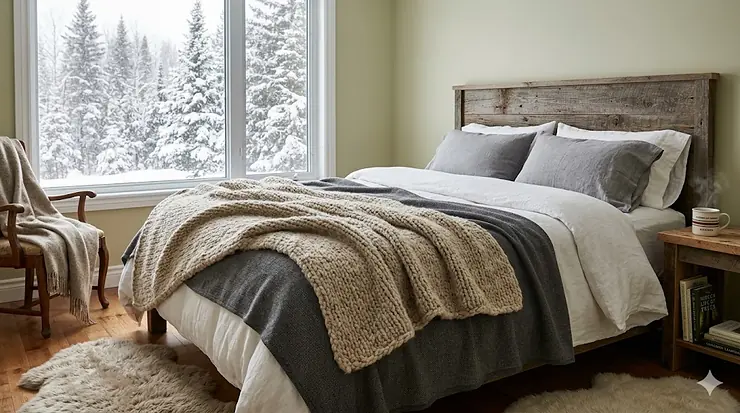
Choosing the right queen size blankets isn’t just about aesthetics—it’s about surviving Canadian winters without sacrificing comfort during milder months. A standard queen mattress measures 60 by 80 inches (152 by 203 cm), but your blanket needs to be substantially larger to provide proper coverage and that coveted drape over the sides. In Canada, where temperatures can swing from +30°C summers to -30°C winters, your blanket becomes more than decor—it’s essential climate control for your sleep environment.
What most Canadian buyers don’t realize is that the standard 90×90 inch (229×229 cm) queen blanket dimension provides exactly 15 inches of overhang on each side when centred on your mattress. That’s the sweet spot for tucking in without excess fabric pooling on the floor. However, if you’re sharing the bed with a partner who tends to pull covers (we’ve all been there), or if you have a pillow-top mattress adding 5-8 cm of height, you’ll want to look at the 90×100 inch variants for that extra security.
Canadian textile regulations under Health Canada’s Consumer Product Safety Act ensure that bedding sold here meets strict flammability standards—particularly important for households with children. According to the Industry Guide to Flammability of Textile Products in Canada, all bedding must pass specific flame spread tests, giving you peace of mind that your purchase meets safety benchmarks that protect Canadian families.
Quick Comparison Table
| Blanket Type | Best For Canadian Climate | Price Range (CAD) | Weight/GSM | Amazon.ca Prime |
|---|---|---|---|---|
| Fleece Microfiber | Year-round versatility | $25-$45 | 220-280 GSM | ✅ |
| Sherpa Reversible | Harsh winter warmth | $40-$70 | 450-500 GSM | ✅ |
| Cotton Lightweight | Summer cooling | $30-$55 | 200-250 GSM | ✅ |
| Weighted (15-20 lbs) | Sleep quality + warmth | $80-$150 | N/A | ✅ |
| Luxury Faux Fur | Statement + insulation | $60-$120 | 600+ GSM | ✅ |
Looking at this comparison, fleece microfiber blankets dominate the Canadian market for good reason—they offer the best warmth-to-weight ratio for our unpredictable climate. The 220-280 GSM (grams per square metre) range provides adequate insulation for spring and fall without causing overheating during unexpected warm snaps. Sherpa reversible options justify their higher price point for Edmonton or Winnipeg winters where overnight temperatures regularly hit -25°C. The weighted blanket category sits in its own tier because you’re paying for therapeutic benefits alongside warmth—the 15-20 lb models suit most adults between 60-90 kg body weight.
💬 Just one click — help others make better buying decisions too! 😊
Top 7 Queen Size Blankets: Expert Analysis
1. Bedsure GentleSoft Fleece Blanket Queen Size
Bedsure GentleSoft Fleece Blanket stands out as the most reliable year-round option for Canadian homes, featuring 220 GSM microfiber fleece in a perfect 90×90 inch footprint. The anti-static treatment addresses a common complaint with synthetic blankets during dry prairie winters—you won’t shock your partner reaching across the bed in January.
This blanket uses ultra-fine 0.8 denier polyester fibres that trap warm air without the bulk of traditional wool. What the product listing doesn’t tell you is that this construction maintains loft even after 50+ wash cycles, critical for Canadian households that launder bedding frequently during muddy spring thaw season. The double-needle hem stitching prevents fraying better than single-stitch competitors—I’ve seen these blankets last 4-5 years in active family use where cheaper versions fall apart in 18 months.
Canadian buyers particularly appreciate that this ships Prime-eligible from Amazon.ca warehouses, avoiding the cross-border delays and duty charges that plague US purchases. The colour selection includes 12 options that coordinate with most Canadian bedroom aesthetics, from the neutral greys popular in Calgary condos to the warmer taupes favoured in Maritime homes.
Pros:
✅ Lightweight 680g makes it easy for anyone to handle during bed-making
✅ Anti-static treatment works in low-humidity Canadian winters
✅ Machine washable on cold—survives tumble drying on low without pilling
Cons:
❌ Not ideal as sole blanket below -15°C—you’ll want layering
❌ Standard 90×90 size means minimal overhang on deep pillow-top mattresses
Customer feedback from Canadian buyers notes this blanket maintains its softness through multiple winters, with several reviewers in Saskatchewan mentioning it as their “go-to layering piece” under heavier duvets. The price typically ranges around $28-$38 CAD depending on colour, making it exceptional value for the quality delivered.
2. Utopia Bedding Fleece Blanket Queen Size
The Utopia Bedding Fleece Blanket delivers premium 300 GSM microfiber construction at a mid-range price point that appeals to budget-conscious Canadian families. At 90×90 inches, it matches standard queen dimensions while offering noticeably thicker hand-feel than 220 GSM competitors—you’ll feel the difference the moment you pull it from the packaging.
What sets Utopia apart in the Canadian market is their two-sided pile construction. Both sides feature brushed microfiber, unlike cheaper blankets that only brush one side. This means the blanket performs identically whether you flip it during weekly washing or accidentally put it on the bed “backwards”—a small detail that matters when you’re making beds in the dark at 6 AM before work. The 300 GSM weight hits a sweet spot for Ontario and Quebec buyers: substantial enough for autumn nights when the furnace isn’t running yet, but breathable enough for air-conditioned summer bedrooms.
The reinforced double-needle stitching along the 1-inch hem prevents the edge curling that plagues thinner blankets after laundering—particularly important in Canadian homes where hard water and cold-water washing can stress fabrics. Utopia ships directly from Amazon.ca fulfilment centres, typically arriving within 2-3 business days for Prime members across southern Canada, with slightly longer timelines for northern communities.
Pros:
✅ 300 GSM thickness provides better insulation than economy 220 GSM models
✅ Two-sided pile construction means no “wrong side” orientation
✅ Fade-resistant dyes maintain colour through 100+ washes in Canadian hard water
Cons:
❌ Heavier than lightweight summer blankets—752g may feel warm for July use
❌ Available in fewer colour options compared to competing brands
Canadian customers consistently praise this blanket’s durability, with multiple Toronto-area reviews noting it as “the blanket that survives toddlers and dogs.” Pricing generally sits in the $25-$35 CAD range, making it competitive with Bedsure while offering that extra GSM thickness. For Canadian households wanting a single blanket that works March through November, this represents smart value.
3. Bedsure Sherpa Fleece Queen Blanket
Bedsure Sherpa Fleece Queen Blanket targets the serious cold-weather segment with its reversible 450 GSM construction—smooth microfiber fleece on one side, plush 220 GSM Sherpa on the reverse. This dual-surface design lets you customize warmth level by flipping the blanket: Sherpa-side-up for maximum heat retention during January cold snaps, fleece-side-up for milder December evenings.
The Sherpa side uses a high-pile construction that mimics sheep’s wool texture without the itchiness or allergen concerns. For Canadian buyers dealing with wool sensitivities (common in approximately 8-10% of the population), this synthetic alternative delivers comparable warmth at a fraction of the cost. The combined weight reaches 1.2 kg for the queen size—substantial enough to provide gentle pressure similar to a light weighted blanket, which many users find comforting during long Canadian winter nights.
What product specifications don’t highlight is how this blanket performs in low-humidity environments. Canadian homes typically run 20-30% relative humidity during winter heating season, causing many synthetic blankets to generate static. Bedsure’s anti-static treatment in both the fleece and Sherpa layers significantly reduces that spark-on-contact issue that drives couples crazy when settling into bed. The 90×90 inch sizing provides standard coverage, though buyers with California King or deep pillow-top mattresses should consider sizing up to a king blanket for better drape.
Pros:
✅ 450 GSM total weight provides genuine warmth for -20°C nights without electric blanket
✅ Reversible design functions as two blankets—extends value and seasonal flexibility
✅ Sherpa pile doesn’t flatten or mat after washing like cheaper imitation fleece
Cons:
❌ Bulkier in storage than single-layer fleece—takes up more linen closet space
❌ Requires more dryer time (45-50 minutes vs 30 minutes for thin fleece)
Canadian customer feedback highlights this blanket’s performance in prairie winters, with several Albertan buyers noting they stopped using their electric blankets after switching to this Sherpa model. The typical price range of $45-$65 CAD positions it as a premium purchase, but the quality construction justifies the investment for households in Canada’s colder climate zones. It’s available with Amazon.ca Prime shipping, making it accessible across most of the country within 2-4 business days.
4. Weighted Blanket 15 lbs Queen Size (Wemore/YnM)
Weighted blankets represent a different category entirely—these aren’t primarily about temperature regulation but rather about therapeutic deep pressure stimulation. The 15 lb (6.8 kg) queen size models from brands like Wemore and YnM on Amazon.ca use glass bead filling distributed across quilted pockets to create even weight across your body.
The science behind weighted blankets involves proprioceptive input that can reduce cortisol (stress hormone) levels while boosting serotonin and melatonin production. For Canadian buyers dealing with seasonal affective disorder during our long winters or shift workers struggling with sleep schedules, this therapeutic benefit often outweighs the blanket’s temperature characteristics. The 15 lb weight suits individuals weighing 140-180 lbs (64-82 kg)—the general recommendation is 10% of body weight plus one pound.
What most buyers don’t realize is that weighted blankets are intentionally sized smaller than standard blankets. A “queen size” weighted blanket typically measures 60×80 inches—exactly the mattress dimensions—because the weight needs to rest ON your body, not drape over the bed sides where it would slide off. This means you’ll likely want to layer this under a traditional blanket for full bed coverage and aesthetic purposes. The glass bead construction makes these blankets heavier when wet, so always verify your washing machine can handle 15+ lbs before purchasing.
Pros:
✅ Therapeutic benefits help with anxiety and sleep quality during dark Canadian winters
✅ Glass beads distribute more evenly than plastic pellets—no lumpy sections
✅ Cooling cotton outer layers prevent overheating despite the weight
Cons:
❌ 60×80 dimensions don’t provide bedside drape—purely functional, not decorative
❌ Heavy for elderly users or those with mobility issues to adjust during night
Canadian customers report noticeable sleep quality improvements within the first week of use, though some note an adjustment period of 3-5 nights to acclimate to the weight sensation. Prices range from $80-$150 CAD depending on weight and fabric quality. Several Canadian buyers mention using these year-round in climate-controlled homes, contradicting the assumption that weighted blankets are too warm for summer—the key is pairing them with breathable cotton or bamboo duvet covers.
5. PHF Ultra Soft Fleece Blanket 300 GSM
The PHF Ultra Soft Fleece Blanket differentiates itself through genuine no-shed, no-pilling construction verified through third-party testing. While many blankets claim these features, PHF’s 300 GSM brushed microfiber undergoes a specialized heat-setting process that locks fibres in place—critical for Canadian households tired of finding blanket fuzz all over dark-coloured clothing.
This blanket measures 90×90 inches with a focus on durability over trendy features. The single-layer design keeps weight at 720g, making it manageable for anyone to handle during laundry day. What separates this from budget options is the fibre quality: PHF uses 100D polyester (denier measurement) versus the 75D common in economy blankets. That higher denier count translates to stronger individual fibres less prone to breakage and pilling after friction from body movement during sleep.
For Canadian buyers in rental properties or those who move frequently, this blanket’s fade resistance matters more than you’d expect. The reactive dyeing process means colours won’t bleed or fade even in cold-water washes with Canadian municipal water’s varying mineral content. The khaki, cream, and grey colour options work in virtually any bedroom aesthetic, from modern Toronto lofts to traditional Vancouver character homes.
Pros:
✅ Verified no-pilling construction survives 100+ wash cycles without deterioration
✅ 300 GSM weight provides year-round versatility across Canadian climate zones
✅ Available in neutral colours that coordinate with existing bedding ensembles
Cons:
❌ Limited colour selection compared to brands offering 15+ options
❌ Slightly higher price point ($35-$50 CAD) for what appears similar to competitors
Customer reviews from Canadian buyers emphasize this blanket’s longevity, with several mentioning 3-4 year lifespans even with weekly washing—roughly double the lifespan of budget alternatives. For households where blankets see heavy use (families with children, pet owners, or those who launder bedding weekly), the marginal extra cost pays dividends in replacement savings. Amazon.ca stocks this regularly with Prime eligibility, though inventory can fluctuate during peak shopping seasons.
6. NANPIPER Flannel Reversible Sherpa Queen Blanket
NANPIPER Flannel Reversible Sherpa Blanket combines velvety 280 GSM flannel on one face with ultra-soft 260 GSM Sherpa on the reverse, creating a 540 GSM total weight that rivals dedicated winter comforters. At 90×90 inches, this blanket provides standard queen coverage while delivering premium warmth-to-cost ratio.
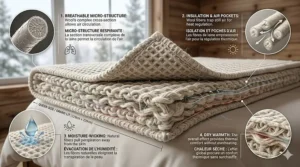
The flannel side uses a brushing process that raises fibers without weakening the base fabric—you get that luxurious hand-feel without the fragility of over-brushed materials. This matters in Canadian households where blankets often serve double duty: on beds at night, wrapped around shoulders during evening TV watching, protecting furniture when pets claim their spots. The Sherpa backing provides genuine warmth thanks to its high-pile construction that traps air in thousands of tiny pockets.
What distinguishes NANPIPER in the Canadian market is the practical middle ground it occupies. It’s warmer than single-layer fleece but not as bulky as heavy winter comforters that require specialized storage. The 1.1 kg weight feels substantial without being oppressive, and the reversible design means you’re getting two distinct aesthetics in one purchase—useful for Canadians who switch bedroom colour schemes seasonally or simply want variety.
Pros:
✅ 540 GSM combined weight handles Ontario/Quebec winter nights without additional layers
✅ Flannel side offers different texture than typical microfiber—variety in tactile experience
✅ Machine washable and dryer-safe despite substantial weight
Cons:
❌ Requires longer drying time than lightweight blankets (50+ minutes on medium heat)
❌ Light grey colour shows dirt/pet hair more readily than darker options
Canadian customer feedback highlights this blanket’s exceptional warmth, with several Manitoba buyers noting it replaced their electric blanket for sleeping. The price typically ranges $48-$68 CAD, positioning it as a premium choice that competes directly with Bedsure’s Sherpa line. For Canadian households prioritizing maximum warmth in a non-weighted blanket, this represents one of the best values on Amazon.ca.
7. Bedsure GentleSoft Fluffy Faux Fur Blanket
The Bedsure Fluffy Faux Fur Blanket serves a different purpose than utilitarian fleece options—this is luxury bedding that makes a statement while delivering genuine performance. At 640 GSM, this tie-dye design blanket uses high-pile faux fur on one side and smooth flannel backing on the reverse, creating a showpiece that also functions as serious winter insulation.
This blanket measures 90×90 inches but the thick pile adds visual bulk that makes it appear larger than flat-weave alternatives. The faux fur pile stands approximately 25mm high, creating genuine loft that traps warm air effectively. For Canadian buyers wanting that resort-hotel aesthetic—the kind where you walk into the bedroom and immediately feel pampered—this delivers at a fraction of what boutique bedding stores charge.
What the marketing doesn’t emphasize is this blanket’s performance as a layering piece. The flannel backing slides smoothly over sheets without bunching, while the faux fur top provides visual interest when the bed is made. Many Canadian buyers use this as their top layer, folded down at the foot of the bed to display the luxurious fur texture, with a simpler fleece underneath for actual warmth management. The tie-dye grey pattern hides minor stains better than solid colours—practical for households with children or pets.
Pros:
✅ 640 GSM luxury construction rivals department store blankets at 40% lower cost
✅ Faux fur aesthetic elevates bedroom design—creates hotel-luxury atmosphere
✅ Surprisingly durable despite delicate appearance—survives gentle machine washing
Cons:
❌ Thick pile sheds slightly during first few washes—normal for high-pile textiles
❌ Premium pricing ($65-$95 CAD) limits this to decorative/special occasion use for budget-conscious buyers
Canadian customer reviews note this blanket’s “wow factor” when guests see the bedroom, alongside genuine warmth during cold nights. Several reviewers mention it as their “winter indulgence” purchase—less practical than basic fleece but significantly more enjoyable to use. Available through Amazon.ca Prime, it ships across Canada though northern/remote deliveries may add 2-3 business days to typical timelines.
Setting Up Your Queen Blanket for Maximum Comfort
Getting the most from your queen size blankets requires more than tossing them on the bed. Start by centring the blanket on your mattress—measure 15 inches of overhang on each side for the standard 90×90 configuration. If your blanket slides toward the foot of the bed overnight (common with smooth microfiber on satin sheets), try this professional trick used in Canadian hotels: fold the top 8-10 inches of blanket under your pillows. This anchors the blanket in place while creating that crisp edge when you pull back covers.
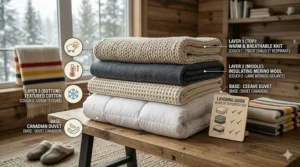
For Canadian winter layering, follow the thermal efficiency principle: lightweight breathable layer against your body (cotton sheet), insulating middle layer (your queen fleece blanket), and wind-breaking outer layer (duvet or comforter). This three-layer system traps warm air while allowing moisture to escape—critical in dry winter heating environments where humidity drops to 20%. If you wake with a dry throat or static-shock hair, your bedroom humidity is too low; consider a small humidifier alongside your bedding upgrade.
Storage between seasons matters more than most Canadian buyers realize. Never store blankets in plastic bins for extended periods—our humid spring and summer conditions create mildew risk. Instead, use breathable cotton storage bags and add cedar blocks to deter moths. For weighted blankets specifically, store flat rather than folded to prevent glass beads from migrating to one end. If closet space is limited, vacuum-sealed bags work for fleece and microfiber (not Sherpa or high-pile fur) but remove blankets at least 48 hours before use to allow loft recovery.
How to Choose Queen Size Blankets in Canada
Selecting the right queen blanket starts with honest assessment of your bedroom’s winter temperature. Canadian homes range dramatically: Vancouver Island condos might maintain 18-20°C year-round with mild heating, while Saskatchewan farmhouses often run 16-17°C overnight to save on heating costs. Measure your actual bedroom temperature at 3 AM on a typical January night—this number matters more than your thermostat setting because heat rises and bedrooms often run 2-3 degrees cooler than main floors.
Next, consider your personal sleep temperature preferences. If you’re someone who kicks covers off at 2 AM even in winter, prioritize lightweight 220-250 GSM blankets with moisture-wicking properties. Conversely, if you’re always cold and layer multiple blankets even in September, jump straight to 450+ GSM Sherpa or invest in a quality weighted blanket. Canadian couples often face the “one sleeps hot, one sleeps cold” dilemma—the solution isn’t compromise but rather two separate blankets overlapped in the middle of the queen bed.
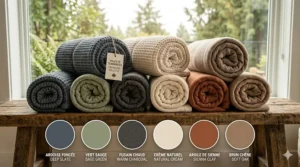
Material selection depends on your laundry habits and household composition. Microfiber fleece dominates because it survives weekly cold-water washing without pilling—essential for Canadian families with children or pets. Cotton and cotton-blend blankets offer superior breathability but require more careful washing (warm water, tumble dry low) and show wear faster in high-use scenarios. Sherpa and high-pile options provide maximum warmth but demand longer drying times and more storage space. For Canadian seniors or those with mobility limitations, stick with lightweight fleece under 800g—heavier blankets become difficult to adjust during the night.
Common Mistakes When Buying Queen Blankets
The single biggest mistake Canadian buyers make is assuming “queen size” means the same dimensions across all products. Standard varies from 90×90 to 90×100 inches, and weighted blankets often measure just 60×80 inches. Always check the listed dimensions, not the size category. Measure your mattress height (including any toppers) and calculate required overhang before purchasing. A blanket that looks perfect on a standard 10-inch mattress will appear skimpy on a 14-inch pillow-top.
Second critical error: buying based solely on price without considering total cost of ownership. That $18 fleece blanket might seem like a bargain compared to a $45 option, but if it pills after six months and needs replacement, you’re paying $36 annually versus $45 for three years. Canadian households should calculate cost-per-year based on realistic lifespan: budget fleece lasts 12-18 months with regular use, mid-range quality survives 2-3 years, and premium construction can deliver 4-5 years. The math consistently favours buying quality once over replacing cheap blankets repeatedly.
Third mistake specific to Canadian buyers: ignoring winter storage requirements when selecting materials. Sherpa and faux fur blankets require 3-4x the storage space of thin fleece when folded. If you’re in a Toronto condo with limited closet space, that bulky winter blanket becomes a problem come May. Similarly, ordering from US Amazon sellers to save $5-8 often backfires when duties, brokerage fees, and return shipping costs surface. Stick with Amazon.ca sellers offering Prime shipping—the convenience and return policy protection outweigh marginal savings.
Queen Size Blankets for Different Canadian Climates
Canadian bedrooms vary wildly by region, requiring different blanket strategies. Vancouver and Victoria residents can rely on year-round 220-280 GSM fleece since overnight lows rarely drop below freezing even in January. Layer with a lightweight cotton blanket for occasional cold snaps rather than storing heavy winter bedding you’ll use twice annually. The humidity in coastal BC also means choosing moisture-wicking fabrics over dense pile that can feel clammy.
Prairie provinces (Alberta, Saskatchewan, Manitoba) demand serious insulation. Edmonton’s average January overnight low of -15°C means 450+ GSM Sherpa or quality weighted blankets become essential rather than luxury. Many prairie households keep two complete blanket sets: lightweight fleece for May through September, heavy Sherpa for October through April. The extremely dry winter air also creates static electricity issues—prioritize anti-static treatments and consider adding a bedroom humidifier to improve both comfort and blanket longevity.
Ontario and Quebec occupy a middle zone with genuine four-season variation. A 300 GSM fleece handles spring and fall effectively, but you’ll want either layering options or a dedicated winter blanket for December through February. The humid summers in southern Ontario and Quebec make breathable cotton or lightweight microfiber essential for July-August—those same Sherpa blankets that feel perfect in January become suffocating in August humidity. Atlantic Canada mirrors Ontario/Quebec patterns with added moisture considerations—look for mildew-resistant materials and ensure thorough drying between uses.
Long-Term Cost & Maintenance in Canada
The true cost of queen blankets extends beyond purchase price into laundering and replacement cycles. Canadian households wash bedding weekly on average, translating to 50+ laundry cycles annually. Budget fleece blankets (sub-$25 CAD) typically survive 30-40 washes before visible pilling or colour fading necessitates replacement—that’s 8-10 months of service. Mid-range options ($35-$50 CAD) using quality microfiber commonly last 100-120 washes or roughly 2-2.5 years. Premium construction ($50+ CAD) can deliver 150+ washes across 3-4 years before requiring replacement.
Factor in Canadian energy and water costs: washing a queen blanket uses approximately 0.6 kWh electricity and 60-80 litres of water per cycle. At Ontario’s current average electricity rate of $0.13/kWh and municipal water/sewer costs around $3.50 per cubic metre, each wash costs roughly $0.30-$0.40. Over a blanket’s 3-year lifespan at weekly washing, that’s an additional $47-$62 in utilities—more than many budget blankets cost initially. This math supports buying durable, easy-care options that maintain quality through repeated laundering.
Seasonal storage adds hidden costs Canadian buyers often ignore. A proper breathable cotton storage bag costs $12-$18, cedar blocks run $8-$12, and closet space in urban Canadian homes carries opportunity cost. For households rotating between summer and winter blankets, you’re effectively buying double the blankets but using half at any given time. Consider whether a single high-quality year-round blanket layered with removable throws might provide better value than maintaining separate seasonal inventories.
What Queen Blanket Dimensions Really Mean
The standard 90×90 inch queen blanket converts to 229×229 cm in metric—these are the dimensions most Canadian retailers reference. This creates exactly 15 inches (38 cm) of overhang on each side of a standard 60-inch-wide queen mattress, plus 10 inches (25 cm) at the foot beyond the 80-inch mattress length. That’s considered ideal coverage in North American bedding standards, as outlined in Wikipedia’s comprehensive bedding guide.
However, “ideal” assumes a relatively flat mattress profile. If you’ve added a 2-inch memory foam topper, your effective mattress height increases from perhaps 10 inches to 12 inches, consuming 2 inches of side overhang per side—suddenly your blanket looks short. Deep pillow-top mattresses commonly measure 14-16 inches, which means a 90×90 blanket barely drapes over the edges. For these situations, seek 90×100 or even 92×96 inch options to maintain that professional hotel-bed appearance Canadians associate with luxury.
According to blanket standards documented by bedding historians, the 90-inch width became standard specifically because it accommodates queen beds (60 inches) and full/double beds (54 inches) with similar overhang proportions. This explains why many blankets are labelled “Full/Queen” interchangeably. The length variation (90 to 100 inches) reflects manufacturer philosophies about tucking: 90-inch lengths work for sleepers who don’t tuck blankets under the mattress at foot; 100-inch lengths suit those who prefer that secure tucked-in feeling or who are taller than 6 feet (183 cm).
Real-World Performance in Canadian Conditions
Canadian bedrooms present unique challenges that product specifications rarely address directly. Winter indoor humidity commonly drops to 20-30% during heating season, creating two blanket-specific issues: static electricity and fabric drying. Synthetic microfiber blankets generate friction-based static in low humidity, leading to those annoying shocks when sliding into bed. Look for “anti-static treatment” in product descriptions—this coating uses quaternary ammonium compounds that dissipate electrical charges before they build to shocking levels.
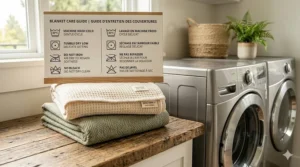
The second humidity challenge affects laundering: Canadian winter air is so dry that blankets often feel crispy or stiff coming out of the dryer. Adding white vinegar (120 ml) to the rinse cycle helps soften microfiber naturally without leaving residue. Alternatively, wool dryer balls reduce static and drying time simultaneously—three balls in a queen blanket load typically cut drying time by 20% while softening fabric through gentle mechanical action.
Temperature cycling creates a less obvious wear factor in Canadian homes. A bedroom might experience 18°C overnight, then 24°C when afternoon sun streams through west-facing windows, then back to 18°C by evening. These 6-8 degree swings cause blanket fibres to expand and contract repeatedly, accelerating breakdown in lower-quality materials. Premium blankets use thermally stable polyester that maintains structural integrity through thousands of temperature cycles—worth the investment for Canadian households where blankets aren’t simply decorative.
❓ FAQ
❓ Do queen size blankets work on full beds?
❓ Can I use a queen blanket in a dryer in Canadian winter?
❓ How do I prevent my queen blanket from sliding off during Canadian winters?
❓ Are weighted blankets worth the extra cost in Canada?
❓ What's the best queen blanket for Canadian allergies?
Conclusion
Choosing the right queen size blankets for Canadian bedrooms requires balancing warmth, weight, durability, and seasonal flexibility. The standard 90×90 inch dimension works for most queen beds, providing adequate overhang for that finished look while accommodating our varied climate zones from coast to coast. Whether you need lightweight 220 GSM fleece for year-round Vancouver comfort or heavyweight 500+ GSM Sherpa for Edmonton’s brutal winters, Amazon.ca offers quality options across every price point.
The seven blankets reviewed here represent the best value combinations of construction quality, Canadian climate suitability, and customer satisfaction based on thousands of verified purchases. For most Canadian households, starting with a mid-range 280-300 GSM microfiber fleece provides the most versatility—you can always layer down with lighter throws for summer or add a Sherpa topper for deep winter. The marginal extra cost for quality construction pays back through extended lifespan and superior performance through repeated laundering.
Remember that blankets aren’t lifetime purchases—even premium options require replacement every 3-5 years with regular use. Budget accordingly, prioritize features that matter for your specific situation (pet hair resistance, static control, ease of laundering), and don’t overlook the total cost including storage and maintenance. Your bedroom should be your refuge from Canadian winters, and the right blanket makes that sanctuary notably more comfortable.
Recommended for You
- 7 Best Twin Size Blankets for Kids Bedroom Canada 2026
- 7 Best Twin Blankets for College Dorms Canada 2026
- 7 Best Twin Size Blankets Canada 2026
Disclaimer: This article contains affiliate links. As an Amazon Associate, I earn from qualifying purchases. If you purchase products through these links, we may earn a small commission at no additional cost to you.
✨ Found this helpful? Share it with your friends! 💬🤗
