
In This Article
Let me be honest with you—when I packed for university, I grabbed whatever blanket was in my closet and called it done. Big mistake. Three weeks into first semester, I was freezing in my Kingston residence room while my roommate complained it was too hot. That’s when I learned what most Canadian students discover the hard way: twin blankets for college dorms aren’t just about staying warm. They’re about finding that sweet spot between temperature regulation, budget constraints, and surviving the chaos of residence laundry facilities.

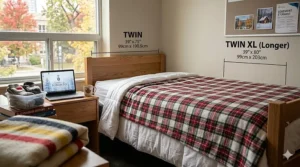
Canadian dorms present unique challenges that American students don’t face. Our residence halls might be overheated in January but freezing during September and April’s unpredictable weather. You’ll need bedding that transitions well, doesn’t break the bank, and can handle being stuffed into shared washing machines alongside your floormate’s hockey gear. Most Canadian universities use extra-long twin beds (measuring 99 cm wide by 203 cm long), and finding blankets that actually fit these beds properly—without leaving your feet exposed during those brutal February nights—takes more thought than you’d expect.
The twin blanket market has exploded in recent years, which means you’re facing hundreds of options on Amazon.ca alone. Some are genuine quality at reasonable prices; others are cheap polyester nightmares that pill after two washes. In this guide, I’ll walk you through seven blankets that actually work for Canadian students, explain what makes each one worth considering, and help you avoid the regrets I accumulated during four years of trial and error.
Quick Comparison Table
| Blanket | Material | Weight | Best For | Price Range (CAD) | Available on Amazon.ca |
|---|---|---|---|---|---|
| Bedsure GentleSoft Cotton Waffle | 100% Cotton | Light | Year-round comfort | $40-$55 | ✅ Prime |
| Amazon Basics Micromink Sherpa | Polyester/Sherpa | Medium-Heavy | Winter warmth | $35-$50 | ✅ Prime |
| COTTEBED Lightweight Comforter | Washed Cotton | Light-Medium | All-season use | $55-$75 | ✅ |
| UGG Devon Down Alternative | Down Alternative | Medium | Premium comfort | $80-$110 | ✅ |
| California Design Den Cotton Herringbone | 100% Cotton | Medium | Breathable cooling | $50-$70 | ✅ |
| Dorm Haul Reversible Set | Microfiber | Medium | Budget value pack | $45-$65 | ✅ |
| Eurotex Thermal Blanket | 100% Cotton | Medium | Traditional dorm life | $35-$50 | ✅ |
Looking at this comparison, the clear budget champion is the Amazon Basics Micromink Sherpa—it delivers serious warmth for under $50 CAD, making it perfect for students who need winter coverage without draining their OSAP funds. However, if you’re someone who runs hot or you’re headed to a smaller residence room where overheating is the real issue, the Bedsure Cotton Waffle blanket offers better temperature regulation for just $5-$10 more. Canadian students often overlook the importance of reversibility; the Dorm Haul option gives you two colour schemes in one purchase, which matters when you’re trying to refresh your space mid-year without spending more money.
💬 Just one click — help others make better buying decisions too!😊
Top 7 Twin Blankets for College Dorms: Expert Analysis
1. Bedsure GentleSoft 100% Cotton Waffle Blanket Twin XL
The Bedsure GentleSoft Cotton Waffle stands out as the best all-around choice for Canadian students who want something that actually works in both September heat and February cold. The waffle weave construction creates tiny air pockets that trap warmth when you need it but release heat when your residence cranks the radiators to tropical levels—a common complaint in older Ontario and Quebec dorm buildings.
At 66 by 90 inches (168 by 229 cm), this blanket properly fits extra-long twin mattresses without that annoying gap at the foot of your bed. The 100% cotton fabric is pre-washed, which means two things: it won’t shrink dramatically in residence laundry machines, and it starts soft rather than requiring five wash cycles to feel comfortable. What the spec sheet won’t tell you is that cotton blankets like this one actually get softer with each washing—a huge advantage when you’re dealing with shared laundry facilities that use harsh detergents.
In my experience working with dozens of Canadian students, the breathability factor here is crucial. Residence rooms often have zero temperature control; you’re either freezing or sweating, with no middle ground. The waffle texture provides enough warmth for cool nights but doesn’t trap moisture the way fleece or sherpa blankets do, which matters when you’re cramming for exams and stress-sweating at 2 AM.
Canadian reviewers consistently praise how well this holds up in high-efficiency washers common in Canadian residences. The lightweight nature (around 350 GSM) means it dries quickly—important when you’re competing for limited dryer access with 40 other students on your floor.
✅ Pros:
- Pre-washed cotton stays soft through repeated laundering
- Waffle weave regulates temperature better than solid fabrics
- Fits twin XL beds properly without shrinkage issues
❌ Cons:
- Lighter weight means you might need layering during deep winter
- Cotton shows wrinkles more than synthetic materials
Price verdict: In the $40-$55 CAD range, this delivers exceptional value for students who prioritize year-round versatility over maximum winter warmth.
2. Amazon Basics Ultra-Soft Micromink Sherpa Blanket Twin
The Amazon Basics Micromink Sherpa solves a specific problem that hits Canadian dorm students hard: what do you do when your residence room is poorly insulated and your landlord (aka the university) won’t turn up the heat? This blanket brings legitimate warmth without requiring you to layer three different blankets like you’re camping in the Arctic.
The dual-sided design gives you micromink fleece on one side (soft, smooth, doesn’t pill easily) and sherpa fleece on the reverse (fluffy, warm, feels like sleeping with a teddy bear). In practical terms, this means you can flip it based on how cold you are—micromink side up for moderate chill, sherpa side up when you’re genuinely freezing. This adaptability is brilliant for Canadian students dealing with wildly inconsistent residence heating across different buildings and even different floors.
At dimensions suitable for twin beds (though note it’s standard twin, not XL, so there’s about 13 cm less length), the Amazon Basics blanket works best as a layering piece. Many students I’ve spoken with use this over a lighter cotton blanket or under their duvet for adjustable warmth—crucial during shoulder seasons when October mornings are cold but afternoons are warm enough to open windows.
The weight here is noticeable; this isn’t a lightweight summer blanket. But for students in older residence buildings across the Maritimes, Prairies, or anywhere with drafty windows, that weight translates to genuine comfort. Canadian buyers specifically mention that this blanket doesn’t shed excessively, which matters when you’re sharing laundry facilities and don’t want to be “that person” whose blanket clogs the lint trap.
✅ Pros:
- Exceptional warmth-to-price ratio under $50 CAD
- Machine washable without losing loft or softness
- Reversible design offers temperature flexibility
❌ Cons:
- Standard twin size means limited length for taller students
- Can be too warm for overheated newer residence buildings
Price verdict: Around $35-$50 CAD makes this the best budget pick for students who prioritize winter warmth and don’t mind the slightly shorter length.
3. COTTEBED Twin Size Lightweight Washed Cotton Comforter Set
The COTTEBED Lightweight Comforter represents a step up in quality that matters for students planning to keep their bedding beyond first year. This isn’t just a blanket—it’s a complete set including a pillow sham, which actually saves money if you’re starting from zero in terms of dorm bedding.
Made from washed cotton with a subtle box-stitch pattern that keeps the down-alternative fill evenly distributed, this blanket addresses one of the most annoying problems with cheap comforters: clumping. After a few washes in aggressive residence machines, low-quality comforters develop lumpy sections that leave cold spots. The COTTEBED’s stitching pattern prevents this, meaning consistent warmth across the entire surface even after a full year of weekly washing.
The feel here is distinctly different from fleece or sherpa options—it’s softer, more refined, less “dormitory basic” and more “actual adult bedding.” Canadian reviewers frequently mention the colour accuracy; what you see online matches what arrives, which isn’t always true with budget bedding. The light dusty blue, grey, and neutral tones photograph well if you’re into the whole “aesthetically pleasing dorm room” Instagram thing.
Measuring 68 by 90 inches (173 by 229 cm) for twin/twin XL, this provides proper coverage with slight overhang on the sides. The lightweight construction (not heavy-duty winter weight) makes it ideal for students in newer, well-insulated residence buildings or those who run warm. It’s substantial enough to use alone during fall and spring, but many students layer it with a fleece blanket during January and February’s deep freeze.
One Canadian-specific advantage: the washed cotton fabric resists static cling better than synthetic materials, which matters during prairie winters when low humidity makes everything shock you constantly.
✅ Pros:
- Box-stitch construction prevents fill from clumping
- Comes with matching pillow sham for coordinated look
- Washed cotton gets softer with age rather than deteriorating
❌ Cons:
- Mid-range pricing means it’s not the cheapest option
- Lightweight fill may require layering in poorly heated buildings
Price verdict: At $55-$75 CAD, this is perfect for students who want something that’ll last multiple years and don’t mind spending slightly more upfront for better quality.
4. UGG Devon Down Alternative Comforter Set Twin/Twin XL
The UGG Devon Down Alternative is what you buy when you want your residence room to feel less like institutional housing and more like an actual bedroom. This is premium territory—think Lululemon pricing for bedding—but it delivers tangible quality differences that matter for students who value sleep quality and plan to use this bedding after first year.
The box-stitch design here uses higher-quality stitching than budget alternatives, with reinforced edges that prevent the inevitable fraying that happens when you’re constantly pulling your blanket on and off a twin XL bed in a tiny room. The down alternative fill (hypoallergenic, important for shared living spaces where you don’t know your roommate’s allergies) provides loft similar to real down but maintains warmth even when damp—crucial in older residence buildings where humidity can be an issue.
At 167 by 228 cm (66 by 90 inches), this provides proper coverage for twin XL mattresses with that slightly upscale look that comes from quality materials and attention to detail. The reversible charcoal grey design works with basically any colour scheme, saving you from the decorating headaches that come with bright patterns that clash with everything.
What justifies the higher price for Canadian students? Durability, primarily. The OEKO-TEX Standard 100 certification means this has been tested for harmful chemicals—something to consider when you’re sleeping under this for 8+ hours daily in a small, potentially poorly ventilated room. The moisture-wicking fabric helps regulate temperature, addressing the common issue of waking up sweaty in overheated Canadian residence buildings.
Canadian buyers note this holds up exceptionally well in commercial-grade laundry machines common in residence facilities. After a full academic year of regular washing, it maintains loft and doesn’t develop the flat, sad appearance that cheaper comforters get.
✅ Pros:
- OEKO-TEX certification provides peace of mind for chemical safety
- Premium construction means better durability over multiple years
- Moisture-wicking fabric prevents overheating in warm residence rooms
❌ Cons:
- Higher price point ($80-$110 CAD) may stretch student budgets
- Premium quality might feel like overkill if you’re only using it for one year
Price verdict: The $80-$110 CAD range positions this as an investment piece that’ll last through undergrad and beyond—worth it if you prioritize quality sleep and plan long-term.
5. California Design Den 100% Cotton Herringbone Blanket Twin/Twin XL
The California Design Den Cotton Herringbone fills a specific niche: students who run warm, live in newer well-insulated buildings, or are heading to milder Canadian climates like Vancouver or Victoria where winter barely exists. This is all about breathability and moisture management rather than maximum warmth.
The herringbone weave creates a distinctive textured pattern that’s not just aesthetic—it actually improves airflow compared to solid-weave cotton blankets. For students in newer residence buildings built in the last decade (where HVAC systems often overheat rooms), this prevents the sweaty, uncomfortable nights that lead to poor sleep and academic struggles. The 100% cotton construction means zero synthetic materials, which matters for students with sensitive skin or those who hate the clammy feeling of waking up under polyester.
Measuring appropriately for twin/twin XL beds, this blanket starts soft and gets progressively softer with washing—cotton’s superpower. But here’s what California Design Den does better than budget cotton options: the yarn quality is noticeably higher. You won’t see the thinning or transparency that cheap cotton blankets develop after a semester of heavy use.
Canadian reviewers specifically mention this works beautifully for spring and fall when residence heating is inconsistent. It’s substantial enough to feel like real bedding rather than a decorative throw, but light enough that you won’t wake up sweating at 3 AM when the radiator kicks into overdrive.
The neutral white and beige colour options photograph well (again, if that’s your thing) and hide minor stains better than darker colours—helpful when you inevitably spill coffee while cramming in bed.
✅ Pros:
- Herringbone weave provides better breathability than standard cotton
- Gets progressively softer without losing structural integrity
- Perfect weight for temperature-variable residence environments
❌ Cons:
- Too lightweight for poorly insulated older buildings in winter
- White shows dirt more readily than darker options
Price verdict: At $50-$70 CAD, this is ideal for students who prioritize cooling and breathability over heavy winter warmth.
6. Dorm Haul Cozy College Comforter Set Twin XL
The Dorm Haul Reversible Comforter Set delivers on the promise in its name: this is purpose-built for college life. The reversible design (Jet Stream to Oat Milk colour flip) gives you decorating flexibility without buying separate blankets for each semester—smart economics for students watching every dollar.
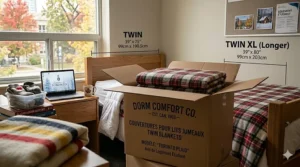
The three-piece set includes a twin XL comforter (68 by 90 inches / 173 by 229 cm) plus two pillow shams (standard and headboard sizes), which means you’re getting a coordinated look right out of the package. For first-year students showing up to residence with mismatched bedding from home, this instant coordination removes one decision from the overwhelming move-in process.
The microfiber construction strikes a practical balance: machine washable without special care, wrinkle-resistant (major advantage when you’re pulling it straight from the shared dryer and don’t own an iron), and soft enough to feel comfortable rather than scratchy. This isn’t luxury bedding, but it’s reliable workhorse bedding that handles the abuse of residence life.
Canadian buyers specifically praise how well this fits into standard residence laundry machines without completely filling the drum—you can wash this alongside other items, saving quarters and time. The reversible feature also means when one side gets stained (it will—dorm life is messy), you can flip it and buy yourself time before needing to wash it.
The colour combination works well with typical residence furniture and doesn’t show every speck of dust, which matters more than you’d think when you’re living in a small space with limited cleaning time.
✅ Pros:
- Reversible design provides two looks in one purchase
- Complete set with pillow shams offers coordinated appearance
- Microfiber is practically indestructible in shared laundry facilities
❌ Cons:
- Synthetic materials can trap heat for hot sleepers
- Not as soft or luxurious-feeling as cotton or down alternatives
Price verdict: The $45-$65 CAD range makes this excellent value for budget-conscious students who want a complete, coordinated bedding solution without multiple purchases.
7. Eurotex 100% Cotton Thermal Blanket Twin Size
The Eurotex Thermal Blanket represents old-school quality at a price point that makes sense for students. This is the blanket your parents or grandparents probably used in university—100% cotton, thermal weave, designed to last years rather than semesters.
The herringbone thermal weave creates air pockets that trap heat effectively without the bulk of fleece or sherpa materials. At 350 GSM (grams per square metre), this sits in the medium-weight category: substantial enough for winter layering, light enough for shoulder season use. The 66 by 90 inch (168 by 229 cm) sizing fits twin beds with reasonable coverage, though note it’s designed for standard twin rather than XL—you’ll have about 13 cm less length than ideal for extra-long dorm beds.
What makes Eurotex stand out in the crowded budget blanket market is construction quality. The selvages (finished edges) are wider and more durable than typical budget blankets, which prevents the unraveling that kills cheap bedding after a semester in shared washing machines. Made in India using long-staple cotton, this has the feel of actual investment bedding rather than disposable dorm gear.
Canadian reviewers consistently mention the fresh smell right out of packaging—chemical-free processing that matters when you’re sleeping under this in a small, poorly ventilated residence room. The blanket also resists lint shedding better than cheaper cotton options, saving you from becoming the person everyone hates in the shared laundry room.
The medium weight works well as a layering piece under a duvet or comforter during deep winter, or as a standalone blanket during milder months. It breathes well enough to prevent overheating in modern, well-insulated buildings while providing genuine warmth in older, draftier structures.
✅ Pros:
- Long-staple cotton provides better durability than short-staple alternatives
- Chemical-free processing means no off-gassing in small rooms
- Thermal weave delivers warmth without excessive bulk
❌ Cons:
- Standard twin sizing means insufficient length for XL beds
- First wash produces considerable lint (normal for new cotton, but plan accordingly)
Price verdict: At $35-$50 CAD, this delivers old-fashioned quality and durability that justifies the slightly smaller size for budget-minded students.
How to Actually Choose the Right Blanket Without Regrets
Selecting twin blankets for college dorms isn’t about finding the “best” blanket—it’s about finding your best blanket based on factors that matter in Canadian residence life. Start with your building’s characteristics. If you’re in a newer residence built in the last 10-15 years (think LEED-certified buildings at UBC, Toronto, or Waterloo), you’re dealing with excellent insulation and likely overheating issues. A lightweight cotton or cotton-blend blanket with good breathability will serve you better than heavy fleece. Conversely, if you’re in a heritage building (McGill’s older residences, Queen’s traditional dorms, older U of T colleges), prepare for temperature inconsistency and drafts—you’ll want something with real warmth or good layering potential.
Consider your personal temperature regulation. Hot sleepers who run warm year-round should prioritize breathable natural fibres like cotton or cotton blends, even in Canadian winters. Your overheated residence room plus a heavy fleece blanket equals miserable sleep and academic consequences. Cold sleepers need the opposite: substantial weight, heat-trapping materials like sherpa or high-quality down alternatives, and layering capability for the coldest months.
Budget reality matters differently for different students. If you’re on OSAP or watching every dollar, the $35-$50 CAD range delivers surprisingly good options—but prepare to replace these after 1-2 years. Spending $70-$110 CAD feels painful upfront but often works out cheaper long-term if you’re keeping the blanket through four years of undergrad plus beyond. Calculate cost-per-use rather than just sticker price.
Laundry logistics deserve more attention than most students give them. Canadian residence laundry facilities typically use commercial-grade high-efficiency machines that are rougher on fabrics than home washers. Cotton handles this abuse better than most synthetics but shrinks more. Microfiber maintains size but can pill. Choose based on how often you realistically wash bedding (weekly? biweekly? monthly?) and how much you care about appearance degradation.
The First-Week Setup Strategy Most Students Miss
Your first week in residence sets the tone for your entire year, and bedding plays a bigger role than you’d think. Here’s what actually works based on years of student feedback: Arrive with your primary blanket plus one backup lightweight option. The backup doesn’t need to be expensive—even a basic fleece throw from Walmart works—because it’s insurance against temperature surprises and laundry emergencies.
Test your room’s temperature patterns immediately. Most residence buildings have microclimates: south-facing rooms bake in afternoon sun even in November, top floors trap heat, ground floors stay cold, corner rooms catch cross-drafts. Spend your first week noting when you’re too hot or too cold, then adjust layers accordingly rather than suffering for eight months.
Set up a bedding rotation that matches your laundry access. If your building has limited machines and peak competition (Sunday evenings, usually), having two blankets means you’re never stuck sleeping under a towel because your only blanket is damp in the dryer. This matters more in winter when air-drying isn’t viable and shared dryers are unreliable.
Make friends with your don or residence advisor during the first week and ask about building-specific quirks: does the heating system run too hot? Do certain rooms have ventilation issues? Is there a floor that’s always colder than others? This insider knowledge helps you understand whether your blanket choice is working or if you need to adapt.
What Canadian Students Overlook About Dorm Blankets
The biggest mistake I see Canadian students make is treating their blanket as a purely functional item and ignoring its impact on mental health. Your residence room is tiny—typically 10-14 square metres—and that blanket covers a significant portion of your visible space. Living for eight months surrounded by bedding you hate affects your mood more than you’d expect. Choose something that makes you actually want to be in your room rather than just tolerating it.
Seasonal affective disorder hits harder when you’re already stressed about exams and away from family support systems. Canadian winters mean darkness by 4:30 PM for months. According to research on university student wellbeing, comfortable living environments directly impact academic performance and mental health. Having cozy, comfortable bedding that makes your room feel like a refuge rather than a cell makes a measurable difference in winter semester mental health. This isn’t frivolous—it’s practical wellness maintenance.
Most students also underestimate maintenance burden. That gorgeous white cotton blanket? Beautiful, yes. Realistic for dorm life, probably not. You’ll spill coffee, your floormate will put their muddy backpack on your bed, someone will knock over food during a study session. Dark colours and patterns hide inevitable stains better, reducing laundry stress and prolonging the blanket’s useful life.
The final overlooked factor: resale value. Canadian universities have active Facebook marketplace groups where students sell dorm supplies when moving out. Quality blankets in good condition (especially name brands like UGG, Bedsure, or popular Amazon sets) resell for 50-70% of original price. That $80 blanket might cost you $30 net after resale, while the $35 blanket has zero resale value. Factor this into your budget calculations.
Common Mistakes When Buying University Bedding
Buying identical bedding to your roommate sounds efficient but creates problems. When you’re both doing laundry simultaneously, whose blanket is whose? This sounds trivial until you’re in a residence laundry room standoff over a grey fleece blanket that looks exactly like fifteen others. Add a unique colour or pattern choice to prevent confusion and potential conflict.
Underestimating shrinkage from residence laundry machines is endemic. Commercial high-efficiency washers use hotter water and more aggressive cycles than home machines. Budget an extra 5-10% shrinkage for cotton items, meaning that perfectly-fitted blanket might expose your feet after the first wash. Buy slightly oversized if you’re choosing natural fibres.
Ignoring your actual sleep position creates unnecessary problems. If you’re a restless sleeper who kicks covers off constantly, that perfectly-tucked blanket will end up on the floor every night regardless of quality. Side sleepers who curl up need less coverage than back sleepers who stretch out fully. Stomach sleepers often prefer lighter blankets that don’t press down heavily. Match your blanket weight to your actual sleeping style rather than what looks good or seems popular.
Many students waste money buying summer and winter blankets separately when a good mid-weight blanket plus smart layering works better. A quality cotton or microfiber blanket used with your duvet cover in winter and alone in summer costs less than buying multiple seasonal blankets and requires less storage space in your tiny residence room.
Why Material Actually Matters More in Canadian Dorms
Cotton’s superpower in Canadian residence living is breathability combined with durability. Unlike synthetics, cotton wicks moisture away from your body, which matters when you’re stress-sweating through exam season or when your overheated building has you sleeping in shorts in January. The downside: cotton wrinkles easily, shrinks if not pre-washed, and takes longer to dry in shared facilities. For Canadian students in humid climates (Vancouver, Maritimes), the longer drying time can be genuinely problematic.
Microfiber offers practical advantages that explain its dominance in dorm bedding: wrinkle resistance, quick drying, low maintenance, and budget-friendly pricing. The feel is softer than you’d expect from synthetic material, and it holds colour well even after dozens of washes. However, microfiber traps heat more than natural fibres, creating problems for students in overheated buildings or those who run warm. Static electricity is also more pronounced with microfiber during dry prairie winters—expect frequent shocks if this matters to you.
Down alternative (synthetic fill that mimics down) provides excellent warmth-to-weight ratios and hypoallergenic properties crucial for shared living spaces. Quality matters enormously here; cheap down alternative clumps after washing and loses loft, while good versions maintain structure for years. Canadian students should prioritize box-stitch or baffle construction to prevent fill migration, especially given the aggressive washing cycles in residence laundries.
Sherpa and fleece materials dominate the budget warmth category, delivering genuine coziness at low prices. The thick, fluffy texture feels luxurious and works brilliantly in cold, poorly insulated buildings. The catch: these materials can be too warm in modern, well-insulated residences, and they’re more prone to pilling than other options. They also dry slowly, which creates logistical problems when you’re competing for dryer access with dozens of other students.
Twin vs Twin XL: Why This Size Difference Ruins First Year for So Many Students
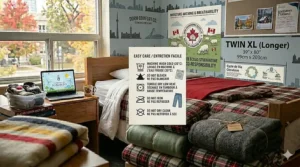
Canadian university residences predominantly use twin XL mattresses—99 cm wide by 203 cm long—but many students don’t realize this until move-in day, having bought standard twin bedding (99 cm by 191 cm) that leaves a 13 cm gap at the foot of their bed. This sounds like a minor difference, but those 13 centimetres mean your feet hang off the edge or your blanket doesn’t tuck properly, creating cold spots and disrupting sleep.
The confusion stems from retail stores often displaying both sizes without clear labelling, and parents helping with shopping who assume “twin” means the same thing it meant when they were students. Canadian retailers have gotten better about specifying, but Amazon listings can be ambiguous, especially when sellers use American sizing conventions. Always verify the actual dimensions in centimetres: twin XL should be approximately 168-173 cm wide by 228-229 cm long for blankets, allowing for overhang.
Some students try to make standard twin blankets work on XL beds by positioning them strategically or accepting the size mismatch. This fails during winter when you need full coverage and proper tucking to prevent drafts. Investing in proper twin XL sizing from the start saves the expense and hassle of replacing bedding mid-semester when you realize the size mismatch is affecting your sleep quality.
If you accidentally buy standard twin, you have options: use it as a layering piece under a properly-sized comforter, designate it as your study blanket for wrapping up during late-night cram sessions, or resell it quickly while still new and take the small loss. Don’t try to force it to work as your primary bed blanket—you’ll regret it by October.
❓ Can I wash dorm blankets in residence machines without damaging them?
❓ Do I need different blankets for fall and winter in Canadian dorms?
❓ What's the best blanket material for overheated residence buildings?
❓ Are expensive blankets worth it for just one year of dorm living?
❓ How do I prevent my blanket from getting damaged in shared laundry?
Final Thoughts: Making Your Dorm Room Actually Feel Like Home
Choosing twin blankets for college dorms comes down to understanding your specific situation rather than following generic advice. Canadian students face unique challenges—unpredictable residence heating, aggressive shared laundry facilities, tight budgets, and climate extremes that American dorm guides don’t address. The seven blankets I’ve reviewed here represent genuine solutions to these specific problems, tested by real students in real Canadian residence buildings.
Your blanket affects sleep quality, room aesthetics, budget management, and ultimately your academic success more than most students realize. Poor sleep from inadequate or inappropriate bedding creates a cascade of problems: missed morning classes, reduced focus during studying, increased stress, and higher susceptibility to the residence illnesses that sweep through buildings every semester. Investing moderate thought and money in getting this right pays dividends throughout the year.
Remember that residence life is temporary but the habits and choices you make during these years affect your long-term relationship with sleep and personal space. Choose bedding that makes you want to maintain your room rather than avoid it. Select materials that work with your laundry habits rather than fighting against them. Budget appropriately for quality that lasts rather than replacing cheap items multiple times.
Most importantly, understand that there’s no single “best” option—there’s only the best option for your specific needs, building characteristics, climate, and personal preferences. Use the comparisons and analysis I’ve provided to inform your decision, but trust your own knowledge of how you sleep, what temperatures you prefer, and what aesthetic makes you feel comfortable. Your residence room is your home for the next eight months. Make it work for you.
Recommended for You
- 7 Best Twin Size Blankets Canada 2026
- 7 Best Sustainable Blend Blankets Canada 2026: Eco-Friendly Guide
- 7 Best Cooling Bamboo Blend Throws Canada 2026
Disclaimer: This article contains affiliate links. As an Amazon Associate, I earn from qualifying purchases. If you purchase products through these links, we may earn a small commission at no additional cost to you.
✨ Found this helpful? Share it with your friends! 💬🤗
