
In This Article
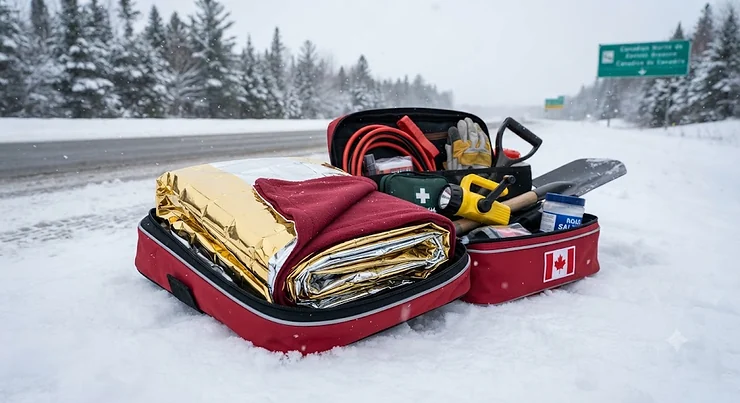
The first time your engine dies on a stretch of highway with nothing but snowbanks and silence around you, you learn a fast, humbling lesson: your car’s heater was doing a lot more work than you ever gave it credit for. Within twenty minutes, cabin temperature can plummet to match whatever’s happening outside the glass — and in a Canadian January, that’s not a minor inconvenience, it’s a real problem. An emergency car blanket is a compact piece of gear — usually a reflective sheet, a wool throw, or a 12-volt heated wrap — kept in the vehicle specifically to preserve body heat if you’re stranded without a running engine.
This guide breaks down seven real, currently available options, from a $10 pack of foil sheets to a heated blanket that plugs into your dash. We’ll compare materials, weigh the honest trade-offs reviewers actually report, and walk through how to pick the right one for your commute, your climate, and your glovebox space. Everything here is priced in Canadian dollars and grounded in genuine product specs — no invented testimonials, no fabricated “I tried this on a mountain pass” stories. Just the research, laid out plainly, from someone who has read every spec sheet so you don’t have to compare them at 2 a.m. before a road trip.
Quick Comparison Table
| Product | Type | Best For | Price Range (CAD) |
|---|---|---|---|
| Swiss Safe Emergency Mylar Thermal Blanket (4-Pack) | Mylar foil | Budget multi-car stash | Under C$20 |
| S.O.L. Survive Outdoors Longer Heavy-Duty Blanket | Reinforced mylar | Tear-resistant reflective option | C$20-C$30 |
| Arcturus Military Wool Blanket | 80/20 wool blend | Real cold, reusable warmth | C$50-C$70 |
| Arcturus All-Weather Survival Blanket | Tarp + reflective layer | Multi-use shelter/ground cover | C$25-C$40 |
| Sojoy 12-Volt Heated Car Blanket | Electric fleece | Active heat while parked | C$35-C$55 |
| Trillium Car Cozy 2 | Electric fleece | Heated blanket with safety timer | C$45-C$65 |
| Thrive Roadside Emergency Car Kit | Full kit + blanket | One-purchase preparedness | C$45-C$70 |
Looking at the spread above, there’s a clear split between passive insulation (the mylar and wool options, which need zero power and work the moment your battery dies) and active heat (the 12-volt blankets, which only work as long as your engine or battery can supply current). The Thrive Roadside Emergency Car Kit sits apart from the rest because it isn’t really competing on blanket quality alone — it’s bundling a blanket into a broader safety net of tools, which matters if you’re building a kit from zero rather than adding one item to an already-stocked trunk.
💬 Just one click — help others make better buying decisions too!😊
Top 7 Emergency Car Blankets: Expert Analysis
1. Swiss Safe Emergency Mylar Thermal Blanket (4-Pack) — best budget multi-pack for stashing everywhere
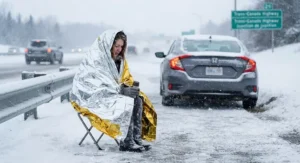
The standout here is simple math: four blankets for the price most competitors charge for one, which means you can outfit every vehicle in the household without a second thought. Each sheet is made from aluminized polyethylene mylar, measures roughly 52 x 82 inches, and weighs about 2 ounces, so the whole four-pack folds down small enough to live in a glovebox, a backpack, and a trunk kit simultaneously without anyone noticing the extra bulk. The reflective aluminized coating is designed to reflect a large share of radiated body heat back toward the wearer, which is the same principle used in the original NASA-derived space blanket design.
Based on the spec comparison with other mylar options on the market, this is squarely a “better than nothing, better than most people’s nothing” product rather than a long-term solution — and that’s precisely the audience it’s built for: people who want one in the car, one in the ski bag, one in the emergency kit at the office, without spending real money on any of them. Reviewers consistently note that the material is genuinely windproof and water-resistant, which matters more than raw thickness when you’re sitting in a stalled car with a draft coming through the door seal. A common complaint in user reviews is that the foil is thin enough to tear if handled roughly or refolded along the same crease repeatedly, so treat it as a one-or-two-use item rather than something to stuff in and out of a bag daily.
Pros:
- ✅ Four blankets for one low price point
- ✅ Genuinely windproof and water-resistant material
- ✅ Compact enough for glovebox, trunk, and bag all at once
Cons:
- ❌ Thin foil tears with rough or repeated handling
- ❌ No insulation once wind exposure ends and body contact begins
At under C$20 for the full pack, the value proposition is hard to beat for anyone who wants basic coverage across multiple vehicles rather than one premium blanket in one car.
2. S.O.L. Survive Outdoors Longer Heavy-Duty Blanket — most puncture-resistant reflective option
What sets this one apart on the spec sheet is thickness: the Heavy-Duty line uses a denser, reinforced polyethylene film that’s noticeably tougher than the standard 12-micron mylar found in bargain multi-packs, closing the durability gap that budget foil blankets can’t. It still folds into a compact pouch and weighs only a few ounces, but the material resists tearing when you’re wrestling it open with cold, clumsy hands — which, ironically, is exactly the moment you’re most likely to be using one.
Here’s what most buyers overlook about this category: reflective effectiveness depends heavily on contact and coverage, not just the coating itself, so wrapping it snugly (rather than draping it loosely) makes a measurable difference in how much heat actually stays put. Aggregated reviewer sentiment on this line points to the reinforced material holding up through actual outdoor use — hiking, camping, vehicle kits — rather than shredding on first deployment, which is the most common criticism levelled at cheaper alternatives. The trade-off is size: at roughly 60 x 96 inches it’s generous for one adult, but tight if you’re trying to cover two people in the back seat.
Pros:
- ✅ Reinforced film resists tearing far better than basic foil
- ✅ Reflects a very high share of radiated body heat
- ✅ Doubles as ground cover or improvised rain shelter
Cons:
- ❌ Costs noticeably more than basic mylar multi-packs
- ❌ Tight coverage for two adults sharing one blanket
Priced in the C$20-C$30 range, this is the pick for anyone who wants reflective-blanket weight and packability without the flimsiness that gives the whole mylar category a bad reputation.
3. Arcturus Military Wool Blanket — best natural-fibre pick for real cold
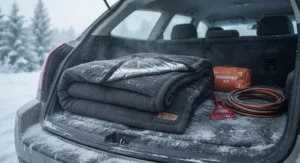
The headline feature is the wool itself: an 80% wool / 20% synthetic blend at roughly 550 GSM density, which puts it in a completely different insulation category than any foil sheet on this list. Wool fibre traps air within its structure and — unlike synthetic fill — continues to insulate reasonably well even if it gets damp, a property that matters if you’ve tracked snow or slush into the cabin while retrieving your kit from the trunk.
On paper this means slower heat loss and genuine, sit-on-it-for-hours comfort rather than a thin emergency measure, and that’s borne out in aggregated review sentiment: owners consistently describe it as warm enough for actual sleeping-bag-adjacent use, not just symbolic coverage. What the spec sheet won’t tell you, but reviewers note repeatedly, is that wool blankets in this weight class shed some fibre initially and benefit from a first wash before daily use — plan for that rather than being surprised by it. At 4.5 lbs and 64 x 88 inches, it’s also considerably heavier and bulkier than anything mylar-based, which matters if trunk space is already tight with winter tires and a shovel.
Pros:
- ✅ Retains real insulating value even when damp
- ✅ Reusable for years rather than single emergency use
- ✅ Doubles as a picnic, stadium, or camping blanket
Cons:
- ❌ Bulkier and heavier than any reflective alternative
- ❌ Sheds some fibre and needs an initial wash
In the C$50-C$70 range, this is the blanket for someone who wants a permanent trunk fixture rather than a single-use safety item — the cost-per-use math favours it heavily over a five-year horizon.
4. Arcturus All-Weather Survival Blanket — most versatile tarp-style shelter
The distinguishing feature is the two-layer construction: a waterproof outer shell bonded to an aluminized reflective inner layer, with reinforced grommets at the corners so it functions as a lean-to, wind block, or ground tarp as easily as a blanket. That grommet detail is a small thing on a spec sheet but a genuinely useful one in practice — you can rig it to block a broken window or a draft rather than just wrapping it around a person.
Based on the spec comparison with plain foil sheets, the added waterproof shell layer is the real differentiator: it holds up to actual precipitation rather than just resisting light moisture, and reviewers consistently frame it as the option that survives being deployed outside the vehicle, not just inside it. What most buyers overlook is that at 1.4 lbs and roughly 5 x 7 feet unfolded, it’s genuinely large enough to cover two people or serve as an improvised shelter wall, which the compact mylar sheets simply can’t do. The trade-off is that it packs down bulkier than a single-layer space blanket, and the aluminized layer, while effective, doesn’t match the raw insulation of the wool option above.
Pros:
- ✅ Reinforced grommets allow tarp and shelter configurations
- ✅ Waterproof outer shell handles real precipitation
- ✅ Large enough to cover two adults or one plus gear
Cons:
- ❌ Bulkier to pack than single-layer mylar sheets
- ❌ Less pure insulation than a wool blanket of similar price
At roughly C$25-C$40, this sits as the versatility pick — the one to grab if you want a single item that pulls double duty as both blanket and improvised shelter component.
5. Sojoy 12-Volt Heated Car Blanket — best active-heat option for parked vehicles
Unlike everything else on this list, this blanket generates its own heat rather than just conserving what your body produces — it plugs directly into a 12-volt outlet and warms a soft fleece shell with high/low temperature settings and an automatic shutoff after roughly 45 minutes of continuous use. That auto-shutoff detail matters more than it might seem: it’s a real safety feature that prevents both overheating risk and unnecessary battery drain if someone falls asleep with it running.
Here’s what the spec sheet doesn’t fully capture: active heat only works as long as there’s power available, so this product is really designed for a scenario where your engine is still running (or your battery still has meaningful charge) rather than the total-failure scenario a mylar blanket is built for. Reviewers consistently praise how quickly it warms up compared with just sitting under an unheated throw, and the roughly 57 x 40-inch size covers one adult generously, including the power cord’s 72-inch reach to back-seat passengers. A recurring theme in aggregated feedback is that it’s hand-wash only, which is a mild inconvenience for a car accessory that inevitably picks up dirt and pet hair over a winter.
Pros:
- ✅ Generates real warmth rather than just retaining body heat
- ✅ Auto shutoff after roughly 45 minutes protects the battery
- ✅ Long power cord reaches rear-seat passengers
Cons:
- ❌ Useless once the battery or engine can’t supply power
- ❌ Hand-wash only, not machine washable
Priced around C$35-C$55, this is best understood as a comfort-and-convenience upgrade for cold mornings and long drives, with emergency use as a secondary benefit rather than its core job.
6. Trillium Car Cozy 2 — best heated blanket with a built-in safety timer
The Trillium Car Cozy 2 distinguishes itself with a patented 30- or 45-minute safety timer and a reset button, plus a fused 7-foot cord and automatic temperature control — details that read like fine print but actually address the two biggest safety concerns with any 12-volt heating product: overheating and battery drain. At 58 x 42 inches, it’s slightly larger than the Sojoy option above, comfortably covering two people in a pinch.
What most buyers overlook about this specific model is its track record: it’s one of the longest-running products in the 12-volt heated blanket category, and that maturity shows up in aggregated review sentiment as consistency — fewer reports of inconsistent heating or premature failure compared with newer, less-established competitors. Based on the spec comparison, the 100% polyester fleece construction prioritizes softness and washability over the technical insulation values you’d get from wool, which is a reasonable trade-off for a product meant to be used while conscious and plugged in rather than while unconscious and unpowered. The auto shut-off timer is a genuine safety plus, but it also means you’ll need to manually restart it periodically on a long, cold drive.
Pros:
- ✅ Patented safety timer with manual reset button
- ✅ Fused cord and automatic temperature control
- ✅ Large enough to comfortably share between two people
Cons:
- ❌ Requires manual restart after the timer cuts power
- ❌ No benefit once the vehicle’s power source is gone
In the C$45-C$65 range, this is the safety-conscious choice among heated options, particularly for families who want an extra layer of reassurance around an electrical product running near kids.
7. Thrive Roadside Emergency Car Kit — best all-in-one kit that includes a blanket
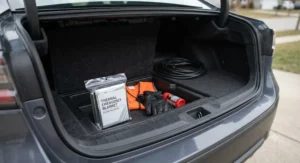
Rather than betting everything on one blanket, the Thrive Roadside Emergency Car Kit bundles a reflective survival blanket alongside jumper cables, a mini first aid kit, and dozens of smaller roadside tools inside a rugged 600D nylon canvas bag — over a hundred pieces total, depending on the version you choose. The standout advantage is coverage breadth: if you’re starting from an empty trunk rather than topping up an existing kit, this solves several problems in a single purchase rather than one.
Based on the spec comparison with buying components separately, the individual items inside — including the reflective blanket — are generally a notch below the dedicated single-purpose products on this list in raw quality, which is a fair trade for the convenience and completeness of a bundled kit. Aggregated review sentiment is strongly positive on the jumper cables and organization of the bag itself, with a common thread being that it makes a genuinely thoughtful gift for a new driver who has nothing in their trunk at all. What the listing won’t tell you outright is that the included blanket is a supplementary item within the kit rather than its headline feature, so if thermal performance is your single priority, pairing a standalone blanket from earlier on this list with a basic tool kit may serve you better than buying this bundle for the blanket alone.
Pros:
- ✅ Solves multiple roadside gaps in one purchase
- ✅ Durable 600D canvas bag with genuine organization
- ✅ Strong value for someone starting from zero gear
Cons:
- ❌ Included blanket is basic compared to dedicated options
- ❌ Some tools inside are lower quality than standalone equivalents
At roughly C$45-C$70 depending on piece count, this is the pick for anyone who wants one purchase to check every roadside-preparedness box rather than assembling a kit item by item.
Practical Usage Guide: Storing, Deploying, and Maintaining Your Blanket
Buying the right blanket only solves half the problem — where and how you keep it matters just as much. Store passive blankets (mylar or wool) somewhere you can reach without opening the trunk in freezing conditions, ideally in the cabin itself, in a door pocket or under a seat, since a locked, iced-over trunk defeats the purpose entirely. Heated 12-volt blankets should be kept within reach of the front seat given their cord length, and unplugged fully when not in use to avoid parasitic battery drain over weeks of parking.
For maintenance: mylar blankets should be refolded loosely rather than along the exact same creases every time, since repeated sharp folding is what causes premature tearing along seam lines. Wool blankets benefit from an annual airing-out and an occasional wash following the manufacturer’s care instructions, since trapped moisture and road grime reduce insulating loft over time. A common first-30-days mistake is leaving a heated blanket wired into the outlet with the vehicle off “just in case” — don’t; check your owner’s manual, since prolonged low-draw accessories can meaningfully affect a weak or aging battery overnight. Finally, do a visual check each fall when you swap to winter tires: a blanket that’s been crushed under gear all summer may have degraded packaging or a torn seal, and that’s the cheapest possible moment to replace it.
Real-World Scenarios: Who Actually Needs This
Picture a college student commuting 15 kilometres each way to campus in a decade-old hatchback with a heater that’s seen better days. For her, a compact mylar pack or the reinforced S.O.L. Survive Outdoors Longer Heavy-Duty Blanket makes sense — low cost, minimal trunk space, and genuinely useful if she’s ever waiting roadside for a tow between classes.
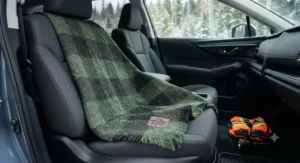
Now picture a family doing regular highway trips through rural Ontario or the Prairies in winter, where a breakdown could mean a genuine wait for help in sub-zero temperatures. Here, the calculus changes: the Arcturus Military Wool Blanket or the Arcturus All-Weather Survival Blanket earns its higher price and bulk, because the scenario it’s protecting against — hours, not minutes, without heat — demands more than a single-use foil sheet. Add the Thrive Roadside Emergency Car Kit to that trunk and you’ve covered both the “we’re stuck” and the “we need tools to get unstuck” problems in one go.
Finally, picture someone who mostly drives short urban errands but occasionally sits in a cold, running car waiting to pick someone up. For that use case, an active-heat option like the Sojoy 12-Volt Heated Car Blanket or Trillium Car Cozy 2 solves the actual daily discomfort — genuine warmth on demand — while the emergency-preparedness angle is a welcome bonus rather than the primary purchase driver.
Problem → Solution: What To Do When You’re Actually Stranded
Problem: your engine won’t start and cabin temperature is dropping fast. Wrap up in whatever passive blanket you have immediately rather than waiting to see if help arrives quickly — heat loss compounds faster than most people expect, especially with any wind exposure through door seals.
Problem: you’re not sure if it’s safe to run the engine for heat. Only do so with a clear tailpipe; check that snow hasn’t packed around the exhaust, since blocked tailpipes are a genuine carbon monoxide risk that has caused real fatalities in stranded-vehicle situations.
Problem: you have a blanket but you’re still losing heat through contact with a cold seat. Sit on a spare layer — a jacket, a floor mat, even the blanket’s packaging — since heat loss through direct contact with a cold surface happens faster than most people account for.
Problem: your phone is dying and you need to signal for help. The reflective side of a mylar blanket doubles as a high-visibility signal panel in daylight; drape it over your dashboard or hang it from a window if you’re waiting for a search-and-rescue pass or a passing vehicle.
Problem: you’re travelling with kids or someone with limited mobility. Prioritize the largest blanket in your kit for them specifically, and layer a second item — even a mylar sheet — over the top, since combining a heat-retaining layer with a wind-blocking layer outperforms either alone.
How to Choose an Emergency Car Blanket
- Match the blanket to your actual risk, not the worst-case scenario you’ve imagined. A daily urban commuter faces a different real-world risk profile than someone driving isolated highway stretches, and the right blanket reflects that.
- Decide between passive and active heat first. Passive options (mylar, wool) work with zero power; active heated blankets require a functioning electrical system, which won’t help you in a true breakdown.
- Check the material’s real durability, not just its heat-retention percentage. A blanket that tears the first time you unfold it with cold hands isn’t protecting anyone.
- Factor in trunk space honestly. A wool blanket you never buy because it “takes up too much room” protects no one; sometimes the compact mylar pack is the better real-world choice simply because it’s the one you’ll actually keep in the car.
- Consider redundancy over a single premium item. Two cheap mylar blankets split between the glovebox and trunk often serve a family better than one excellent blanket that’s inaccessible if the trunk release fails.
- Look at aggregated review themes, not star ratings alone. A 4.5-star product with recurring “tears easily” complaints tells you more than the number itself.
- Buy before winter, not during the first cold snap. Availability and price stability are both better in October than during a January storm, when demand spikes and options thin out.
Common Mistakes When Buying an Emergency Car Blanket
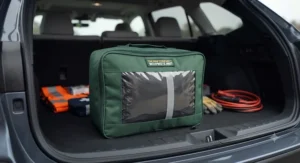
The most common mistake is treating a single mylar sheet as a complete winter safety plan rather than one component of a broader kit that should also include a flashlight, warm clothing, and a way to signal for help. A close second is buying based on square footage or heat-retention percentage alone without checking real-world durability — a blanket that’s technically excellent on paper but rips apart on first use provides zero actual protection. Buyers also frequently overestimate how much a heated 12-volt blanket helps in a true emergency; it’s an excellent comfort product but a poor primary safety purchase, since it depends entirely on power that may not be available exactly when you need it most. Finally, many people buy once and never check the blanket again — a mylar sheet crushed at the bottom of a trunk for three winters may have degraded packaging or seam damage nobody discovers until the moment it matters.
Emergency Car Blanket vs Space Blanket: What’s the Real Difference?
This is one of the more confusing corners of the category, mostly because the terms get used almost interchangeably in casual conversation — but there is a meaningful distinction worth understanding before you buy. A space blanket, in the strict sense, refers specifically to the ultralight aluminized mylar sheet originally developed from NASA-derived thermal insulation technology; it’s thin, reflective, foil-like, and designed for minimal weight and pack size above almost anything else. You can read more about the underlying aerospace-derived design if you want the full technical history.
An emergency car blanket, by contrast, is a broader functional category defined by its use case — anything kept in a vehicle specifically for warmth during a breakdown — which can include a space blanket, but just as easily includes a wool throw, a tarp-style survival blanket, or a 12-volt heated wrap. In practice, every space blanket qualifies as a type of emergency car blanket, but not every emergency car blanket is a space blanket. The practical takeaway: if someone recommends “keep a space blanket in your car,” they’re specifically pointing you toward the mylar category (like the Swiss Safe Emergency Mylar Thermal Blanket or S.O.L. Survive Outdoors Longer Heavy-Duty Blanket above), whereas “emergency car blanket” as a shopping term should prompt you to consider the full range, including wool and heated options, based on your actual climate and risk profile.
Thermal Retention Material, Explained (What the Numbers Actually Mean)
Marketing copy loves to quote a heat-retention percentage — “reflects 90% of body heat” is the industry’s favourite claim — but that number describes the material’s theoretical performance under controlled conditions, not your actual experience wrapped in one on a windy shoulder in February. The thermal retention material in most budget and mid-range blankets is aluminized mylar: a thin polyethylene or polyester film with a vapour-deposited layer of aluminum, which reflects radiant body heat back toward the source rather than letting it escape into the surrounding air. This works genuinely well against radiant heat loss, but it does almost nothing against heat lost through direct conduction (sitting on a cold seat) or convection (a draft moving air past exposed skin) — which is exactly why wrapping the material snugly and blocking wind exposure matters more than the percentage on the packaging.
Wool, by contrast, retains heat through a completely different mechanism: air trapped between its fibres acts as an insulating layer, and that structure keeps working reasonably well even when the fibres pick up some moisture — a meaningful advantage in a Canadian winter where snow tracked into a cabin is a near-certainty. Active-heat blankets sidestep the whole question by generating warmth directly through resistive heating elements, but that convenience comes at the cost of total dependency on an external power source. Understanding which mechanism you’re actually buying — reflection, trapped-air insulation, or direct heating — is more useful for real decision-making than comparing headline percentages across products that aren’t measuring the same thing.
Winter Driving Safety in Canada: What the Law Actually Requires
Winter driving safety in Canada isn’t governed by a single federal law mandating a blanket in every trunk, but Transport Canada actively recommends keeping a winter emergency kit — including a lightweight, heat-reflective blanket — as standard advice for anyone driving through the colder months, alongside items like a shovel, sand or traction aid, and a flashlight (see Transport Canada’s winter driving emergency kit guidance). Provincial rules vary more meaningfully than federal ones: some northern and remote highway corridors have signage requiring travellers to carry winter supplies, and several provinces strongly encourage — without strictly mandating — a basic emergency kit for anyone travelling outside major urban areas between November and April.
Beyond the letter of the regulations, the practical safety guidance is consistent across provincial and federal sources: stay with your vehicle rather than walking for help in a storm, keep a window cracked for fresh air if running the engine, and watch for early hypothermia signs like uncontrollable shivering or confusion, which the Canadian Red Cross outlines in detail as warning signs that shouldn’t be ignored. For anyone doing regular winter highway travel, following Transport Canada’s broader winter driving safety recommendations — proper tires, reduced speed, full tank of gas — reduces the odds you’ll ever need the blanket in the first place, which is really the goal.
Long-Term Cost & Maintenance: Is a C$15 Blanket Really Enough?
Run the numbers over five winters and the value picture shifts meaningfully. A C$15 four-pack of mylar blankets works out to roughly C$3.75 per blanket, but each one is realistically a single-use item once torn or degraded — so if you replace one every year or two, the effective annual cost stays low but the coverage is thin and disposable. A C$60 wool blanket, by contrast, amortizes to about C$12 per winter over five years of use, while offering genuinely reusable, washable, multi-purpose warmth that a foil sheet simply can’t match — the cost-per-use math clearly favours the wool option for anyone keeping a vehicle long-term.
Heated 12-volt blankets sit in a different category of cost entirely, since their ongoing “maintenance cost” is really about battery health rather than the blanket itself; running one regularly on an older or marginal battery can shorten its effective life, which is a hidden cost worth factoring in for anyone driving an aging vehicle. A car emergency blanket for winter CAD budgeting purposes really comes down to this: cheap and disposable works fine as a backup layer or a glovebox stash, but a genuine primary safety item benefits from the higher upfront cost of a durable, reusable option, spread across years rather than treated as a one-time expense.
FAQ
❓ What is the best emergency blanket to keep in a car?
❓ Do emergency car blankets actually work?
❓ How many emergency blankets should I keep in my car?
❓ Is a wool blanket better than a mylar space blanket for a car?
❓ Can a heated car blanket work if the engine won't start?
Conclusion
There’s no single “best” emergency car blanket, because the right pick depends entirely on the drive you’re actually doing — a quick city commute, a rural highway haul, or long stretches of near-empty road where help might be an hour away rather than ten minutes. What matters more than any individual product is having something reachable, tested at least once so you know how it unfolds, and matched honestly to your real risk rather than either dismissed as unnecessary or over-bought as premium overkill you never actually keep in the car. Whether that ends up being a C$15 four-pack of mylar sheets tucked in the glovebox or a genuine wool blanket riding permanently in the trunk, the goal is the same: don’t let a dead battery or a slid-off shoulder turn into a genuine medical emergency because nobody thought about it until the moment it mattered.
✨ Don’t Miss These Exclusive Deals!
🔍 Take your winter preparedness to the next level with these carefully selected picks. Click on any highlighted product above to check current pricing and availability on Amazon.ca. A few dollars now could make a real difference on a cold, stranded night this winter!
Recommended for You
- RV Throw Blanket Set: 7 Cozy Picks for Canadian Campers (2026)
- 7 Best Compact RV Blankets for Storage in 2026 (Space-Saving Picks)
- RV Blanket for Cold Nights: 7 Cozy Canadian Picks for 2026
Disclaimer: This article contains affiliate links. As an Amazon Associate, I earn from qualifying purchases. If you purchase products through these links, we may earn a small commission at no additional cost to you.
✨ Found this helpful? Share it with your friends! 💬🤗
