
In This Article
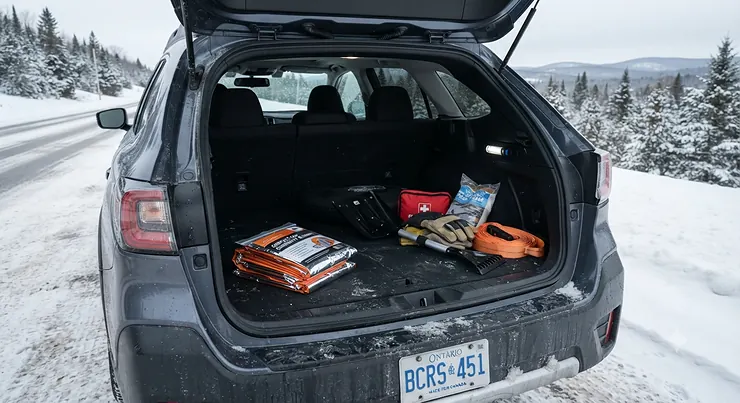
A compact car emergency blanket is a small, foldable thermal sheet — usually reflective mylar, insulated poly, or wool — kept in a vehicle to prevent heat loss if you’re stranded, injured, or waiting on roadside help. That’s the textbook definition, but if you’ve ever sat on the shoulder of a rural highway in January watching your breath fog up the windshield, you know it’s really about something simpler: not freezing while you wait.
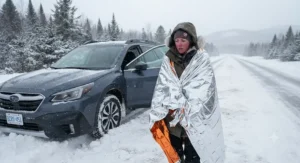
Here’s the thing about a compact car emergency blanket — it’s one of those items everybody agrees they should own and almost nobody actually owns until the tow truck is running two hours behind. We get it. It’s not glamorous. It doesn’t photograph well for a road-trip Instagram post. But when your battery dies on a stretch of highway with spotty cell service and the temperature is dropping with the sun, a compact car emergency blanket for stranded motorists becomes the single most useful item in your trunk, full stop.
This guide walks through seven real, currently available options — from C$3 disposable mylar sheets to heavier wool blankets built to survive years of Canadian winters — with honest analysis of who each one actually suits. We’ll cover glovebox storage space realities (spoiler: not everything marketed as “compact” actually fits), what changes when kids are riding along, and why rural highway breakdowns demand a different kind of preparation than a five-minute wait in city traffic. Per Transport Canada’s winter driving guidance, a blanket is one of the core items recommended for every vehicle’s cold-weather kit — not an afterthought.
Quick Comparison Table
| Product | Type | Price Range (CAD) | Best For |
|---|---|---|---|
| Coghlan’s Emergency Blanket | Mylar poly, single-use | Under C$10 | Budget glovebox stash |
| Swiss Safe 4-in-1 Blankets (4-Pack) | Mylar, multi-pack | C$15-C$25 range | Families, multiple vehicles |
| S.O.L. 90% Heat Reflective XL | Puncture-resistant mylar, 2-person | C$15-C$25 range | Extreme cold, 2 occupants |
| Arcturus All-Weather Survival Blanket | Reusable poly/mylar tarp | C$25-C$40 range | Reusable, multi-purpose |
| S.O.L. Emergency Bivvy | Hybrid bivvy sack + whistle | C$25-C$40 range | Extended rural waits |
| Arcturus Military Wool Blanket | 80% wool, 550 GSM | C$50-C$70 range | Kids, comfort, reuse |
| Ready America 72-Hour 2-Person Kit | Bundled kit w/ blanket | C$60-C$90 range | Full rural highway kit |
Looking at this lineup, the price spread tells its own story: Coghlan’s Emergency Blanket and the Swiss Safe 4-in-1 Blankets cover the “better than nothing, costs almost nothing” tier, while the Arcturus Military Wool Blanket and Ready America 72-Hour 2-Person Kit are built for people who treat winter driving as a genuine risk to plan around, not an inconvenience to shrug off. The middle tier — S.O.L. 90% Heat Reflective XL, Arcturus All-Weather Survival Blanket, and S.O.L. Emergency Bivvy — is where most Canadian drivers should actually be shopping, because it balances glovebox-friendly size with materials that won’t shred the first time you unfold them with cold fingers.
💬 Just one click — help others make better buying decisions too!😊
Top 7 Compact Car Emergency Blankets: Expert Analysis
1. Coghlan’s Emergency Blanket — budget-friendly Canadian camping heritage
Coghlan’s has been making outdoor gear since 1959, and this emergency blanket is about as no-nonsense as the category gets. It’s an aluminized, non-stretch polyester sheet that stays flexible even in freezing temperatures, which matters more than it sounds — plenty of cheap mylar sheets turn brittle and crack apart the moment you try to unfold them at minus 20°C.
Key specs with real-world meaning: the blanket measures roughly 52 x 82.5 inches and weighs about 0.15 lb, folding down to something closer in size to a deck of cards than an actual blanket. That’s the entire appeal — it lives permanently in a glovebox pocket or door pocket without anyone noticing it’s there, which means it’s actually present when you need it, unlike the bulkier options people buy and then leave in a closet at home.
Who it’s for: this is the “one in every car, including the beater you loan to your teenager” pick. Reviewers consistently note that it does exactly one job — reflecting body heat and blocking wind — and does it reliably for the price, though a meaningful minority report the material tearing on a second or third use, which tracks with its single-use design intent rather than a defect.
Pros:
- ✅ Folds smaller than most phone cases for true glovebox storage
- ✅ Stays flexible in sub-zero temperatures, unlike stiff off-brand mylar
- ✅ Doubles as a windproof, waterproof ground barrier in a pinch
Cons:
- ❌ Single-use design tears with repeated folding and unfolding
- ❌ Thin material offers less insulation than wool or reusable poly
Priced under C$10 in most listings, it’s less an investment than a rounding error — the kind of item you buy three of and forget about until it’s genuinely needed.
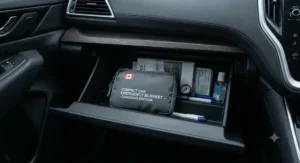
2. Swiss Safe 4-in-1 Emergency Mylar Blankets (4-Pack) — best value 4-pack for the whole family
If one glovebox blanket makes sense, four makes even more sense once you factor in how many people might actually be in the vehicle. The Swiss Safe 4-in-1 pack ships four individually wrapped aluminized dual-sided thermal blankets, each rated to reflect a significant share of body heat, in a design the company markets as originally developed for space-industry-style thermal protection.
What the spec sheet won’t tell you, but reviewers note, is that having four separate units changes behaviour: instead of one blanket shared awkwardly between a parent and two kids in the back seat, everyone gets their own. That’s a meaningfully different experience during an actual roadside wait, where sharing a single 52-inch sheet among three cold, cranky people creates more friction than warmth.
Each blanket individually packs into a compact pouch small enough for a glove compartment, backpack, or emergency kit, so the whole four-pack distributes easily — one for the trunk kit, one for each kid’s school backpack, one spare. Aggregated review sentiment describes the material as noticeably crinklier and louder than premium options, a fair trade-off for the multi-unit value.
Pros:
- ✅ Four individually packaged blankets cover an entire family
- ✅ Dual orange-and-silver sides aid visibility for roadside signalling
- ✅ Cheapest per-unit cost among name-brand mylar options
Cons:
- ❌ Noisy, crinkly material can be startling for young children
- ❌ Thin single layer offers modest insulation versus wool
At roughly C$15 to C$25 for the full pack in Canadian listings, the per-blanket cost lands well under C$7, making it the clear pick for anyone outfitting multiple vehicles or a family with more than one child.
3. S.O.L. 90% Heat Reflective Emergency Blanket XL — best for extreme cold, 2-person coverage
Survive Outdoors Longer built its reputation on gear tested by search-and-rescue professionals, and the XL emergency blanket reflects that pedigree. Made from vacuum-metalized polyethylene rather than basic mylar film, it’s engineered to resist punctures far better than the thin sheets found in budget multi-packs — a real distinction, since a torn thermal blanket loses much of its heat-retention value almost immediately.
The XL sizing (roughly 56 x 84 inches, extending toward 60 x 98 inches on some SOL variants) is built for two occupants, which changes the math for a family with one child in a car seat or two adults commuting together. Based on the spec comparison, the 90% heat-reflection rating puts it ahead of most standard mylar sheets, which typically top out closer to 80%, and the high-visibility orange colouring does double duty as a rescue signal against snow.
Reviewers consistently report that this blanket survives being folded and refolded multiple times without the crackling degradation typical of dollar-store versions, though a handful mention that the material still isn’t tear-proof under real stress, such as being caught on a jagged edge while exiting a vehicle.
Pros:
- ✅ Puncture-resistant material holds up to repeated folding
- ✅ 90% heat-reflection rating outperforms standard mylar
- ✅ High-visibility orange doubles as a roadside signal flag
Cons:
- ❌ Bulkier than single-layer disposable blankets
- ❌ Premium material commands a higher per-unit price
Expect to pay in the C$15-C$25 range for a single XL blanket, positioning it as the mid-tier upgrade for anyone who’s decided their winter kit deserves better than the cheapest option on the shelf.
4. Arcturus All-Weather Outdoor Survival Blanket — best reusable dual-sided tarp
This is where the category shifts from disposable to genuinely reusable. The Arcturus All-Weather blanket pairs a mylar reflective inner layer with a two-layer waterproof polypropylene outer shell, meaning it functions as both an emergency blanket and a ground tarp or makeshift shelter — a meaningful distinction if you’re stuck for hours rather than minutes.
At 60 x 82 inches and 1.4 lbs, it’s noticeably heavier than the mylar sheets above, but that weight buys durability: four reinforced tie-down grommets let you rig it as a windbreak against a vehicle door or secure it over a shelter frame, something a paper-thin single-use blanket simply can’t do. Based on the spec comparison, the reflective side still delivers roughly 90% heat reflection, so you’re not sacrificing warmth for the added ruggedness.
Aggregated customer sentiment is largely positive on durability, with reviewers noting it survives multiple seasons of use without the material degrading the way mylar-only blankets do, though a common complaint in user reviews is that it packs down bulkier than advertised, closer to a rolled towel than a folded napkin.
Pros:
- ✅ Reusable across multiple winters, not single-use
- ✅ Reinforced grommets allow shelter or windbreak setup
- ✅ Waterproof outer layer resists tearing better than mylar-only sheets
Cons:
- ❌ Bulkier profile eats more glovebox or console space
- ❌ Heavier than disposable options at 1.4 lbs
Pricing typically falls in the C$25-C$40 range, positioning it as a sensible middle ground between disposable convenience and genuine durability.
5. S.O.L. Emergency Bivvy with Rescue Whistle — best hybrid shelter for extended waits
The Emergency Bivvy takes a different approach entirely: instead of an open sheet, it’s a sealed sack you climb partway into, reflecting heat from nearly all sides rather than just the one you happen to be lying against. For a compact car emergency blanket for stranded motorists facing a genuinely long wait — think rural highway breakdowns where a tow truck is ninety minutes out rather than fifteen — that full-coverage design meaningfully changes the warmth equation.
Weighing under 6 oz and packing to roughly the size of a soda can, it’s still glovebox-plausible despite the added function. What most buyers overlook about this model is the included rescue whistle threaded into the drawstring closure — a detail that sounds minor until you’re the person trying to flag down a passing snowplow through a fogged-up window. The tear-resistant, aluminum-coated polyethylene construction is quieter than standard mylar too, which matters if a frightened child is inside it with you.
Reviewers consistently note the bivvy’s dual function as an emergency sleeping bag doubles its usefulness beyond the car — useful if the same kit travels between vehicle, hiking pack, and camping gear. The trade-off, per aggregated feedback, is that climbing fully inside can feel claustrophobic for some users compared to an open blanket you can simply wrap around your shoulders.
Pros:
- ✅ Near-360° heat reflection outperforms a flat open blanket
- ✅ Built-in rescue whistle aids roadside signalling
- ✅ Doubles as hiking and camping gear beyond the car
Cons:
- ❌ Enclosed sack design feels confining to some users
- ❌ Less convenient to share between two people quickly
At around C$25 to C$40, it sits alongside the Arcturus tarp in price while serving a distinctly different use case — extended, solo, or single-occupant emergencies rather than a shared family blanket.
6. Arcturus Military Wool Blanket — best for kids, comfort, and reuse
Wool is the material choice that trades compactness for a genuinely different experience, and for families specifically, that trade-off often makes sense. At 80% wool and 550 GSM density, the Arcturus Military Wool Blanket retains warmth even when damp — a real advantage over mylar, which loses effectiveness almost entirely if it gets wet from melting snow tracked into the car.
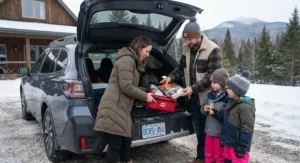
Here’s what the spec sheet won’t tell you: wool doesn’t crinkle, rustle, or make the startling crackling noise that mylar sheets produce. For a car emergency blanket for kids safety specifically, that quiet, familiar texture matters more than raw heat-reflection percentages, because a calm child is easier to keep warm and cooperative than a frightened one fighting against a loud, unfamiliar material. At 64 x 88 inches and 4.5 lbs, it’s also large enough to wrap around a parent and small child together.
Aggregated review sentiment describes the blanket as genuinely warm even in wet conditions and notes it’s machine washable, softening with each wash — a meaningful advantage for something that might see occasional non-emergency use as a stadium or picnic blanket, keeping it in active rotation rather than forgotten in a trunk for years.
Pros:
- ✅ Retains warmth even when wet, unlike mylar
- ✅ Quiet, soft texture is calmer for children in crisis
- ✅ Machine washable and durable across many winters
Cons:
- ❌ Far bulkier than any mylar option — trunk, not glovebox
- ❌ Highest per-unit price point among single blankets
Expect a price in the C$50-C$70 range in most Canadian listings — a real investment, but one that functions as household gear year-round rather than a single-purpose emergency item.
7. Ready America 72-Hour 2-Person Emergency Kit — best bundled kit for rural highway trips
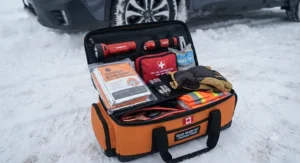
Rather than a standalone blanket, this is a complete pre-assembled kit built around Red Cross-recommended emergency essentials, and it’s worth including precisely because a blanket alone doesn’t solve every problem a rural highway breakdown creates. The backpack-style kit bundles two mylar survival blankets alongside food bars, water pouches, a first-aid kit, light sticks, dust masks, gloves, and a whistle.
Key specs with real-world meaning: it’s designed to sustain two people for roughly 72 hours, which sounds excessive for a typical roadside wait until you consider the Alberta drivers stranded for over fifteen hours during a 2026 highway snowstorm, some improvising blankets from whatever was in their luggage. CBC’s coverage of that Highway 63 closure is a useful reminder that “a few minutes on the shoulder” and “overnight, no cell service, plows can’t get through” are both realistic scenarios on Canadian highways.
Honest analysis: this isn’t a glovebox item — it’s a trunk item, and that’s fine, because it’s answering a different question than the other six products here. Aggregated review sentiment praises the completeness of the kit for the price but notes the included blankets are basic single-layer mylar, meaning many buyers pair the kit with a better standalone blanket like the S.O.L. XL for the actual thermal layer.
Pros:
- ✅ Bundles food, water, and first aid alongside blankets
- ✅ Built for extended, multi-hour or overnight scenarios
- ✅ Backpack format is easy to grab and carry if you must leave the vehicle
Cons:
- ❌ Included blankets are basic, not premium mylar
- ❌ Too bulky for glovebox storage — trunk only
Priced in the C$60-C$90 range depending on the exact bundle, it’s the pick for drivers who regularly cover long rural stretches — northern Ontario, the Prairies, interior BC — where “someone will be along in ten minutes” isn’t a safe assumption.
Practical Usage Guide: Fitting Your Emergency Blanket Into a Glovebox or Centre Console
Glovebox storage space is finite, and most gloveboxes are already stuffed with the owner’s manual, registration, an ice scraper, and assorted receipts by the time anyone thinks about adding a blanket. Here’s how to actually make it work rather than just buying a blanket and hoping it fits.
Start by measuring before you buy. A folded Coghlan’s or Swiss Safe mylar sheet compresses to roughly the footprint of a smartphone — genuinely glovebox-friendly. The Arcturus tarp and S.O.L. Bivvy are closer to a rolled pair of socks; they’ll fit a centre console or door pocket but may crowd a small glovebox. The wool blanket and the bundled kit are trunk items, full stop — don’t fight that.
A practical trick reviewers mention often: store the compact mylar option in the glovebox for immediate, one-person emergencies, and keep a second, bulkier option (wool or the bundled kit) in the trunk for anything that turns into a genuine wait. This two-tier approach means you’re never digging through a packed trunk in freezing wind for the thing you need in the first sixty seconds.
Common first-30-days mistake: people buy a compact blanket, unfold it once to check it out, then refold it imperfectly and it never fits back in its pouch the same way. Refold along the original creases the first time, and resist the urge to “just check” more than once — mylar in particular loses its compact fold integrity fast.
Real-World Scenarios: Matching the Right Blanket to Your Driving Life
If you’re a commuting parent doing a 15-minute daily school run in the city, your risk profile looks completely different from someone doing a six-hour drive through rural highway breakdowns territory between small towns. Here are three quick profiles.
The urban daily commuter: Short trips, dense population, help typically arrives within 20-30 minutes. A single Coghlan’s Emergency Blanket or one unit from the Swiss Safe 4-in-1 pack genuinely covers this risk level — the goal is bridging a short, uncomfortable wait, not surviving overnight.
The family road-tripper: Multiple people, unpredictable weather changes across regions, kids in the back seat. This is where the Arcturus Military Wool Blanket earns its higher price — for a car emergency blanket for kids safety specifically, quiet material and genuine warmth-when-wet matter more than ultra-compact storage. Pair it with a couple of Swiss Safe units as backups.
The rural or long-haul driver: Long stretches between towns, patchy cell coverage, real risk of multi-hour waits. This profile is exactly who the Ready America 72-Hour Kit and S.O.L. Emergency Bivvy were built for — food, water, and near-full-body heat reflection aren’t overkill when the nearest tow truck might be ninety minutes out on a closed highway.
✨ Don’t Miss These Exclusive Deals!
🔍 Take your winter road safety to the next level with these carefully selected picks. Click on any highlighted item to check current pricing and availability. These blankets will help keep your family warm and prepared for whatever the road throws at you!
Problem → Solution: What Actually Goes Wrong During Rural Highway Breakdowns
Rural highway breakdowns create a specific, predictable set of problems, and most of them have a straightforward fix if you’ve planned ahead.
Problem 1 — No cell signal to call for help. Solution: keep a paper map or downloaded offline map as backup, and treat the blanket as a bridge to whenever signal returns or a passing vehicle stops, not a five-minute stopgap.
Problem 2 — Running the engine for heat burns fuel and risks carbon monoxide if snow blocks the exhaust. Solution: this is precisely where a genuine thermal blanket like the S.O.L. 90% Heat Reflective XL or Arcturus Military Wool Blanket earns its keep — it reduces how often you need to run the engine at all, extending your fuel reserve for when you truly need heat or to attempt driving out.
Problem 3 — Kids getting scared or cold faster than adults. Solution: prioritize the quieter, softer Arcturus Military Wool Blanket for young children, and layer a mylar option like Swiss Safe underneath rather than relying on one blanket per person.
Problem 4 — Being invisible to rescuers in low visibility or snow. Solution: the high-visibility orange side of the S.O.L. 90% Heat Reflective XL or the whistle bundled with the S.O.L. Emergency Bivvy genuinely help here — reflective, bright materials cut through blowing snow far better than a dark winter coat.
Problem 5 — Realizing your kit is inadequate only once you’re already stranded. Solution: this is purely preventable. According to Canadian Red Cross cold-weather guidance, hypothermia risk climbs quickly once temperatures fall below -10°C without adequate protection, so treat the pre-trip check as non-negotiable, not optional.
How to Choose a Compact Car Emergency Blanket
- Match the size to your typical occupancy. A single-person mylar sheet doesn’t stretch to cover two adults comfortably — check whether you need XL sizing like the S.O.L. 90% Heat Reflective XL before assuming any blanket “fits everyone.”
- Weigh reusable versus disposable honestly. If you’ll actually re-check and refold your kit yearly, a reusable option like the Arcturus All-Weather Survival Blanket pays for itself. If it’ll sit forgotten for five years, a cheap disposable that you replace occasionally may be more realistic.
- Consider who’s riding with you. Families with young kids should weight comfort and quiet material — the Arcturus Military Wool Blanket — more heavily than raw heat-reflection percentage.
- Check your actual glovebox and trunk space before buying, not after. Measure the empty space, not just what’s currently crammed in.
- Decide whether you need a standalone blanket or a bundled kit. Long rural drivers benefit from the completeness of something like the Ready America 72-Hour Kit; short-trip city drivers rarely need the food and water components.
- Verify puncture and cold-flexibility ratings where listed. Cheap mylar that cracks at -20°C fails exactly when you need it most — reviewers flag this constantly.
- Buy more than one. A single blanket anywhere is better than none, but layering a compact glovebox option with a bulkier trunk option covers both the immediate and extended-wait scenarios.
Common Mistakes When Buying a Car Emergency Blanket for Stranded Motorists
The single most common mistake is buying the cheapest available option and assuming “emergency blanket” is a single undifferentiated category — it isn’t. A C$3 dollar-store mylar sheet and a C$60 Arcturus wool blanket both technically qualify, but they solve genuinely different problems.
A second frequent mistake: buying a car emergency blanket for stranded motorists CAD-priced kit once and never checking it again. Mylar degrades with repeated folding, moisture can seep into a trunk-stored kit over years, and a blanket bought for a car you no longer own doesn’t help anyone in your current vehicle. Set a yearly reminder, ideally before the first snowfall.
A third mistake worth flagging: assuming a blanket alone is “the kit.” Reviewers and safety organizations alike consistently note that a blanket paired with zero other supplies — no water, no light source, no way to signal for help — still leaves a meaningful gap for genuinely long rural highway breakdowns. Treat the blanket as one component, not the entire solution.
Compact Car Emergency Blankets for Kids: Safety Considerations
Kids change the calculation in ways that go beyond simply “buy a smaller size.” A frightened child in a loud, crinkling mylar blanket during an already stressful roadside wait can escalate a manageable situation into a genuinely difficult one — reviewers of mylar products mention this specifically, describing kids pulling the blanket off because the noise or texture unsettled them.
Based on the spec comparison across this list, the Arcturus Military Wool Blanket is the strongest fit for families specifically because it avoids that crinkle entirely, while still delivering genuine warmth-when-wet performance that a mylar sheet can’t match if snow has gotten into the car. For a lighter backup that still fits a child’s smaller frame, one unit from the Swiss Safe 4-in-1 pack works well as a supplementary layer.
Beyond material choice, a few practical habits matter: keep a spare set of dry mittens and a toque with the blanket kit specifically for kids, since small hands and ears lose heat faster than an adult’s. Talk through the “what happens if we get stuck” scenario with kids calmly before it happens, not during — familiarity reduces panic. And never leave a child alone in a stopped vehicle on a highway shoulder to retrieve supplies from the trunk; keep whatever the child needs within arm’s reach in the cabin.
Mylar vs Wool vs Reusable Bivvy: What to Expect in Real-World Performance
On paper, heat-reflection percentages make mylar look like the clear winner — numbers in the 80-90% range dominate the spec sheets. In practice, what to expect diverges based on conditions. Mylar performs best in dry cold: wrapped snugly, it reflects body heat effectively and weighs almost nothing. The moment moisture gets involved — melting snow tracked into the cabin, condensation, or a wet coat — that performance advantage narrows considerably, because a damp mylar sheet clings and loses some reflective efficiency at the contact points.
Wool, represented here by the Arcturus Military Wool Blanket, takes the opposite trade-off: heavier, bulkier, but wool fibres retain a meaningful portion of their insulating capacity even when wet, a property mylar simply doesn’t share. For anyone driving through regions with frequent freeze-thaw cycles rather than consistently dry deep cold, that’s a real practical advantage.
The reusable bivvy and tarp options — the S.O.L. Emergency Bivvy and Arcturus All-Weather Survival Blanket — split the difference: mylar-based reflective performance with a tougher outer shell that resists the puncture and tear failures common to basic disposable sheets. What most buyers overlook is that these hybrids also double as multi-purpose gear — ground cover, wind block, improvised shelter — which a flat single-use blanket can’t offer.
Long-Term Cost & Value: Are Multi-Packs Worth It in CAD?
Running the numbers on cost-per-use tells a clearer story than sticker price alone. A Swiss Safe 4-in-1 pack priced around C$20 works out to roughly C$5 per blanket — genuinely hard to beat for outfitting a family across two vehicles. But that math assumes each blanket only gets used once in an emergency; if any of them see repeated real-world use, a single reusable option amortizes better over time.
The Arcturus All-Weather Survival Blanket, at roughly C$25-C$40, costs more upfront than an entire multi-pack of disposables, but because it’s genuinely reusable across multiple seasons rather than single-use, its effective cost-per-winter drops well below any mylar option after year two. The Arcturus Military Wool Blanket, despite sitting at the top of this list’s price range around C$50-C$70, arguably offers the best long-term value of all seven products, because it doubles as everyday household gear — a stadium blanket, a picnic blanket, a spare for guests — rather than sitting untouched until an emergency.
The Ready America 72-Hour Kit is harder to evaluate on cost-per-use alone, since its value isn’t really about the blanket component at all — it’s the bundled food, water, and first-aid supplies that justify the higher C$60-C$90 range, and those do have shelf lives that eventually require replacement, an ongoing cost worth factoring in for anyone budgeting seriously for rural highway breakdowns preparedness.
Safety, Regulations & Winter Driving Compliance in Canada
Canada doesn’t mandate carrying an emergency blanket by federal law, but multiple provincial and industry bodies actively recommend it as standard winter driving practice.Transport Canada’s official winter driving emergency kit guidancelists a blanket alongside jumper cables, a first-aid kit, and traction aids like sand or kitty litter as baseline items every vehicle should carry from late fall through early spring.
Beyond blanket ownership itself, cold-weather safety bodies emphasize recognizing hypothermia risk quickly. The Canada Safety Council’s guidance on cold-weather emergencies notes that hypothermia is a genuine medical emergency requiring prompt attention — early signs like uncontrollable shivering and confusion shouldn’t be dismissed as simple discomfort, particularly for children or older passengers who lose body heat faster.
Provincial highway authorities in Ontario, Alberta, and Quebec periodically issue winter storm advisories urging drivers to delay non-essential trips and, if already on the road, to stay with their vehicle rather than attempting to walk for help in low-visibility conditions — a scenario where a genuinely warm, reliable blanket becomes directly life-relevant rather than a nice-to-have.
Frequently Asked Questions
❓ Do I really need an emergency blanket if I already have a winter coat in the car?
❓ How long does a mylar emergency blanket actually last in storage?
❓ Can a compact car emergency blanket be reused after one emergency?
❓ What's the best car emergency blanket for stranded motorists on a tight CAD budget?
❓ Is a wool blanket overkill for a city driver who rarely leaves town?
Conclusion
A compact car emergency blanket isn’t a purchase anyone gets excited about, and that’s exactly why it’s worth handling now rather than after the fact. The honest takeaway from comparing these seven products is that there’s no single “best” pick — there’s a best pick for your specific situation. A city commuter genuinely doesn’t need the same kit as someone crossing northern Ontario in February.
If you want the simplest possible starting point, a Coghlan’s Emergency Blanket or a Swiss Safe 4-in-1 pack costs almost nothing and beats having zero preparation entirely. If you’re driving with kids regularly, the quiet, warm-when-wet Arcturus Military Wool Blanket genuinely changes the experience of an already stressful roadside wait for a frightened child. And if your routes regularly cross rural highway breakdowns territory — the kind of stretch where help might be an hour or more away — pairing a durable option like the S.O.L. Emergency Bivvy with a fuller kit like the Ready America 72-Hour Kit closes the gap between “uncomfortable” and “genuinely dangerous.”
Whatever you choose, the goal is the same one Transport Canada and the Canadian Red Cross both emphasize: don’t let winter catch your vehicle unprepared.
✨ Don’t Miss These Exclusive Deals!
🔍 Take your winter driving preparedness to the next level with these carefully selected picks. Click on any highlighted item to check current pricing and availability. These compact blankets could make all the difference for your family this winter!
Recommended for You
- Car Emergency Blanket Kit: 7 Top Picks for Canadian Winters 2026
- 7 Best Emergency Car Blankets for Canadian Winters (2026 Guide)
- RV Throw Blanket Set: 7 Cozy Picks for Canadian Campers (2026)
Disclaimer: This article contains affiliate links. As an Amazon Associate, I earn from qualifying purchases. If you purchase products through these links, we may earn a small commission at no additional cost to you.
✨ Found this helpful? Share it with your friends! 💬🤗
