
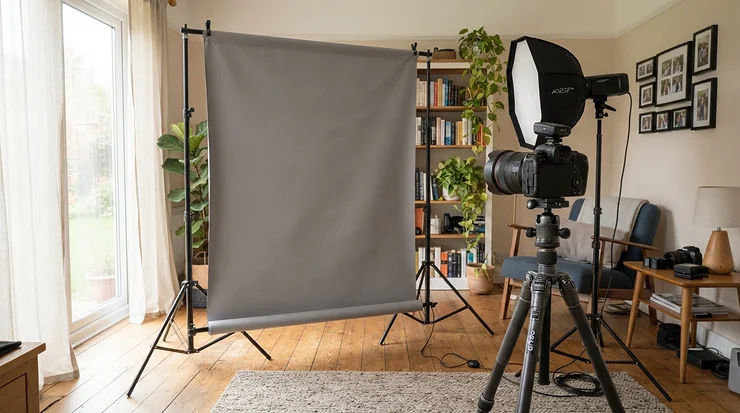
In This Article
You unfold a fresh backdrop, hang it, switch on your key light, and every crease lights up like a topographic map. It’s a ritual of small humiliations, and most home-studio shooters know it well.
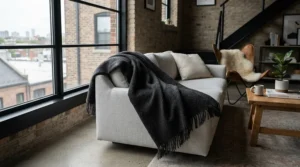
A wrinkle resistant photography backdrop exists to end that ritual. Backdrops have a long history, from the painted Victorian-era scenes documented in this overview of painted photography backdrops to the plain cloth hanging in spare rooms across the country. What matters now is the fabric. Modern polyester and microfiber are designed to hang flat, shrug off folding, and survive a washing machine.
This guide ranks seven real options, all chosen with black in mind. Black is the fastest route to a moody, professional look when your “studio” is a corner of the basement. It’s also the colour that punishes cheap fabric hardest, because every fold, fibre and light leak shows up on it.
Here is how this guide works. Everything comes from published specifications, retailer listings and aggregated review themes, never from invented hands-on testing. Prices appear as CAD ranges only. Measurements are metric first, because that’s how Canadian rooms are measured. If you’re hunting for a black photography backdrop blanket Canada shoppers can actually get delivered, or a photography backdrop blanket for home studio CAD budgets, keep reading. The comparison table is next, then seven detailed breakdowns.
Quick Comparison Table: Wrinkle Resistant Photography Backdrop Options
| Product | Size (metric) | Fabric | Price Range (CAD) | Best For |
|---|---|---|---|---|
| Westcott 9′ x 10′ | 2.75 x 3.05 m | Lightweight wrinkle-resistant fabric | C$100–C$200 | Groups and full-length framing |
| Westcott X-Drop 5′ x 7′ | 1.52 x 2.13 m | 100% polyester, embossed velour texture | C$60–C$250 (fabric only vs. kit) | Headshots and portable setups |
| Neewer 10 x 12 ft | 3 x 3.6 m | 100% polyester | C$45–C$75 | All-round value |
| Kate 10 x 12 ft | 3 x 3.6 m | Microfiber | C$40–C$80 | Soft, non-reflective portraits |
| EMART 8.5 x 10 ft | About 2.6 x 3 m | Polyester | C$35–C$60 | First-time buyers |
| WEIJIEMING 10 x 10 ft | 3 x 3 m | High-density opaque polyester | C$25–C$50 | Tight budgets with big coverage |
| Vevelux 10 x 10 ft | 3 x 3 m | 100% polyester, double-sided | Under C$40 | Cheapest entry point |
Looking at the table, the two Westcott options sit at the premium end, and what you’re paying for is a brand with a clear warranty and purpose-built mounting. The Neewer 10 x 12 ft and Kate 10 x 12 ft share the same generous footprint at mid-range pricing, so the choice between them comes down to fabric feel. Budget buyers should treat the WEIJIEMING 10 x 10 ft and Vevelux 10 x 10 ft as coverage-first purchases and expect to check opacity before the first shoot.
💬 Just one click — help others make better buying decisions too!😊
Top 7 Wrinkle Resistant Photography Backdrop Picks: Expert Analysis
1. Westcott Wrinkle-Resistant 9′ x 10′ Backdrop — best for group portraits and wide framing
The standout here is raw coverage. At 2.75 x 3.05 m, it handles a family of four or a full-length standing portrait without revealing the edge of your wall.
Westcott builds in a pole pocket for standard support systems and grommets for wall mounting. It also states the fabric is wrinkle-resistant when stretched taut. That last phrase matters, and the catch is worth reading twice. A crossbar and clamps do the real work, so without proper tension even good fabric will crease.
Based on the specs, this suits shooters who want a durable, reflection-resistant surface that travels well. Many Canadian basements have ceilings around 2.4 m, so a 3 m drop will puddle on the floor. That’s an advantage for sweep-style product shots, though you’ll want to keep the pooled fabric clean.
Colour availability varies by listing. The Amazon.ca page I found shows Neutral Gray, so confirm that black is offered before you buy. Reviews for Westcott’s wider fabric line are mixed. Retailer buyers praise portability, while some find lighter colours thin, so lean on black-specific feedback.
Pros:
- ✅ Generous 2.75 x 3.05 m coverage
- ✅ Pole pocket plus grommets for flexible mounting
- ✅ Lightweight and travel-friendly
Cons:
- ❌ Needs tension to deliver wrinkle resistance
- ❌ Black availability varies, so verify the listing
Expect roughly C$100–C$200, so check current price. It’s a fair value if you shoot groups often.
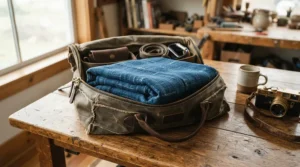
2. Westcott X-Drop Wrinkle-Resistant 5′ x 7′ Backdrop (Rich Black) — best for portable headshots
Where the previous pick is about size, this one is about speed. The fabric weighs only about 0.6 kg (1.3 lb) and carries five metal grommets. It’s built to clip onto the collapsible X-Drop stand, which Westcott says is the lightest on the market.
The material is 100% polyester, machine-washable and described as reflection-free, with an embossed velour texture noted by retailers. On a black backdrop that velvet-like surface is the point. It soaks up spill light instead of bouncing it back at the lens. The 1.52 x 2.13 m size suits headshots and video calls but not full-length work.
Based on the spec comparison, this is the right call for anyone shooting at clients’ offices, or a home photographer who needs to pack away a “studio” after each session.
Review themes at retailers are split. Fans like the compact system and the way black and grey fabrics handle light. Critics call the frame basic and say lighter fabrics can be see-through, with one reviewer doubling the fabric under bright flash. For black, that opacity concern is smaller, but it’s still wise to test with your strobes.
Pros:
- ✅ Velour-textured surface suits black well
- ✅ Very light and fast to set up
- ✅ Machine-washable polyester
Cons:
- ❌ Small footprint limits full-length shots
- ❌ Stand is sold separately in some listings
Fabric alone runs around C$60–C$100, and kits with the stand climb toward C$250. That’s strong value for mobile shooters.
3. Neewer 10 x 12 ft Collapsible Backdrop (Black) — best all-round value
The unusual selling point is honesty. Neewer says outright that a folded backdrop will arrive with creases, and that they relax after hanging for about half a day.
The material is 100% polyester in a single seamless piece, with fully stitched edges and a rod pocket on one edge. At 3 x 3.6 m it covers couples, kids and small groups comfortably. Neewer advises keeping wash and iron temperatures at or below 40°C, which is far gentler than the setting most irons default to. B&H’s listing for the white version also flags it as machine-washable and wrinkle-resistant.
My read is that this is the sensible default for most home studios. The big footprint gives you room to move your light, and the price won’t make you flinch if a sweaty toddler or a muddy dog gets involved.
Neewer ships from a Canadian warehouse through its own site, with a two-year warranty on direct purchases, per its Canadian page. Verified Amazon.ca review data wasn’t available to me, so check the current ratings on the listing.
Pros:
- ✅ Generous 3 x 3.6 m seamless piece
- ✅ Reinforced stitching on all edges
- ✅ Clear, low-heat care guidance
Cons:
- ❌ Arrives creased until it has hung for hours
- ❌ Rod pocket on one edge only
Plan on around C$45–C$75, so check current price. It’s an excellent value for the size.
4. Kate 10 x 12 ft Solid Black Microfiber Backdrop — best for soft, non-reflective portraits
Microfiber is the quiet hero here. Kate lists a soft, seamless microfiber that is non-reflective, with shallow wrinkles and a top pocket for hanging.
It weighs about 0.7 kg (1.5 lb) in its box, which tells you how easily it travels. The 3 x 3.6 m dimensions match the Neewer 10 x 12 ft, so the difference is entirely in the hand-feel. Microfiber’s softer, slightly napped surface tends to scatter light more gently than flat polyester, which helps black stay black.
Kate recommends a wash or a dryer cycle if folds persist. Reviewers of Kate’s textured microfiber backdrops often mention a dryer tumble as a quick fix, along with the observation that the fabric hides small creases better than flatter alternatives.
For anyone who photographs children or pets, the washability is the real feature. The cost of an accident drops sharply when the whole backdrop can go in the machine.
Pros:
- ✅ Soft microfiber with low reflectivity
- ✅ Washable and dryer-friendly care
- ✅ Same 3 x 3.6 m footprint as pricier rivals
Cons:
- ❌ Microfiber can attract lint and pet hair
- ❌ Shipped folded, so creases need time or a dryer
Expect about C$40–C$80. That’s a solid verdict for portrait shooters.
5. EMART 8.5 x 10 ft Black Polyester Backdrop — best for first-time buyers
If you’ve never owned a backdrop, this is the least intimidating start. EMART’s black polyester screens are listed as machine-washable, wrinkle-free and equipped with a top pole pocket.
At roughly 2.6 x 3 m, the size sits between a headshot cloth and a group-sized drape. That works nicely for one or two people at a desk-sized distance. The brand also sells stands and kits, so you can build a complete starter setup under one name.
Here’s what most buyers overlook. A backdrop is only as flat as its support, and EMART’s adjustable stands are a popular match. A Trusted Reviews round-up even named EMART’s 10×7 ft stand a top value support system for fabric backdrops. Pair the cloth with decent clips and the wrinkle claim becomes believable.
I couldn’t verify a large pool of reviews for the black cloth itself, so treat this as a modest-evidence pick and read the listing before buying.
Pros:
- ✅ Machine-washable polyester with pole pocket
- ✅ Easy to bundle with matching stands
- ✅ Friendly size for single-subject shoots
Cons:
- ❌ Limited verified review data for the cloth
- ❌ Too narrow for full groups
Pricing lands around C$35–C$60, so check current price. It’s a good value for beginners.
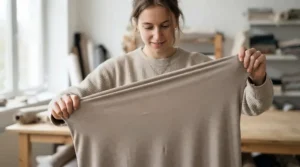
6. WEIJIEMING 10 x 10 ft Black Photography Cloth — best budget coverage
Square and generous, this one is built around a clear fabric claim. The listing describes high-density, opaque polyester that is less prone to wrinkles than cotton and easier to restore to a smooth finish.
A 3 x 3 m square gives you plenty of room for portraits and lets you drape across a table for product shots. Because polyester is naturally resilient, folds relax over time, and low-temperature steaming should finish the job. “High-density” only matters if it translates to opacity, which is the thing to test on arrival by holding the fabric up to a lamp.
On the evidence, this is the “I want big and black without paying much” answer. The listing shows five-star ratings, but one is flagged as an incentivized review, so I wouldn’t lean on the star count.
For fussier work, consider doubling the fabric over your stand or placing it a couple of metres behind your subject, which darkens the tone naturally.
Pros:
- ✅ Large 3 x 3 m square coverage
- ✅ Opaque, high-density polyester claim
- ✅ Foldable, washable and seamless
Cons:
- ❌ Reviews are limited and partly incentivized
- ❌ Opacity should be tested before use
Budget about C$25–C$50. It’s good value if you check the fabric on day one.
7. Vevelux 10 x 10 ft Black Backdrop — cheapest way into the format
Cheap doesn’t have to mean careless. This listing specifies 100% high-density polyester, a 7 cm rod pocket, a double-sided design and claims of fade and pilling resistance with minimal wrinkling.
The 7 cm pocket is wide enough for most crossbars. Double-sided use matters more than it sounds, because you can flip the cloth if one face picks up lint. “Quick recovery” is the marketing phrase to watch. In plain terms it suggests folds should relax quickly once hung, though that’s a claim, not a test result.
At one retailer listing I found, the product averaged around four out of five stars from a modest review pool. That’s reassuring but not conclusive.
Buy this one for experiments such as a first product shoot, a classroom, or a backup for your better backdrop. It’s a low-risk way to learn your lighting.
Pros:
- ✅ Double-sided 3 x 3 m cloth
- ✅ Wide 7 cm rod pocket
- ✅ Lowest cost of the seven
Cons:
- ❌ Modest review pool
- ❌ Fabric weight likely lighter than premium picks
Expect under C$40, so check current price. It’s an excellent value for experimentation.
What Is a Wrinkle Resistant Photography Backdrop?
A wrinkle resistant photography backdrop is a fabric background, usually polyester or microfiber, engineered to hang flat with minimal creasing so it can go from box to shoot with little or no ironing. It typically includes a rod pocket or grommets, is often machine-washable, and gives a clean, non-reflective surface behind portraits or products.
That’s the short version. The longer one is that “wrinkle resistant” is a spectrum, not a switch. Synthetic fibres resist creasing because their polymer chains spring back after folding, whereas cotton creases and holds the fold. Heavier weaves also relax faster than thin ones, since weight helps gravity pull the fabric straight.
For black work, the practical differences are opacity, sheen and lint. Those three variables decide whether your background reads as velvet or as a cheap bedsheet.

How to Choose a Wrinkle Resistant Photography Backdrop
Here are six criteria, ordered by how often they trip people up:
- Match the size to your distance. A common rule of thumb is that the backdrop should be about three to four times the subject’s dimensions when shooting at typical distances, as explained in this photography glossary entry. Small cloths force tight crops.
- Pick the fabric for your finish. Polyester gives a flatter, easy-care surface, while microfiber adds softness and less reflection.
- Check opacity. Hold the fabric against a window. If light shows through, double it up or choose a heavier option.
- Confirm the mounting. A rod pocket needs a crossbar, grommets suit hooks, and neither works without the right support.
- Read the care instructions. Low-temperature washing is the norm, so look for specifics on heat limits.
- Budget for the support. A good stand and clamps often matter more than another C$20 on fabric.
Think of the backdrop as a bride and the stand as the venue. A lovely dress in a collapsing marquee still ruins the day.
Fabric Quality: What Separates a Good Backdrop From a Bad One
Fabric quality is the single biggest variable in this category, and it’s the one product photos hide best. Two black cloths can look identical online. Under strobes they behave like different species.
Three traits decide the outcome. First, weave density determines opacity and how well folds relax. Second, surface finish controls reflection, so matte or velour-like textures keep black deep. Third, stitching and hems decide whether edges fray after a few washes. The Neewer 10 x 12 ft highlights fully stitched edges for exactly this reason.
Canadian shoppers also have a little regulatory context. Under the federal Textile Labelling Act, the Competition Bureau explains that fibre content labelling is required for consumer textile items, while care labelling is a voluntary program. Whether a particular backdrop falls under that regime is a matter for the seller, so I wouldn’t assume. The practical advice is simple. Look for a stated fibre content and care guidance on the listing, and be wary when neither appears.
When a manufacturer states that fibre blend plainly, it signals confidence in the fabric quality. Vague language like “premium material” with no fibre named is a mild red flag. In short, specifics are the cheapest quality signal you have.
Black Photography Backdrop Blanket Canada: Does the “Blanket” Format Work?
Searches for a black photography backdrop blanket Canada photographers can order are really about format: a soft, foldable cloth instead of a rigid roll of paper or vinyl. Each product above fits that idea.
The appeal is obvious. A cloth-style black photography backdrop blanket Canada studios can pack away in a closet takes up almost no space. It drapes over chairs, tables or a stand, and it can be washed rather than replaced.
Two Canadian-specific cautions apply. First, winter air in heated homes is often very dry, and dry air encourages static, which tends to attract lint to dark fabrics. Run a lint roller down the cloth before each shoot, and consider a humidifier in the room. Second, plan for delivery windows. The Neewer 10 x 12 ft can ship from a Canadian warehouse, which may shorten waits compared with cross-border shipments.
Treat a true bedroom blanket as a different product. Thick fleece reflects light unevenly and holds wrinkles in odd ways, so choose a cloth made for photography.
Photography Backdrop Blanket for Home Studio CAD: Budget and Long-Term Value
A photography backdrop blanket for home studio CAD budgets can run from cheap to surprisingly costly once you add support gear. Here’s a realistic ladder:
| Tier | Typical Range (CAD) | What You Get | Best For |
|---|---|---|---|
| Entry | Under C$50 | Vevelux 10 x 10 ft, WEIJIEMING 10 x 10 ft | Learners and hobbyists |
| Mid | C$40–C$80 | Neewer 10 x 12 ft, Kate 10 x 12 ft, EMART 8.5 x 10 ft | Regular home studios |
| Premium | C$100–C$250 | Westcott 9′ x 10′, Westcott X-Drop 5′ x 7′ kit | Mobile and client work |
The table makes one thing clear. Mid-range cloths deliver most of the benefit, and the premium tier mostly buys convenience and brand support. If your photography backdrop blanket for home studio CAD plan includes a stand, add C$40–C$100 for a decent one.
Cost per use is the better lens. A C$60 cloth used 100 times costs 60 cents a shoot, and a washable one avoids replacement after spills. Cheaper cloths can still be false economies if you replace them twice a year, so factor durability into the maths. Ironing-free backdrops also save time, and time is a cost too.
Professional Studio Equipment: What to Pair With Your Backdrop
A backdrop is only one piece of professional studio equipment. The rest of the kit decides whether it looks flat or flawless.
Start with the support. A sturdy stand with a crossbar matters most, and clamps keep the cloth taut. Next comes lighting. A black backdrop needs light on your subject, not on the cloth. Feathering your key light away from the background keeps black truly black, and a snoot or flag can help.
The Westcott X-Drop 5′ x 7′ shows how professional studio equipment can be modular. A stand, fabric and travel case combine into one grab-and-go system. By contrast, the larger cloths like the Neewer 10 x 12 ft pair better with a heavier-duty crossbar rig.
Other useful add-ons include a lint roller, a garment steamer, sandbags for stand stability and a simple floor covering. None of this is exotic. Together, though, these items separate a casual setup from something that looks like professional studio equipment in use.
If you’re building up gradually, buy in this order: stand, clamps, backdrop, then lights. The order feels backwards, but a good support makes any backdrop look better.
Ironing-Free Backdrops vs. Traditional Muslin and Paper
Ironing-free backdrops have a straightforward promise. Hang them, let gravity work, and shoot. Traditional cotton muslin and seamless paper make different trade-offs:
| Feature | Wrinkle-Resistant Polyester/Microfiber | Cotton Muslin | Seamless Paper |
|---|---|---|---|
| Wrinkle behaviour | Folds relax with hanging or steaming | Creases hold, often needs ironing | Creases tear or mark |
| Washable | Usually yes | Sometimes | No |
| Storage | Folds small | Folds small | Bulky rolls |
| Best For | Home studios and travel | Painterly textured looks | Clean sweeps and product shots |
For a concrete example of the muslin trade-off, the Photoflex Muslin Backdrop (Black, 10 x 12′) is 100% muslin with dual rod pockets and both sides usable, per B&H. One buyer there reported light leaking through and used black plastic behind it. That’s the kind of opacity issue many polyester cloths try to avoid.
That doesn’t make muslin bad. It makes it a different tool. If you love a hand-painted, mottled look, muslin is hard to beat. If your priority is speed, ironing-free backdrops win clearly.
For most home photographers, ironing-free backdrops remove the one chore that makes people stop shooting. A simple rule applies. Choose polyester or microfiber for convenience, muslin for character, and paper only when you need a perfectly clean sweep.
Practical Usage Guide: Setup, First-Use Tips and Ironing-Free Wrinkle Removal
Here’s how to get the best from any black cloth, and it’s also where ironing-free backdrops earn their name.
First 24 hours. Unfold the cloth the moment it arrives. Hang it fully extended, since folds relax with time and gravity. The Neewer 10 x 12 ft maker suggests roughly half a day, which is a sensible benchmark for the others.
Stubborn creases. Use a handheld garment steamer from a distance, or a low-temperature tumble in the dryer. Keep heat modest. Neewer caps wash and iron temperatures at 40°C, and polyester can scorch or shine if overheated. If you do iron, use the reverse side with a pressing cloth.
Mounting. Slide a crossbar through the pocket, then pull the sides outward and clamp lightly. Even tension is what makes “wrinkle resistant when stretched taut” come true. For larger cloths, add a weighted pole at the bottom to keep the surface flat.
Distance and lighting. Place the subject a couple of metres in front of the cloth, and keep light off the fabric. Distance helps hide weave texture and tiny creases.
Between shoots. Fold loosely or roll rather than pressing into a tight square. A rolled cloth in a cardboard tube often hangs flatter next time.
Skip these habits and even the best backdrop will fight you. Follow them and you’ll hardly think about wrinkles at all.
Problem and Solution Guide: Fixing Common Black Backdrop Headaches
Problem: Lint everywhere. Black reveals every fibre. Run a lint roller over the cloth before shooting and keep pets out of the room. Microfiber like the Kate 10 x 12 ft can attract more, so roll it gently.
Problem: The black looks grey. This usually means light is spilling onto the cloth. Move your subject farther forward, flag your light, or switch to a denser fabric.
Problem: Light shows through the fabric. Double the cloth or hang it in front of a dark wall. A thin cloth like the Vevelux 10 x 10 ft may need this on bright flash days.
Problem: Sagging and ripples. Add clamps and a bottom pole. The EMART 8.5 x 10 ft pairs well with adjustable stands, which also help with tension.
Problem: Shine from heat. Never press polyester with a hot iron. Steam is gentler and often enough.
Problem: Not enough room. The Westcott X-Drop 5′ x 7′ works in tight spaces because the stand folds down. For a larger room, the WEIJIEMING 10 x 10 ft offers wide coverage cheaply.
Most backdrop troubles turn out to be lighting or support problems. Fix those first, and the fabric usually behaves.
Common Mistakes When Buying a Wrinkle Resistant Photography Backdrop
Buyers repeat the same errors, and they’re cheap to avoid.
Trusting the label too much. “Wrinkle resistant” is a marketing phrase, not a standard. Westcott itself qualifies the claim with “when stretched taut”, so read the fine print.
Buying too small. A 1.5 x 2 m cloth looks fine in a listing and cramped in a room. If you shoot anything beyond headshots, size up.
Ignoring colour fidelity. Monitors vary, and listings warn that colour may differ slightly from the screen. Order a single colour first and test before buying a set.
Skipping the support. Gravity doesn’t flatten a cloth hung from nails. A crossbar and clamps cost far less than the frustration.
Forgetting about space. A 3 m drop in a room with a 2.4 m ceiling will pool on the floor. That’s fine for sweeps but awkward for standing portraits.
Chasing the lowest price blindly. Budget cloths work, but check opacity and read recent review themes before committing.
Avoid these six, and you’ll sidestep most of the regrets people post about in reviews.
FAQ
❓ Can I steam a wrinkle resistant photography backdrop safely?
❓ What is a realistic CAD budget for a photography backdrop blanket for home studio use?
❓ Do ironing-free backdrops really never need ironing?
❓ Is polyester or microfiber better for a black backdrop?
❓ How do I stop lint and pet hair showing on black fabric?
Conclusion
The right wrinkle resistant photography backdrop depends on your room, your subjects and your patience for ironing. After comparing seven real options, a few conclusions stand out.
For most home studios, the Neewer 10 x 12 ft is the sensible all-rounder, offering generous coverage at mid-range cost. If you favour a softer finish for portraits, the Kate 10 x 12 ft microfiber is a strong alternative. Travelling photographers will appreciate the Westcott X-Drop 5′ x 7′, while group shooters should look at the Westcott 9′ x 10′. Budget buyers can start with the EMART 8.5 x 10 ft, WEIJIEMING 10 x 10 ft or Vevelux 10 x 10 ft, then upgrade once their lighting improves.
Whatever you choose, remember that fabric quality, support gear and lighting work together. A modest cloth on a good stand beats a premium cloth on a wobbly one. Treat your backdrop as one part of a growing kit of professional studio equipment, and let ironing-free backdrops give you your Sunday evenings back.
✨ Ready to Shoot Without the Ironing Board?
🎯 Pick the size that fits your room, click the product name that suits your budget, and check current pricing on Amazon.ca. Your next black-backdrop portrait is one unfolded cloth away! 📸
Recommended for You
- Photography Backdrop Blanket: 7 Best Picks In Canada 2026
- Heavy Soundproof Blanket: 7 Best Picks That Actually Work (2026)
- Soundproof Moving Blanket Guide: 7 Best Picks For 2026 (Proven)
Disclaimer: This article contains affiliate links. As an Amazon Associate, I earn from qualifying purchases. If you purchase products through these links, we may earn a small commission at no additional cost to you.
✨ Found this helpful? Share it with your friends! 💬🤗
