
In This Article
Picture this. You’ve finally set up the mic, the laptop fan is whispering, you hit record — and your upstairs neighbour decides it’s the perfect evening to rearrange furniture. Welcome to home audio in a Canadian condo, townhouse or drafty older semi.
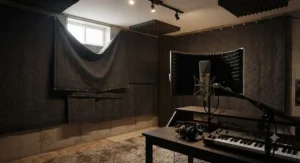
This is exactly where a heavy soundproof blanket earns its keep. It won’t turn a bedroom into Abbey Road, and anyone who promises that is selling you a fairy tale. But a well-chosen heavy soundproof blanket can tame echo, soak up the harsh mid and high frequencies that make recordings sound “roomy,” and — if it has a real barrier layer — knock a noticeable edge off noise leaking through a door or thin partition.
What Is a Heavy Soundproof Blanket?
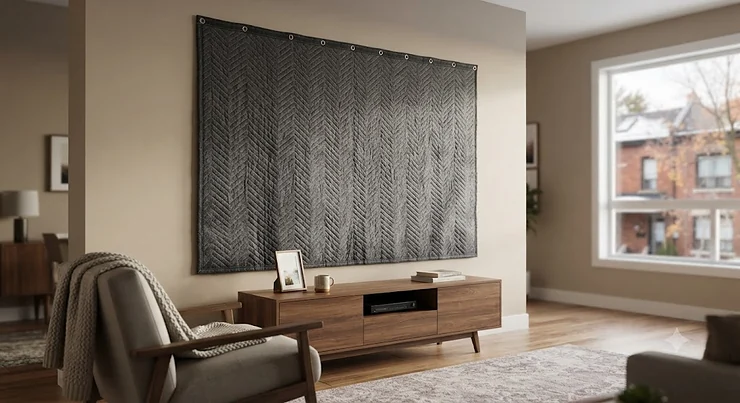
A heavy soundproof blanket is a dense, quilted acoustic panel — usually 4-8 kg, filled with recycled cotton or fibre, sometimes backed with mass-loaded vinyl — that you hang over walls, doors or windows. Its main job is absorbing echo (measured by the noise reduction coefficient, or NRC); only barrier-backed models meaningfully block sound passing through.
That distinction matters more than anything else in this guide. Most “soundproof” blankets are really sound-absorbing blankets. Heavy ones absorb better, and barrier-backed ones also block a little. Keep that one idea in your pocket and you’ll dodge most of the marketing traps.
For 2026, I dug through manufacturer spec sheets, independent review roundups and aggregated Amazon review sentiment to shortlist seven real products available to Canadian shoppers — from bargain moving-blanket hybrids to a vinyl-backed premium sheet. Prices are given as ranges in Canadian dollars because they move constantly; always check the current price on amazon.ca.
Quick Comparison Table: 7 Heavy Soundproof Blanket Picks at a Glance
| Product | Size (approx.) | Weight (each) | Key Acoustic Spec | Price Range (CAD) | Best For |
|---|---|---|---|---|---|
| Audimute isolé Sound Barrier Sheet | 88 × 208 cm | ~8.2 kg (18 lb) | MLV layer, STC 20, NRC 0.75 (maker’s figures) | ~C$170-C$240 | Audimute isolé: doors and blocking noise |
| Audimute Sound Absorption Sheet | 122 × 244 cm | ~5 kg (11 lb) | NRC 0.85 (maker’s figure) | ~C$100-C$160 | Audimute Sound Absorption Sheet: echo control in studios |
| VocalBoothToGo Producer’s Choice VB70-G | 203 × 203 cm | ~4 kg (8.8 lb) | NRC 0.80 (maker’s figure) | ~C$60-C$110 | Producer’s Choice: vocal booths |
| US Cargo Control 80″ x 96″ Sound Blanket | 203 × 244 cm | ~5.4 kg (12 lb) | 18 grommets, machine washable | ~C$60-C$100 | US Cargo Control: big walls, heavy use |
| Saree 850GSM Sound Dampening Blanket (2-pack) | 244 × 203 cm | ~4.2 kg (9.2 lb) | 850 GSM recycled-cotton fill | ~C$90-C$140 per pair | Saree 850GSM: two-blanket coverage on a budget |
| VEVOR Sound Dampening Blanket 96″ x 80″ | 244 × 203 cm | ~4 kg (8.8 lb) | Triple-layer, Z-stitch | ~C$50-C$90 | VEVOR: garages, workshops, room dividers |
| BoxerTools Studio Series 78″ x 72″ | 198 × 183 cm | not published | Grommets plus hanging loops | ~C$40-C$70 (single) | BoxerTools Studio Series: easy, renter-friendly hanging |
Reading the table, the real split is between the two Audimute products (engineered acoustic sheets with published NRC figures) and the five heavy quilted “sound blankets” that grew out of the moving-blanket world. The Audimute isolé is the only one with a genuine mass-loaded vinyl barrier, which is why it costs roughly three times as much as a VEVOR or BoxerTools blanket. For pure echo control per dollar, though, the Saree 850GSM pair and the US Cargo Control blanket cover the most wall area for the money.
💬 Just one click — help others make better buying decisions too!😊
Top 7 Heavy Soundproof Blanket Options: Expert Analysis
Each pick below is judged on weight, construction, published acoustic data and what reviewers repeatedly report. No product here is ranked on hype — and where a claim can’t be verified, I’ll say so.
1. Audimute isolé Sound Barrier Sheet — the only true noise blocker here
The Audimute isolé is what happens when an acoustic company stops pretending a quilt can block sound and simply adds a barrier. It pairs a 1.6 mm (1/16″) layer of mass-loaded vinyl with Audimute’s eco-C-tex absorption fill made from recycled cotton and cellulose.
On paper, you get an NRC of 0.75 and an STC of 20 according to Audimute. In practice, NRC 0.75 means the face swallows roughly three-quarters of the mid and high-frequency reflections hitting it, while the vinyl adds real mass — about 8.2 kg across an 88 × 208 cm sheet sized to cover a standard 81 × 203 cm (32″ × 80″) interior door. That’s the key insight: it’s shaped for doors, which are usually the weakest link in any room.
Who should buy it? Podcasters and voice-over artists fighting hallway noise, and anyone whose problem is sound coming through rather than echo bouncing around. An STC of 20 is modest — a standard interior wall is well above that — so treat it as an upgrade layer, not a miracle.
Review sentiment is broadly positive about the build and weight, while a recurring note is that it only works as well as the gaps around it are sealed.
Pros:
- ✅ Genuine MLV barrier, not just absorption fill
- ✅ Sized precisely for standard interior doors
- ✅ Fibreglass-free, recycled-cotton core
Cons:
- ❌ Priciest option per square metre by far
- ❌ Narrow width covers less wall area
Expect roughly C$170-C$240 depending on colour and seller — worth it only if blocking, not echo, is your main headache.
2. Audimute Sound Absorption Sheet — highest published NRC in the lineup
If echo is your enemy, this is the most “studio-grade” absorber here. Audimute publishes an NRC of 0.85 for its 122 × 244 cm (4′ × 8′) sheet — the highest rating on this list.
At about 5 kg, it isn’t the heaviest, but weight and absorption aren’t the same thing. The eco-C-tex core is engineered for acoustic performance rather than furniture protection, so each kilogram does more acoustic work than a moving blanket’s random fibre. Three metal grommets and included knob-and-screw hangers mean it mounts flush like a panel rather than drooping like a curtain.
Based on the spec comparison, this is the one I’d point a home-studio owner toward when they want foam-level absorption without the dorm-room look. The 4′ × 8′ format also matches Canadian drywall sheet dimensions, which makes planning coverage on a wall straightforward.
Reviewers consistently report a clear drop in room echo after hanging one or two sheets. The most common complaint is realistic expectations: it absorbs, it doesn’t isolate, and it isn’t machine washable — you spot-clean or vacuum it instead.
Pros:
- ✅ Highest published NRC (0.85) of all seven
- ✅ Hangs flat like a proper acoustic panel
- ✅ Available in several neutral colours
Cons:
- ❌ Not machine washable
- ❌ Won’t stop noise from neighbouring rooms
Typically in the C$100-C$160 range — strong value if you want panel performance in blanket form.
3. VocalBoothToGo Producer’s Choice VB70-G — purpose-built for vocal booths
VocalBoothToGo built its reputation selling to voice actors, and the Producer’s Choice line shows it. These are not re-labelled moving blankets; they use a different stitch pattern specifically to help absorption.
Here’s the clever part. Instead of the zig-zag quilting common on movers’ pads, the Producer’s Choice uses parallel vertical stitching every 5 cm (2″), which lets the cotton fill loft and thicken. The company rates the fill at 106 lb per dozen — about 4 kg per 203 × 203 cm blanket — versus roughly 86 lb per dozen for its standard moving blankets, and publishes an NRC of 0.80. More fill, more loft, more absorption.
The two-tone black-and-white version is a quietly smart design touch: face white out to brighten a small booth for video calls, or black out to kill light reflections on camera. That makes it a natural fit for YouTubers and voice-over talent who record in the same corner.
Aggregated user feedback praises the thickness and grommet quality; the main caveat is that Amazon.ca availability for this brand fluctuates, so you may need to check the maker’s own shop.
Pros:
- ✅ Loft-friendly vertical stitching boosts absorption
- ✅ Published NRC of 0.80
- ✅ Reversible black-and-white finish
Cons:
- ❌ Amazon.ca stock can be inconsistent
- ❌ Absorbs only; no barrier layer
Usually around C$60-C$110 per blanket — excellent value for a dedicated vocal corner.
4. US Cargo Control 80″ x 96″ Sound Blanket — heaviest washable workhorse
If “heavy” is the word you typed into the search bar, this is the blanket that most literally delivers. The US Cargo Control 80″ × 96″ Sound Blanket weighs about 5.4 kg (12 lb) — roughly 144 lb per dozen, well above typical movers’ pads.
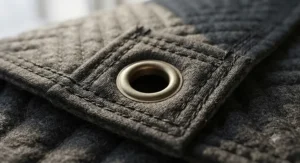
It’s filled with 100% recycled cotton inside a cotton/polyester woven shell, and the company notes its fabric is about 85 g — thicker than the 30-35 g non-woven skins on cheap blankets. What that means for you: the face resists snagging and tearing when you hang, unhook and rehang it repeatedly. Eighteen 2.5 cm (1″) grommets run along one long and one short side, so you can hang it portrait or landscape.
The standout practical feature is that it’s machine washable (hang to dry). For a garage band space, a basement laundry room or a rehearsal area where dust and sweat happen, that’s a genuine long-term advantage the Audimute sheets can’t match.
One honest warning from the maker itself: the recycled filler is multicoloured, so keep it off light upholstery. Review themes focus on thickness, stitching durability and sheer coverage — at 203 × 244 cm, one blanket covers most of a small wall.
Pros:
- ✅ Heaviest blanket here at about 5.4 kg
- ✅ Machine washable for dusty or sweaty spaces
- ✅ Eighteen grommets allow flexible hanging
Cons:
- ❌ No published NRC from the manufacturer
- ❌ Recycled fill may shed colour onto fabrics
Often around C$60-C$100 — the best kilograms-per-dollar pick for big surfaces.
5. Saree 850GSM Sound Dampening Blanket (2-pack) — best two-blanket value
The Saree 850GSM set wins on a simple equation: two big blankets for roughly the price of one premium sheet. Each 244 × 203 cm (96″ × 80″) blanket weighs about 4.2 kg (9.2 lb) and carries nine grommets.
“850 GSM” means 850 grams of material per square metre. For context, a decent bath towel sits around 500-600 GSM. So this is dense, towel-beating fill, which is what drives absorption in a quilted blanket. Recycled cotton inside a non-woven shell, locked with double Z-stitching, keeps the fill from bunching at the bottom after months of hanging — a common failure in cheap blankets.
Based on the spec comparison, this is my budget pick for anyone treating a whole room. Two blankets can flank a desk and mic, or cover two adjacent walls to stop flutter echo bouncing between parallel surfaces.
Aggregated review sentiment is strongly positive on thickness and value; the recurring complaint is a mild odour out of the box that reviewers say fades within a day or two of airing. The non-woven shell is also less rugged than the US Cargo Control woven face.
Pros:
- ✅ Two large blankets per pack
- ✅ Dense 850 GSM recycled-cotton fill
- ✅ Double Z-stitching resists fill sag
Cons:
- ❌ Initial odour needs airing out
- ❌ Non-woven shell less durable long term
Expect around C$90-C$140 for the pair — outstanding coverage per dollar.
6. VEVOR Sound Dampening Blanket 96″ x 80″ — tough, water-resistant all-rounder
The VEVOR blanket is the one I’d trust in a garage or unfinished basement, thanks to its water-resistant polyester woven face. It’s a triple-layer build with double-lock Z-stitching at about 4 kg (8.8 lb), or roughly 110 lb per dozen.
The 244 × 203 cm size matches the Saree 850GSM, but the woven, water-resistant shell changes where it belongs. Basements in much of Canada get damp in spring thaw; a face that shrugs off splashes and condensation is more useful there than a slightly higher fill density.
Here’s what most buyers overlook: VEVOR’s own listing notes the product “does not have soundproofing features.” That’s refreshingly honest. It’s a sound dampening blanket — good for echo and light blocking, not a wall between you and a noisy furnace room.
Reviewers on VEVOR’s site describe it as thick and heavy, with stitching that holds up, and many praise its light-blocking. The complaints are a few reports of thin spots in the fill and warnings that the polyester shell can melt in a hot dryer — hang it to dry.
Pros:
- ✅ Water-resistant woven polyester face
- ✅ Triple-layer build with Z-stitching
- ✅ Excellent light blocking for windows
Cons:
- ❌ Maker admits it isn’t true soundproofing
- ❌ Shell can melt in a hot dryer
Usually in the C$50-C$90 range — solid value for utility spaces.
7. BoxerTools Studio Series 78″ x 72″ — easiest hanging for renters
The BoxerTools Studio Series stands out for one clever detail: it combines grommets and fabric loops. Eight grommets run along the 72″ side, with loops positioned about 6 cm (2.5″) from each one.
Why care? Loops slide straight onto a curtain rod or tension rod, so you can hang the blanket without drilling a single hole in your rental’s drywall. At 198 × 183 cm, it’s also slightly smaller and more manageable than the 244 cm blankets — easier to wrangle alone on a step stool. The diamond-quilted recycled fibre gives it a tidier look than classic mover blankets.
The catch is that BoxerTools doesn’t publish a per-blanket weight, which makes direct comparison harder. Treat it as a mid-weight absorber rather than the heaviest option. It’s sold in 2-, 4- and 6-packs, which suits people treating an entire rehearsal space.
Aggregated reviews highlight easy installation, good light blocking and decent echo reduction, while the maker itself warns of a slight industrial odour initially that fades with airing.
Pros:
- ✅ Loops plus grommets for no-drill hanging
- ✅ Manageable size for solo installation
- ✅ Multi-packs suit whole-room treatment
Cons:
- ❌ Weight not published by the maker
- ❌ Initial industrial smell reported
Around C$40-C$70 for a single, with better per-unit value in multi-packs.
Top 7 Heavy Soundproof Blanket Specs Compared
| Product | Fill / Core | Hanging | Washable | Published NRC/STC | Best For |
|---|---|---|---|---|---|
| Audimute isolé | eco-C-tex + 1.6 mm MLV | 3 grommets + knobs | No | NRC 0.75, STC 20 | Door noise blocking |
| Audimute Sound Absorption Sheet | eco-C-tex | 3 grommets + knobs | No | NRC 0.85 | Studio echo control |
| Producer’s Choice VB70-G | High-loft cotton, 106 lb/dz | Grommets | Spot clean | NRC 0.80 | Vocal booths, video |
| US Cargo Control | 100% recycled cotton | 18 grommets | Yes | Not published | Large walls, rehearsal |
| Saree 850GSM | 850 GSM recycled cotton | 9 grommets | Gentle care | Not published | Whole-room budget treatment |
| VEVOR | Recycled cotton, 3 layers | Grommets + straps | Hang dry | Not published | Garages, damp basements |
| BoxerTools Studio Series | Recycled quilted fibre | 8 grommets + loops | Not stated | Not published | Renters, no-drill setups |
The pattern is clear once you line these up: only three products publish acoustic ratings, and those are the three that were designed as acoustic products first. The four moving-blanket hybrids compete on weight, size and toughness instead. So if you need predictable numbers for a studio, stay with Audimute or Producer’s Choice; if you need big, washable, hard-wearing coverage, the US Cargo Control and VEVOR make more sense.
How to Hang a Heavy Soundproof Blanket: Practical Usage Guide
Buying the right blanket is half the battle. Hanging it well is the other half, and it’s where most first-timers leave performance on the table.
Setup, step by step
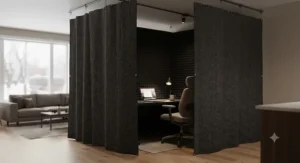
- Leave an air gap. Hang the blanket 5-10 cm off the wall rather than pinning it flat. Absorbers work better on lower frequencies when there’s space behind them — it’s free performance.
- Use proper anchors. A 4-8 kg blanket will rip cheap adhesive hooks off drywall. Use screw-in hooks into studs, heavy-duty drywall anchors, or a sturdy curtain rod.
- Overlap seams. When using two blankets side by side, overlap them 10-15 cm. Gaps leak sound like water through a crack.
- Cover reflection points first. Sit at your mic position and have someone slide a mirror along the wall; wherever you see the mic, sound reflects. Treat those spots first.
First 30 days: common mistakes
- Hanging over a cold exterior wall with no gap. In a Canadian winter, that traps warm, moist air against a cold surface — a recipe for condensation and mould.
- Machine-drying polyester-shelled blankets like the VEVOR on high heat.
- Skipping the airing-out period. Most recycled-fill blankets smell for a day or two; hang them in a garage or balcony first.
Maintenance schedule
Vacuum monthly with a brush attachment. Wash the US Cargo Control blanket seasonally if it lives in a dusty space. For the Audimute sheets, spot-clean only. Check grommets and anchors every few months — heavy blankets slowly work screws loose.
Real-World Scenarios: Matching the Right Blanket to Your Space
Specs make more sense when you attach them to a real room. Here are three common Canadian setups and how I’d match them, based on the spec comparison above.
Scenario 1: The Toronto condo podcaster
Budget: around C$200. Environment: a 3 × 3 m spare room with a hollow-core door facing the hallway. Frequency: two recording sessions a week.
The echo is manageable, but hallway chatter and elevator dings creep into every episode. The best move is one Audimute isolé over the door, because blocking is the problem, plus a cheap BoxerTools Studio Series blanket on a tension rod behind the chair to cut reflections. Blocking where sound enters beats absorbing everywhere.
Scenario 2: The Calgary garage band
Budget: about C$250.
Environment: detached single garage, concrete floor, bare drywall.
Frequency: three rehearsals a week.
Here, the room itself is the problem — hard, parallel surfaces make drums sound like a tin can. Two US Cargo Control blankets and one VEVOR give tough, washable coverage on three walls. The water-resistant VEVOR belongs on the wall near the garage door, where meltwater and road salt drift in.
Scenario 3: The Montreal voice-over freelancer
Budget: about C$350.
Environment: a closet-sized corner in a triplex.
Frequency: daily.
Daily paid work needs predictable results. Two Producer’s Choice VB70-G blankets form a three-sided booth, with one Audimute Sound Absorption Sheet on the wall behind the mic. The published NRC figures take the guesswork out of an income-generating setup.
Door Gap Sealing: Problem → Solution Guide for Leaky Rooms
Here’s the uncomfortable truth: a heavy soundproof blanket over a door is only as good as the gaps around it. Sound behaves like air — if air can get through, so can noise. A 1 cm gap under a door can undo much of what a blanket achieves. That’s why door gap sealing deserves its own section.
Problem 1: The gap under the door
Solution: Fit an adjustable door sweep or a slip-on draft stopper. Canadians already know this trick from winter heating bills — the same product that stops a cold draft also stops hallway chatter. Pair it with the Audimute isolé, and let the blanket hang low enough to brush the floor.
Problem 2: Light (and sound) leaking around the frame
Solution: Self-adhesive foam or rubber weatherstripping along the door stop. If you can see light around a closed door, sound is escaping there too. Door gap sealing with weatherstripping is often the cheapest acoustic upgrade you’ll ever make, usually well under C$30.
Problem 3: A hollow-core interior door
Solution: Hollow-core doors are basically drums. Hang a barrier-backed blanket directly on the door with over-door hooks, then seal the perimeter. If you rent, this is fully reversible.
Problem 4: The blanket sags away from the door
Solution: Heavy blankets pull hooks forward. Add a second row of hooks halfway down, or a thin bungee across the middle, so the VEVOR or US Cargo Control blanket stays snug against the surface.
Think of it this way: the blanket is the lid, and door gap sealing is the seal on the jar. Neither works well alone.
Soundproof Blanket for Home Studio Canada: Building a Better Room
Setting up a soundproof blanket for home studio Canada use comes with a few local twists. Many of us record in basements, condo second bedrooms or older homes with forced-air heating — each with its own acoustic personality.
Basements
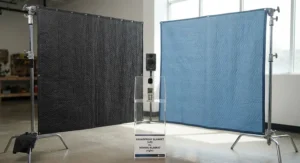
Concrete and bare drywall reflect a lot. Start with the wall behind your speakers or monitor, then the wall behind you. The machine-washable US Cargo Control blanket suits basements where dust from the furnace room settles on everything.
Condos
Shared walls and hallway doors are your challenge. A soundproof blanket for home studio Canada condo setups should focus on the door first (barrier) and the mic position second (absorption). The Audimute isolé plus one Audimute Sound Absorption Sheet is a tidy combination that doesn’t look like a moving truck exploded.
Forced-air homes
Heating vents rumble. No blanket fixes that; schedule sessions when the furnace cycles off, or temporarily close the room’s register while recording.
Frequency reality check
A heavy soundproof blanket excels at mid and high frequencies — voices, acoustic guitar, cymbals. Bass is a different beast; it needs thick bass traps or construction changes. If your music is bass-heavy, set expectations accordingly and budget for corner traps later.
The best part about building a soundproof blanket for home studio Canada setup is flexibility. When you move — and many Canadians rent — the blankets come down in minutes and go with you.
Podcast Recording Setup: Where Blankets Actually Help
A good podcast recording setup is mostly about the room, not the mic. An expensive condenser in an echoey room sounds worse than a modest dynamic mic in a treated corner. Blankets are the cheapest way to fix the room.
The “blanket fort” booth
For a solo podcast recording setup, hang two blankets in a V shape behind and beside the mic, and one in front if you can. The Producer’s Choice VB70-G is ideal here thanks to its published NRC of 0.80 and reversible face for video.
Two-host setups
Seat hosts facing each other with a blanket on each side wall. Parallel bare walls create flutter echo — that metallic “zing” after a clap. Covering even one of each pair of parallel walls kills most of it. Two Saree 850GSM blankets handle this affordably.
Mic choice matters
A dynamic mic rejects more room sound than a condenser. Pair a dynamic with even modest blanket treatment and your podcast recording setup will sound dramatically cleaner.
Quick test
Clap once at your mic position. If you hear a ring, add treatment until the clap sounds dry and short. It’s crude, but it’s fast and free.
A treated podcast recording setup also reduces editing time — less noise reduction software, fewer artefacts, more natural-sounding voices.
Soundproof Blanket for Walls Canada: What It Can and Can’t Do
Choosing a soundproof blanket for walls Canada homeowners and renters can rely on starts with honest expectations. A blanket hung on a wall mostly improves the sound inside the room. It reduces the energy bouncing around, which slightly lowers what escapes — but it won’t stop your neighbour’s TV the way added drywall or insulation would.
Still, the benefits are real. Research and reporting on everyday noise, including this CBC look at how noise harms our health, is a reminder that chronic noise affects sleep and stress, not just recordings. Taking the edge off a harsh, echoey room is worthwhile.
Best practices for wall coverage
- Cover 20-30% of wall area for noticeable echo reduction, more for vocal recording.
- Prioritise the shared wall in a semi-detached or condo.
- Hang from a rail such as a curtain track to avoid dozens of holes.
Exterior walls in winter
This is a very Canadian concern. Heavy blankets flat against a cold exterior wall can trap moist indoor air, causing condensation. Leave a gap, and check behind the blanket after the first cold snap.
A soundproof blanket for walls Canada setup works best with the larger, heavier options — the US Cargo Control or the Saree 850GSM pair — because coverage matters more than peak NRC on a big wall.
Acoustic Foam Comparison: Heavy Soundproof Blanket vs Foam Panels and Other Options
Any honest acoustic foam comparison starts with this: foam and blankets do roughly the same job — absorption — but in very different ways. Neither is a substitute for construction when you need true isolation, which is measured by sound transmission class (STC) ratings rather than NRC.
| Option | Absorption | Blocking | Install Effort | Portability | Best For |
|---|---|---|---|---|---|
| Heavy soundproof blanket (e.g., Saree 850GSM) | Good | Minimal | Low | High | Renters, flexible setups |
| Barrier-backed blanket (Audimute isolé) | Good | Modest (STC 20) | Low | Medium | Doors, noise ingress |
| Thin 2.5 cm acoustic foam | Mid/high only | None | Medium (adhesive) | Low | Small vocal nooks |
| Mineral-wool panels | Excellent | Minimal | Medium-high | Medium | Dedicated studios |
| Added drywall/insulation | N/A | High | Very high | None | Owners doing renovations |
This acoustic foam comparison shows why blankets win for most renters: foam typically needs adhesive that damages paint, and thin foam mainly absorbs high frequencies. Blankets cover more area per dollar and come down in minutes. If you own your home and want serious performance, mineral-wool panels beat both — but for flexible, damage-free treatment, a heavy soundproof blanket is the practical sweet spot.
One more acoustic foam comparison point: fire behaviour. Cheap foam can be highly flammable, which is worth weighing before covering a bedroom wall.
How to Choose a Heavy Soundproof Blanket
- Diagnose echo vs. leakage first. Echo needs absorption; leakage needs mass and sealing. This decides everything.
- Check weight or GSM. More fill generally means better absorption. Look for 4 kg+ per full-size blanket or 800+ GSM.
- Prefer published acoustic data. An NRC figure from the maker is more useful than vague “noise reduction” claims.
- Measure your surfaces. Buy blankets that cover the target area with overlap — oversized is better than gappy.
- Match the shell to the room. Woven or water-resistant faces for garages and basements; softer faces for studios.
- Plan your hanging method. Grommets for hooks, loops for rods. Renters should favour loop designs like the BoxerTools Studio Series.
- Consider care needs. Machine-washable blankets like the US Cargo Control save money in dusty spaces.
Features That Actually Matter (And Those That Don’t)
Marketing copy on this category is loud. Here’s how I’d filter it.
Features that matter
- Weight and fill density. The single best predictor of absorption among quilted blankets.
- Stitch pattern. Vertical channel stitching, like the Producer’s Choice, lets fill loft; tight zig-zag compresses it.
- Barrier layer. Only MLV-backed products meaningfully block sound.
- Grommet count and quality. Metal grommets spaced every 25-30 cm spread the load and prevent sagging.
Features that don’t (much)
- “Soundproof” in the title. Nearly universal, rarely accurate.
- Colour. Black and grey absorb sound identically; choose for looks and light control.
- “Studio-grade” labels without numbers behind them.
A feature people underrate
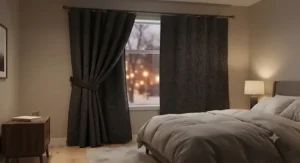
Light blocking. Many buyers end up using a heavy soundproof blanket as a blackout curtain for shift-work sleep or long Canadian summer evenings. It’s a nice bonus.
Common Mistakes When Buying a Heavy Soundproof Blanket
- Buying for isolation when you need absorption — or vice versa. The most expensive mistake. Diagnose first.
- Buying too few. One blanket in a bare room makes a small difference; three or four transform it.
- Ignoring door gap sealing. A premium blanket over a gappy door is like a winter parka with the zipper open.
- Trusting “tested” claims without numbers. If a listing says “reduces noise by 90%” without a test standard, treat it as marketing.
- Choosing cheap adhesive hooks. A 5 kg blanket falling mid-session is both annoying and potentially damaging to gear.
- Skipping the smell test. Air new blankets out before hanging them in a bedroom.
✨ Ready to hear the difference? 🔍
Take your recording room to the next level with these carefully selected blankets. Click any highlighted product to check current pricing and availability on Amazon.ca. The right pick will help you create cleaner, more professional sound your listeners will love!
Long-Term Cost & Maintenance: The Real Value Math
Sticker price tells only part of the story. Let’s look at cost per square metre of coverage — the number that actually matters for a room.
| Product | Coverage (m²) | Approx. Price (CAD) | Approx. Cost per m² | Best For |
|---|---|---|---|---|
| Saree 850GSM (2-pack) | ~9.9 | C$90-C$140 | ~C$9-C$14 | Maximum coverage per dollar |
| US Cargo Control | ~5.0 | C$60-C$100 | ~C$12-C$20 | Durable washable coverage |
| VEVOR | ~5.0 | C$50-C$90 | ~C$10-C$18 | Utility spaces |
| Audimute Sound Absorption Sheet | ~3.0 | C$100-C$160 | ~C$33-C$53 | Rated studio absorption |
| Audimute isolé | ~1.8 | C$170-C$240 | ~C$94-C$133 | Blocking noise at doors |
The math is striking: the Saree 850GSM pair covers square metres for a fraction of what the Audimute isolé costs. But that’s not the whole picture — the Audimute isolé does a different job, and you only need one for a door. The smartest budgets mix both: a premium barrier where noise enters, budget absorbers everywhere else.
On longevity, well-stitched blankets last years. Washable models like the US Cargo Control stay fresher, and since there’s no electricity, filters or consumables, total cost of ownership is essentially the purchase price plus a few anchors.
Safety, Fire and Canadian Considerations
Heavy textiles hung near heat sources deserve respect. Keep blankets clear of baseboard heaters, space heaters and halogen lamps — common in Canadian homes during winter. Check each listing for flame-retardancy information before buying; not every manufacturer publishes it, and none of the seven here should be assumed fire-rated unless the seller documents it.
Mounting safety matters too. A 5-8 kg blanket hung above a desk needs anchors rated well above its weight, especially in older plaster walls common in pre-war homes in Montreal, Toronto and Winnipeg.
Finally, if you’re treating a room because the noise inside it is loud — drums, power tools, amplified guitar — remember that absorbing echo doesn’t protect your ears. Canada’s federal guidance on protecting your hearing from noise sets workplace exposure at 87 dBA over eight hours and warns that noise-induced hearing loss is permanent. Blankets make a loud room sound nicer; earplugs keep you hearing it.
FAQ
❓ What is the best heavy soundproof blanket to buy in Canada?
❓ How much does a heavy soundproof blanket cost on Amazon.ca?
❓ Do soundproof blankets work on windows?
❓ How many soundproof blankets do I need for a small room?
❓ Can I wash a heavy soundproof blanket?
Conclusion
The heavy soundproof blanket market is noisy — ironically — but the decision gets simple once you separate echo from leakage. If your recordings sound hollow and roomy, you need absorption, and the Audimute Sound Absorption Sheet, Producer’s Choice VB70-G or budget-friendly Saree 850GSM pair will make the biggest difference. If noise is sneaking in from the hallway, start with door gap sealing and add the barrier-backed Audimute isolé.
For basements, garages and rehearsal spaces, the tough, washable US Cargo Control and water-resistant VEVOR earn their spots. Renters who don’t want to drill will appreciate the loop-and-grommet design of the BoxerTools Studio Series.
Whatever you choose, remember the three rules: leave an air gap, overlap your seams, and seal your doors. Do those well, and a modest heavy soundproof blanket budget can make a Canadian spare room sound far more like a real studio than you’d expect.
✨ Don’t Miss These Top Picks! 🔍
Take your home studio to the next level with these carefully selected blankets. Click any highlighted product to check current pricing and availability on Amazon.ca. They’ll help you create clean, professional-sounding recordings your audience will love!
Recommended for You
- Soundproof Moving Blanket Guide: 7 Best Picks For 2026 (Proven)
- Soundproof Blanket For Apartments: 7 Smart Picks That Work (2026)
- Moving Blankets For Appliances: 7 Best Picks For Canada (2026)
Disclaimer: This article contains affiliate links. As an Amazon Associate, I earn from qualifying purchases. If you purchase products through these links, we may earn a small commission at no additional cost to you.
✨ Found this helpful? Share it with your friends! 💬🤗
