
In This Article
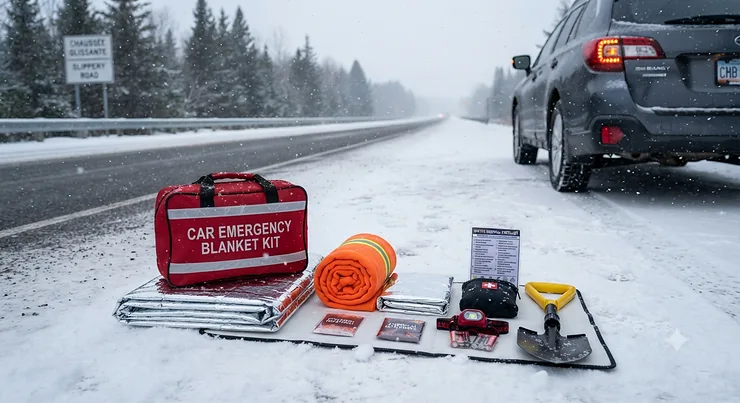
Somewhere between the second pothole and the third snow squall warning, most Canadian drivers make a quiet deal with themselves: “I’ll sort out a car emergency blanket kit before winter really hits.” Then winter hits anyway, usually on a Tuesday, usually with zero warning, and that deal quietly dissolves into a glovebox full of expired gum and a single mismatched mitten. This guide exists to close that gap for good. A car emergency blanket kit is a compact set of heat-retaining blankets — typically mylar, wool, or 12-volt heated fabric — kept in a vehicle to prevent hypothermia and shock during a breakdown, collision, or extended roadside wait, and it is one of the cheapest insurance policies a Canadian driver can buy.
We dug into real products sold through amazon.ca, cross-referenced their specs against Transport Canada’s own guidance and CAA’s winter preparedness checklists, and worked out which options genuinely earn a spot in your trunk versus which ones are just shiny foil and marketing. You’ll get honest analysis, not a rewritten product listing — every entry below explains what the spec actually means for you, shivering, at 2 a.m. on Highway 17 in February.
Because Transport Canada notes that winter conditions can turn a routine drive into a survival situation faster than most people expect, building the right car emergency blanket kit isn’t paranoia — it’s just sound Canadian math. Let’s get into what actually works.
Quick Comparison Table
| Product | Type | Best For | Price Range (CAD) |
|---|---|---|---|
| Swiss Safe Mylar Emergency Blankets (4-Pack) | Mylar sheet | Budget backup, multi-vehicle families | around C$15-C$20 |
| Primacare HB-10 Emergency Mylar Thermal Blankets (10-Pack) | Mylar sheet | Bulk stockpiling, EMS-grade reliability | around C$25-C$35 |
| Arcturus Heavy Duty Survival Blanket | Reflective tarp-blanket | Reusable multipurpose shelter | around C$30-C$40 |
| UST Survival Blanket/Tarp 2.0 | Reversible tarp-blanket | Windy, wet climates (coastal BC, Atlantic Canada) | around C$30-C$45 |
| Arcturus Military Wool Blanket | Wool blanket | Long waits, wet-cold conditions | around C$60-C$80 |
| Trillium Worldwide Car Cozy 2 | 12V heated blanket | Comfort during long idles with engine running | around C$45-C$60 |
| S.O.L. Escape Bivvy with Hood | Sealed survival bivvy | Worst-case, extended-exposure scenarios | around C$45-C$55 |
At a glance, the split comes down to three questions: do you want disposable-cheap backups, a reusable everyday blanket, or a sealed shelter for genuine worst-case exposure? The Swiss Safe and Primacare HB-10 packs win on raw redundancy — for the price of one nicer blanket, you can stash mylar sheets in every vehicle your household owns. The Arcturus Heavy Duty Survival Blanket and UST Survival Blanket/Tarp 2.0 sit in the middle because they double as ground tarps or lean-to shelters, not just wraps. The Arcturus Military Wool Blanket, Trillium Car Cozy 2, and S.O.L. Escape Bivvy all cost more, but each solves a specific failure mode — wet-cold insulation, active-engine comfort, and sealed hypothermia prevention, respectively — that a thin mylar sheet simply can’t touch.
💬 Just one click — help others make better buying decisions too!😊
Top 7 Car Emergency Blanket Kit Picks: Expert Analysis
1. Swiss Safe Mylar Emergency Blankets (4-Pack) — cheapest way to cover every seat
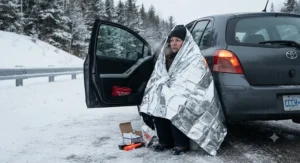
If you’ve ever bought a first aid kit and noticed the little foil packet tucked inside, that’s mylar, and Swiss Safe’s version is the same idea scaled up for the trunk. Each blanket measures roughly 52 by 82 inches, built from military-grade aluminized polyethylene film that’s designed to reflect a large share of the body heat you’d otherwise lose to the outside air. The dual-sided design also blocks wind and precipitation, which matters more than people assume — a soaked, wind-whipped body loses heat far faster than a merely cold, dry one. Practically speaking, this is the pick for anyone who wants to outfit multiple vehicles or hand blankets to every passenger without blowing the budget; a family with two cars and a teenager who just got their G2 can equip everyone for less than the cost of one wool blanket. Reviewers consistently note that the material is thinner and crinklier than it looks in photos, which tracks with the physics — this is a heat-loss barrier, not an insulating layer, so it works best layered over regular clothing rather than as a substitute for warm gear. If you can’t verify long-term durability claims for a specific colour run, treat that as a reason to buy a couple of spares rather than pin your safety on a single unopened packet from three winters ago.
Pros:
- ✅ Extremely low cost per blanket for multi-vehicle households
- ✅ Compact enough to store several in a glovebox or door pocket
- ✅ Waterproof and windproof shell blocks precipitation loss
Cons:
- ❌ Thin material tears more easily than fabric blankets
- ❌ Provides heat reflection, not true insulation, on its own
Priced around C$15-C$20 for a four-pack at the time of research, this is the “buy two packs and forget about it” option — genuinely solid value if you treat it as a layering tool rather than your only line of defence.
2. Primacare HB-10 Emergency Mylar Thermal Blankets (10-Pack) — the EMS-grade bulk buy
Primacare makes gear for paramedics and first responders, and the HB-10 pack is essentially the same product EMTs carry to prevent shock in trauma patients, just sold in a ten-unit bundle for consumers. Each blanket runs 84 by 52 inches — noticeably larger than most competitors — with the same reflective mylar construction designed to help retain the majority of a wearer’s body heat while blocking wind and moisture. What most buyers overlook about a product like this is that the “EMS” pedigree isn’t a marketing flourish; these blankets are built to a use case where seconds matter and the person wrapping the patient can’t afford a flimsy tear-prone sheet, so the material tends to be a step more robust than the cheapest bargain-bin mylar. Based on the spec comparison, this is the strongest choice for anyone thinking beyond their own vehicle — stock the trunk, the cabin, the cottage, and a couple of spares for neighbours or coworkers, since the per-unit cost drops sharply at this pack size. Aggregated reviewer sentiment points to consistent satisfaction with the size and reflective performance, with occasional notes that individually wrapped packaging can be fiddly to reseal once opened, so keep unused units in their original wrap until needed.
Pros:
- ✅ Larger dimensions than most mylar competitors
- ✅ Field-tested EMS-grade construction and reputation
- ✅ Lowest per-unit cost among all seven picks
Cons:
- ❌ Ten units may be excessive for a single-vehicle household
- ❌ Individual packaging isn’t easily resealed once opened
At around C$25-C$35 for the full ten-pack, the cost-per-blanket math here is hard to beat if you’re building kits for more than one vehicle or want genuine redundancy.
3. Arcturus Heavy Duty Survival Blanket — the reusable tarp-blanket hybrid
This is where the category gets more interesting than “foil sheet in a bag.” The Arcturus Heavy Duty Survival Blanket measures about 152 by 208 centimetres (roughly 60 by 82 inches) and uses a three-layer design: a mylar reflective face for heat retention on one side, paired with two layers of tougher polypropylene on the other, so it functions as a blanket, a ground tarp, or a basic lean-to shelter depending on which side faces out and how you rig it. Reinforced grommets at the corners mean you can actually stake or tie it down, which a plain mylar sheet can’t do in any wind above a light breeze. What the spec sheet won’t tell you, but the design implies, is that this product is aimed at people who might need to build a makeshift shelter beside a disabled vehicle rather than just wrap up inside it — useful if you’re the type who drives logging roads, cottage country backroads, or anywhere tow trucks take a while to arrive. Reviewers frequently mention that the fabric is genuinely reusable across multiple trips rather than a one-time-use item, which changes the value calculation considerably compared to disposable mylar. Weighing about 1.4 pounds and packing into its own carry bag, it’s light enough that leaving it in the trunk year-round costs you nothing in cargo space.
Pros:
- ✅ Reusable across many trips, not single-use like plain mylar
- ✅ Reinforced grommets allow tarp or shelter configurations
- ✅ Dual-sided design adds tear resistance over sheet mylar
Cons:
- ❌ Bulkier to store than a folded mylar sheet
- ❌ Premium over basic mylar for a feature many drivers won’t use
At around C$30-C$40, this sits at the sweet spot for drivers who want one solid reusable piece rather than a stack of disposables.
4. UST Survival Blanket/Tarp 2.0 — built for wind and wet, not just cold
UST has built its reputation on outdoor survival gear rather than automotive accessories, and the Survival Blanket/Tarp 2.0 reflects that lineage — it’s a reversible, windproof, waterproof blanket designed first for backcountry conditions and repurposed well for a glovebox. The reversible construction typically pairs a bright, high-visibility side with a heat-reflective side, so the same piece of gear can double as a signalling panel if you need to be spotted by a search party or a passing snowplow, and as a heat-retention wrap once you’ve been located. Here’s what most buyers overlook about survival-branded gear versus automotive-branded gear: products designed for hikers and hunters tend to get tested against genuinely brutal wind-chill and precipitation scenarios, because that’s the market they were built for, so the waterproofing and grommet hardware are frequently a notch more serious than blankets marketed purely as car accessories. This makes it a particularly strong fit if you’re driving through coastal British Columbia, the Maritimes, or anywhere sideways rain and wind are as much of a threat as raw cold. Aggregated review sentiment highlights the tarp’s versatility for shelter-building over pure blanket use, with some buyers noting the material feels stiffer in extreme cold than fleece alternatives, which is a fair trade-off for the added wind resistance.
Pros:
- ✅ Reversible high-visibility and reflective sides in one piece
- ✅ Built to backcountry wind and rain standards
- ✅ Doubles as a rescue-signalling panel
Cons:
- ❌ Stiffer material in sub-zero temperatures than fleece options
- ❌ Less familiar automotive branding than dedicated car-kit products
Expect to pay in the C$30-C$45 range, positioning it as a direct alternative to the Arcturus tarp-blanket with a stronger lean toward wet, windy climates.
5. Arcturus Military Wool Blanket — insulation that keeps working even wet
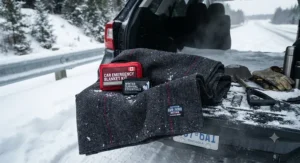
Every mylar and reflective-tarp product on this list shares one physical limitation: they reflect heat, but they don’t generate meaningful insulation of their own the way a thick fabric does. That’s where wool changes the equation. The Arcturus Military Wool Blanket measures a generous 64 by 88 inches, weighs about 4.5 pounds, and blends roughly 70 to 80 percent wool with hypoallergenic synthetic fibres for durability, at a density around 550 grams per square metre — thick enough that it functions less like a throw and more like a piece of actual survival gear. The defining advantage of wool as a material, and the reason firefighters and military units have used it for generations, is that it retains a meaningful share of its insulating capacity even when wet, unlike cotton or down, which collapse and lose warmth almost immediately once soaked. Based on the spec comparison, this is the blanket you want if you’re realistically facing an hours-long wait in a Prairie whiteout or a Northern Ontario cold snap, where “reflect body heat” alone isn’t going to cut it and you need genuine thermal mass. Reviewers consistently describe the blanket as noticeably heavier and warmer than typical camping throws, with some noting the wool blend softens after the first few washes — a detail worth knowing if the initial texture feels coarser than expected out of the packaging. It’s also machine washable, which matters for a piece of gear that will eventually get used, spilled on, or shared.
Pros:
- ✅ Insulates even when wet, unlike mylar or cotton
- ✅ Large enough to cover two people or wrap a child fully
- ✅ Naturally fire-retardant without added chemical treatment
Cons:
- ❌ Heaviest and bulkiest option on this list
- ❌ Highest price point among non-electric picks
At around C$60-C$80, it’s the priciest passive blanket here, but for genuinely cold, wet Canadian regions, the insulating performance justifies the premium for many buyers.
6. Trillium Worldwide Car Cozy 2 — the only option that generates its own heat
Every product above this one relies on trapping heat you’ve already generated. The Trillium Worldwide Car Cozy 2 flips that script by plugging directly into a 12-volt outlet and actively warming, drawing about 48 watts through a seven-foot fused cord long enough to reach back-seat passengers. It measures 58 by 42 inches — plenty for one adult or a parent and small child sharing — and includes a patented 30- or 45-minute safety timer with automatic shut-off, so it won’t run the battery down or overheat if someone falls asleep under it. Here’s the honest trade-off reviewers keep flagging: this blanket only works while the vehicle’s electrical system is live, meaning it’s genuinely comforting during a roadside wait with the engine idling, but it becomes dead weight the moment the battery dies or you’re conserving fuel by keeping the engine off. What most buyers overlook is that this makes it less of a true emergency blanket and more of a comfort-and-prevention tool — its real value is keeping a child or elderly passenger warm and calm during a long wait for a tow truck, reducing the odds anyone needs the more serious survival gear at all. Aggregated feedback describes the polyester fleece as soft and the warm-up time as quick, with occasional notes that the auto-off timer, while a smart safety feature, requires manually resetting if you want continuous heat over a longer wait.
Pros:
- ✅ Actively generates heat rather than only reflecting it
- ✅ Auto-off safety timer prevents battery drain or overheating
- ✅ Long cord reaches rear seats for child passengers
Cons:
- ❌ Useless once the engine or battery is off
- ❌ Not a substitute for a true survival blanket if power fails
Typically priced around C$45-C$60, this is best purchased as a second item alongside a passive blanket, not as your only line of defence.
7. S.O.L. Escape Bivvy with Hood — full-body sealed protection for the worst case
The S.O.L. Escape Bivvy with Hood is a different category of product entirely — instead of a flat sheet you wrap around yourself, it’s a sealed, hooded sleeping-bag-style shell with a 23-inch side zipper and a fully formed foot box, designed to be climbed into rather than draped over. Its Escape-fabric construction is engineered to reflect a solid share of body heat back to the wearer while remaining breathable enough to reduce the condensation buildup that plagues plain mylar bivvies, where trapped moisture from breathing and sweating can actually leave you damper — and colder — than you started. Here’s what stands out on the spec comparison: because it’s fully enclosed with a hood and zipper rather than open on one side, it seals out wind-driven cold far more effectively than any flat blanket on this list, which matters enormously if you’re stranded somewhere with no shelter and genuinely need to survive several hours or overnight, not just stay comfortable for twenty minutes until a tow arrives. Reviewers in the outdoor and survival community consistently rate the breathability as the standout feature relative to older bivvy designs, since less internal moisture buildup translates directly to better sustained warmth. This is overkill for a daily commute in the city, but for anyone regularly driving rural highways, mountain passes, or remote provincial routes where cell coverage and traffic both thin out, it’s arguably the single most protective item on this list.
Pros:
- ✅ Fully sealed hood and zipper block wind better than open blankets
- ✅ Breathable fabric reduces condensation versus plain mylar
- ✅ Purpose-built for extended, worst-case exposure scenarios
Cons:
- ❌ Bulkier and pricier than a simple mylar sheet
- ❌ Overkill for short urban commutes with reliable cell coverage
At around C$45-C$55, it’s a premium pick best suited to rural and remote drivers who take genuine exposure risk seriously.
Practical Usage Guide: Setting Up Your Winter Car Kit
Buying the blanket is the easy part; using it correctly is where most drivers quietly fall short. Start by placing your kit somewhere you can reach without leaving the vehicle if possible — the back seat or a door pocket beats the trunk, since a stuck trunk latch in freezing temperatures is a real and common problem. During the first thirty days, get in the habit of checking the kit every time you top up windshield washer fluid; it’s an easy trigger that keeps the routine from slipping. A common mistake is sealing mylar blankets in their original plastic wrap and never opening them until the actual emergency, which means the first time you ever unfold one is under stress, in the cold, with numb fingers — practice unfolding and refolding it once at home so you’re not fighting the packaging when it counts. For heated blankets like the Trillium Car Cozy 2, test the outlet and timer function seasonally, since 12-volt sockets that see little use can develop corrosion or loose connections over a Canadian winter. Rotate wool blankets out for a wash roughly once a season if they’ve been used, and inspect mylar sheets for pinhole tears after any use, replacing damaged units rather than trusting a compromised barrier. Finally, layer strategically: wrap the reflective side of any mylar product toward your body, then add a wool blanket or extra clothing over top if you have both, since combining reflection with insulation outperforms either alone.
Real-World Scenarios: Who Needs Which Blanket
Picture three different drivers pulling out of the same parking lot on the same snowy morning. The first is a downtown commuter with a fifteen-minute drive and near-constant cell coverage and traffic — for this profile, a couple of Swiss Safe mylar sheets tucked in the glovebox cover the realistic worst case of a short wait for a tow within city limits, and spending more is unnecessary. The second is a family heading two hours north to a rural cottage with young kids in the back seat, driving through stretches with patchy coverage — this household benefits most from pairing the Arcturus Military Wool Blanket for genuine insulation with the Trillium Car Cozy 2 for comfort while the engine’s still running, giving both a passive and an active heat source. The third is a solo driver who regularly covers long stretches of provincial highway between small towns, the kind of route where a breakdown could mean ninety minutes or more before help arrives — for this profile, the S.O.L. Escape Bivvy with Hood paired with the UST Survival Blanket/Tarp 2.0 as a shelter backup makes far more sense than anything lighter-duty, because the actual exposure risk is materially higher. Matching the kit to the drive, rather than buying whatever’s cheapest or whatever’s on the endcap at the auto parts store, is the single biggest lever most people are missing.
How to Choose a Car Emergency Blanket Kit
- Match the blanket type to your actual driving pattern. Short urban commutes with reliable coverage need less redundancy than long rural or highway routes.
- Check reusability versus disposability. Mylar sheets like Swiss Safe and Primacare HB-10 are excellent for stockpiling but degrade with reuse; fabric options like the Arcturus Military Wool Blanket are built to be washed and reused for years.
- Consider your climate’s specific threat. Wind and rain call for reversible, waterproof tarp-blankets like the UST Survival Blanket/Tarp 2.0; deep dry cold favours wool insulation.
- Factor in passengers, not just yourself. A family car needs enough blankets for every seat, not one blanket for the driver.
- Decide whether a heated option makes sense. The Trillium Car Cozy 2 is a strong comfort layer but should never be your only kit item, since it fails the moment power does.
- Weigh storage space against protection level. A sealed bivvy like the S.O.L. Escape Bivvy takes more trunk space than a folded mylar sheet, but the protection gap is significant for remote driving.
- Buy before you need it. Winter tire installation day is a natural, easy-to-remember trigger for restocking your kit every year.
Thermal Car Blanket vs Traditional Wool Blanket for Roadside Emergencies
The debate between a thermal car blanket for roadside emergencies and a traditional wool blanket isn’t really about which is “better” in the abstract — it’s about which failure mode you’re protecting against. Thermal mylar-style blankets, like the Swiss Safe and Primacare HB-10 packs, work by reflecting radiant body heat back toward the wearer while blocking wind and precipitation from the outside; they’re astonishingly light, pack down to almost nothing, and cost a fraction of fabric alternatives, which is exactly why organizations from marathon aid stations to EMS crews rely on them for short-term, high-volume use. Traditional wool, represented here by the Arcturus Military Wool Blanket, works through actual thermal insulation — trapping air within the fibre structure — and crucially keeps a meaningful share of that insulating power even when wet, which reflective mylar simply cannot replicate since it has no insulating mass of its own.
| Factor | Mylar / Thermal Blanket | Wool Blanket |
|---|---|---|
| Weight & pack size | Extremely light and compact | Heavy, bulkier |
| Performance when wet | Reflects heat but no insulation | Retains insulation even wet |
| Reusability | Limited, tears easily with reuse | Durable, washable, multi-season |
| Best For | Short waits, multi-vehicle backup | Extended waits, wet-cold climates |
The practical takeaway from this comparison is that they’re not really competitors — they’re complementary layers. Reviewers and emergency-preparedness guides alike tend to recommend carrying both: reflective mylar as a windproof, waterproof outer barrier, and a wool or fleece layer underneath for actual warmth, since combining a reflective shell with an insulating layer consistently outperforms either material used alone.
Waterproof Car Emergency Blanket Review Canada: What Actually Holds Up
Searching for a waterproof car emergency blanket review Canada context specifically matters because our climate throws genuinely varied moisture challenges at drivers — freezing rain in Southern Ontario, coastal downpours in British Columbia, and lake-effect snow squalls around the Great Lakes all test waterproofing differently than a dry Prairie cold snap does. Among the seven products reviewed here, the Arcturus Heavy Duty Survival Blanket and the UST Survival Blanket/Tarp 2.0 are the two purpose-built for wet-weather resilience, both using multi-layer construction with a waterproof shell rather than relying on a single thin mylar sheet that can develop pinhole leaks under repeated flexing in cold temperatures. The S.O.L. Escape Bivvy with Hood takes waterproofing a step further through its fully sealed, zippered design, which keeps wind-driven rain and snow out far more effectively than any open blanket, at the cost of extra bulk. What reviewers and outdoor gear testers consistently flag is that “waterproof” claims on cheaper generic mylar sheets should be treated with some skepticism over repeated use — the coating that provides water resistance can degrade with folding and unfolding, so a blanket that performed well in year one testing isn’t guaranteed to perform identically in year three. For genuinely wet Canadian regions, prioritizing the reinforced, multi-layer options over basic single-sheet mylar is the more defensible choice, even at a higher price point.
✨ Ready to build your kit? Check current prices and availability on the picks above before the next storm rolls in!
Winter Car Kit Essentials Beyond the Blanket
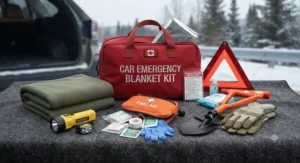
A blanket alone doesn’t make a complete winter car kit essentials list, and treating it as the whole solution is one of the more common gaps we see. CAA’s national winter driving guidance recommends pairing your blanket with a crank-powered flashlight, since standard batteries lose charge faster in extreme cold, along with booster cables, a small shovel, and a bag of sand or non-clumping kitty litter for traction — road salt is specifically discouraged because of the rust risk it poses to your vehicle over time. Beyond CAA’s list, a genuinely complete kit benefits from a basic first aid kit with any personal medications, a phone charger or portable power bank, extra winter gloves and a toque, and enough non-perishable food and water to comfortably outlast a multi-hour wait. The blanket is the piece most people remember to buy because it’s the most visually obvious “emergency” item, but a flashlight with a dead flashlight or a phone with a dead battery can leave you just as stranded in the dark, unable to call for help or signal a passing vehicle. Building the blanket into a broader kit, rather than treating it as a standalone purchase, is the difference between being prepared and just feeling prepared.
Family Road Trip Safety: Blankets for Kids and Multi-Passenger Trips
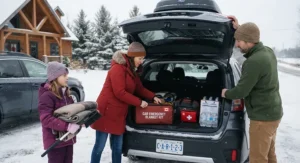
Family road trip safety changes the calculus considerably compared to a solo commuter kit, because children lose body heat faster than adults relative to their size, and a stalled minivan full of kids on a highway shoulder is a meaningfully higher-stakes situation than one adult waiting for a tow. The practical rule of thumb echoed across Canadian winter driving guidance is to carry at least one blanket per regular passenger, not one blanket per vehicle — a family of four needs four blankets, not one shared throw that leaves someone exposed. For families, a mixed kit tends to work best: Primacare HB-10 or Swiss Safe mylar sheets are cheap enough to give every child their own, while a larger Arcturus Military Wool Blanket works well as a shared layer for siblings sitting together in the back seat. The Trillium Car Cozy 2 is particularly well-suited to families because its long cord reaches rear seating, meaning the youngest or most cold-sensitive passenger can get direct, active warmth while the engine is still running, buying time and comfort before anyone needs to rely on passive insulation alone. It’s also worth keeping a lighter-weight children’s-sized wrap on hand if your kids are young enough that a full adult-sized wool blanket is unwieldy for them to manage independently.
Emergency Preparedness: Building a Complete Roadside Kit
Broader emergency preparedness thinking — the kind Public Safety Canada promotes for households facing any hazard, from winter storms to power outages — applies directly to your vehicle, not just your home. The same logic that says keep a stocked emergency kit at home applies on the road: know what’s in it, check it seasonally, and make sure everyone in the household knows where it lives in the vehicle. A car emergency blanket kit is really just the automotive branch of a household preparedness mindset, and treating it that way tends to produce better outcomes than treating it as a one-off impulse purchase before a specific trip. Practically, this means setting a recurring reminder — many Canadians tie it to winter tire installation, since that’s already an annual ritual — to check blanket condition, replace anything torn or degraded, verify flashlight batteries, and confirm first aid supplies haven’t expired. Preparedness isn’t about assuming disaster; it’s about removing one more variable from an already stressful situation, so that if a breakdown does happen, staying warm isn’t the thing you’re improvising.
✨ Don’t Miss These Exclusive Deals!
🔍 Take your winter car preparedness to the next level with the picks above. Click through to check current pricing and availability, and make sure everyone in your vehicle stays warm and safe this season!
Long-Term Cost & Maintenance
Thinking in terms of total cost of ownership changes how these seven products stack up. Disposable mylar options like Swiss Safe and Primacare HB-10 carry the lowest upfront cost, but if you actually use and discard a sheet after a real emergency, you’re back to buying replacements — over a decade of ownership, someone who restocks mylar every few years may spend a comparable amount to someone who bought one durable wool blanket once. The Arcturus Military Wool Blanket, by contrast, front-loads the cost but is machine washable and built for repeated use, meaning its effective cost-per-winter drops the longer you own it. Heated options like the Trillium Car Cozy 2 carry no ongoing cost beyond the vehicle’s own fuel or battery use, though the internal heating element and cord are the components most likely to eventually wear out with heavy use.
| Product | Typical Lifespan | Ongoing Cost |
|---|---|---|
| Swiss Safe / Primacare HB-10 | Single-use to a few uses | Replace after deployment |
| Arcturus Wool / Tarp Options | Multiple winters with care | Occasional washing only |
| Trillium Car Cozy 2 | Several years typical use | None beyond vehicle power |
| S.O.L. Escape Bivvy | Multiple seasons | Minimal, inspect seals yearly |
Looking at the comparison above, the smartest long-term strategy for most Canadian households is a hybrid one: keep disposable mylar as cheap, replaceable backup while investing once in a durable wool or tarp-style blanket that will outlast several winters of ordinary use.
Features That Actually Matter (And Those That Don’t)
Marketing copy on emergency blankets loves to lean on numbers like “reflects 90% of body heat,” and while that figure is a legitimate physics claim about mylar’s reflective properties under controlled conditions, it’s frequently presented in a way that implies more real-world warmth than a thin sheet can actually deliver on its own in a Canadian windchill. What actually matters more in practice is reusability, tear resistance, and how the product performs specifically when wet or windy, since those are the conditions most likely to occur during an actual Canadian roadside emergency. Features that genuinely matter include reinforced grommets or seams (relevant if you might need to rig shelter), machine washability (relevant for anything you’ll realistically reuse), and auto-shutoff timers on heated products (a real safety feature, not a gimmick). Features that matter less than their marketing suggests include exact reflectivity percentages compared between competing mylar brands — the difference between 88% and 90% claimed reflectivity is unlikely to be perceptible in an actual emergency — and elaborate colour options, which affect visibility for signalling purposes but not core thermal performance.
Safety, Regulations & Compliance Guide
There’s no federal law in Canada mandating a specific emergency kit for private vehicles, but several provinces and territories strongly encourage or require winter preparedness equipment on certain routes, and insurers increasingly reference emergency kit contents in roadside assistance guidance. Products used in vehicles don’t require CSA certification the way electrical household appliances do, but 12-volt heated products like the Trillium Car Cozy 2 should still carry basic safety features such as auto-shutoff timers and overheat protection, both of which this product includes. If you’re driving in more remote regions — Northern Ontario, the territories, or mountain passes in BC and Alberta — some regional advisories go further, suggesting supplementary gear like a personal locator beacon, since cell coverage cannot be assumed. None of the seven products reviewed here require special permits or registration; they’re standard consumer safety equipment, and the main compliance consideration is simply keeping them accessible and in good condition rather than buried under seasonal cargo where they can’t be reached quickly.
Common Mistakes When Buying a Car Emergency Blanket Kit
The single most common mistake is buying one blanket for the whole family and assuming it covers everyone — it doesn’t, and a shared blanket in a genuine multi-person emergency means someone goes without. A close second is buying only disposable mylar and never adding a reusable, insulating layer like wool, which leaves you under-equipped for anything beyond a short wait. Some buyers also fixate entirely on price and choose the cheapest bulk mylar pack without considering their actual driving pattern — a rural highway commuter genuinely needs more protection than a downtown driver, and treating both cases identically under-serves the higher-risk profile. Another frequent oversight is buying a heated blanket like the Trillium Car Cozy 2 as a sole solution without a passive backup, forgetting that it becomes useless the moment the battery or engine fails. Finally, plenty of drivers buy a kit once and never check it again — mylar degrades, wool needs occasional washing, and heated cords can fray, so a five-year-old unchecked kit may offer far less real protection than its owner assumes.
Frequently Asked Questions
❓ How many blankets should I keep in my car emergency kit?
❓ Do mylar emergency blankets actually work in Canadian winters?
❓ Can I leave a car emergency blanket kit in a vehicle year-round?
❓ Is a heated 12V blanket better than a regular emergency blanket?
❓ What's the difference between a survival bivvy and a regular emergency blanket?
Conclusion
A car emergency blanket kit isn’t a glamorous purchase, and it’s easy to keep putting it off until the first real cold snap makes the decision feel urgent instead of optional. But the research here points to a clear, practical structure: cheap mylar sheets like the Swiss Safe and Primacare HB-10 packs for broad, affordable coverage across every seat and every vehicle; a genuinely insulating layer like the Arcturus Military Wool Blanket for anyone facing real wet-cold exposure; reinforced tarp-blankets like the Arcturus Heavy Duty Survival Blanket and UST Survival Blanket/Tarp 2.0 if shelter-building matters for your routes; the Trillium Car Cozy 2 as an active-heat comfort layer while the engine runs; and the S.O.L. Escape Bivvy with Hood for drivers who genuinely need worst-case, extended-exposure protection on remote highways. None of these are mutually exclusive — the strongest kits blend a couple of categories rather than relying on a single product. Whatever you choose, the underlying goal from Transport Canada, CAA, and every provincial emergency management office pointing the same direction is simple: don’t let a mechanical failure become a medical emergency because nobody in the car had a way to stay warm.
✨ Don’t Miss These Exclusive Deals!
🔍 Take your winter car preparedness to the next level with these carefully selected products. Click on any highlighted item to check current pricing and availability — a warmer, safer winter starts in the trunk!
Recommended for You
- 7 Best Emergency Car Blankets for Canadian Winters (2026 Guide)
- RV Throw Blanket Set: 7 Cozy Picks for Canadian Campers (2026)
- 7 Best Compact RV Blankets for Storage in 2026 (Space-Saving Picks)
Disclaimer: This article contains affiliate links. As an Amazon Associate, I earn from qualifying purchases. If you purchase products through these links, we may earn a small commission at no additional cost to you.
✨ Found this helpful? Share it with your friends! 💬🤗
