
In This Article
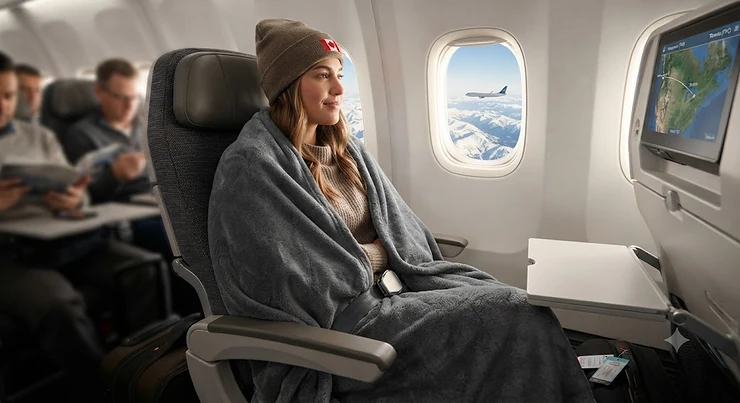
Somewhere over Saskatchewan, at 35,000 feet, you will discover a universal truth: the blanket the flight attendant hands you is basically a napkin with delusions of grandeur. An airline travel blanket is a compact, personal blanket designed to pack down small enough for a carry-on while still providing real warmth on planes, trains, and long car rides. It solves the two problems every Canadian flyer knows intimately — cabin air that’s colder than a Winnipeg parking lot in January, and the thin, questionable freebie that airlines occasionally toss your way.
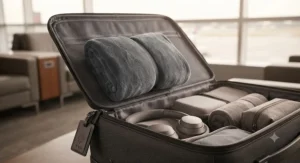
If you’ve ever landed in Vancouver after a red-eye from Toronto feeling like a popsicle with a headache, you already understand the appeal. This guide walks through seven real, currently available blankets — from bargain-bin-friendly microfleece throws to premium packable puffies built with the same insulation used in outdoor gear — and breaks down which one actually earns a spot in your carry-on. We’ll also dig into what CATSA actually lets you bring aboard, because “can I even pack this thing” is a fair question before you buy anything.
We’re not just listing specs here. Every product below gets an honest read on who it suits, what the aggregated review sentiment says, and where the value genuinely lives — not where the marketing copy claims it does. Whether you’re chasing the packable airline blanket that vanishes into a backpack pocket, a travel blanket with pouch that doubles as a pillow, or simply the cheapest thing that’ll stop you shivering through a three-hour delay, there’s a pick here that fits.
Quick Comparison Table: Airline Travel Blankets at a Glance
| Blanket | Packed Size | Material | Best For | Price Range (CAD) |
|---|---|---|---|---|
| Cabeau Fold ‘n Go 4-in-1 | ~32 x 20 x 10 cm | French microfiber | Budget 4-in-1 versatility | C$40–C$55 |
| EverSnug 2-in-1 | Ultra-compact pouch | Micro plush | Minimalist packers | C$35–C$50 |
| BlueHills Travel Blanket Pillow | 11.5 x 10 in (pillow mode) | Micro-plush | All-round comfort | C$45–C$60 |
| PAVILIA Travel Blanket with Pouch | 6 x 9 x 3 in | Jersey polyester | Smallest packed footprint | C$40–C$55 |
| Lewis N Clark Micro Plush | Compact zip pouch | Microfleece | Wearable poncho style | C$50–C$70 |
| Oceas Travel Blanket | Compact roll | Waterproof-backed fleece | Wet-weather crossover use | C$60–C$80 |
| Rumpl Travel Puffy Blanket | 4 x 10 in stuff sack | NanoLoft synthetic | Frequent flyers, durability | C$120–C$150 |
Looking at the spread above, the gap between the cheapest and priciest option isn’t really about warmth — it’s about how much abuse the fabric and stuff sack can take over dozens of flights. The Cabeau Fold ‘n Go 4-in-1 and EverSnug 2-in-1 deliver near-identical comfort to the pricier options for a fraction of the cost, but the Rumpl Travel Puffy Blanket pulls ahead once you factor in weather resistance and how it holds its loft after repeated compression. If you fly twice a year, budget wins. If you fly twice a month, the math shifts fast.
💬 Just one click — help other parents make better nursery decisions too!😊
Top 7 Airline Travel Blankets: Expert Analysis
Choosing an airline travel blanket sounds simple until you actually start comparing packed dimensions, fill types, and attachment systems side by side. Below, each of these seven products gets its own honest breakdown — specs, who it’s genuinely built for, and where the aggregated review sentiment lands (with no invented quotes or star ratings you can’t verify yourself on the retailer’s page).
1. Cabeau Fold ‘n Go 4-in-1 Travel Blanket & Pillow — best budget 4-in-1 for tight packing
The clever part of this blanket isn’t the fabric — it’s the case, which unfolds into a pillow, seat cushion, or lumbar support depending on what your back is complaining about that day. The blanket itself measures roughly 152 cm x 91 cm (60 in x 36 in) of French microfiber, generous enough to tuck fully around your legs without exposing your ankles to the merciless air vent above row 34. At around 280 grams, it barely registers in a backpack, and the zippered case includes a detachable handle that loops over a suitcase pole so it rides hands-free through security.
Here’s what most bargain-blanket shoppers overlook: the 4-in-1 conversion matters more on long layovers than on the flight itself. A blanket that becomes a lumbar cushion during a four-hour wait at Pearson is doing double duty most travel blankets can’t. Reviewers across major retail platforms consistently describe the fabric as noticeably softer than typical throw blankets in this price bracket, though a handful mention the case’s strap attachment feeling less durable than the blanket fabric itself — a fair trade-off at this price point. This is a strong match for budget-conscious flyers, students, and anyone buying their first travel blanket who isn’t ready to commit to a premium pick yet.
Pros:
- ✅ Converts to pillow, cushion, or lumbar support
- ✅ Generous 152 x 91 cm coverage for the price
- ✅ Detachable strap clips onto luggage handles
Cons:
- ❌ Strap hardware reported as less durable than fabric
- ❌ Hand-wash recommended, less convenient for frequent trips
At around C$40–C$55, the Cabeau Fold ‘n Go 4-in-1 delivers outsized value for occasional flyers who want blanket-plus-pillow functionality without paying premium prices.

2. EverSnug 2-in-1 Travel Blanket — lightest pick for minimalist carry-ons
If your packing philosophy is “every gram is a personal insult,” this is your blanket. The EverSnug compresses into a small zippered pouch that barely takes up more room than a paperback, using a micro plush fabric that leans velvety rather than fuzzy — a distinction that matters more than it sounds like it should when the fabric is pressed against your face for six hours. Families frequently repurpose it for car rides between flights, which says something about how versatile the compact size actually is.
What the spec sheet won’t tell you is that “ultralight” travel blankets sometimes trade warmth for packability, and this one mostly avoids that trap by using a denser weave than typical microfleece throws. Aggregated review sentiment across retail sites leans heavily positive on softness and texture, with the most common critique being that the blanket runs slightly narrow for tucking under both legs simultaneously — a minor issue for solo travellers, a real one if you’re sharing armrests with a partner. It’s a smart pick for solo commuters, minimalist packers, and anyone whose carry-on is already stuffed with electronics and snacks.
Pros:
- ✅ Compresses to a genuinely pocket-sized pouch
- ✅ Velvety micro plush feels premium for the price
- ✅ Doubles easily as a car or home throw blanket
Cons:
- ❌ Narrower width than some competitors
- ❌ No pillow-conversion feature included
Priced in the C$35–C$50 range, this is the pick for anyone who values packed volume above almost everything else.
3. BlueHills Travel Blanket Pillow with Carry Bag — best all-rounder pillow conversion
This is the blanket that shows up in nearly every “best travel blanket” list for a reason: it hits a genuinely useful middle ground. Measuring 60 in x 43 in (152 cm x 109 cm) when unfolded, it’s noticeably wider than budget competitors, which translates to actual leg coverage rather than the awkward half-tuck you get with narrower throws. The included pouch — complete with a hand-luggage belt and carabiner clip — folds into an 11.5 x 10 in pillow, so you’re carrying one item that does two jobs.
Based on the spec comparison against similarly priced blankets, the extra width here is the standout differentiator; most competitors in this bracket max out around 130 cm wide. Reviewers commonly flag the carabiner clip as a genuine convenience for clipping onto backpack straps during a terminal sprint, though several mention the luggage-strap stitching as the weak point that shows wear first. It suits families needing shared coverage, taller travellers who get shortchanged by narrower blankets, and anyone who wants a two-in-one item without paying premium prices.
Pros:
- ✅ Wider coverage than most budget competitors
- ✅ Pouch converts cleanly into a travel pillow
- ✅ Carabiner clip attaches easily to bags
Cons:
- ❌ Strap stitching reported as a wear point over time
- ❌ Micro-plush fabric sheds slightly when new
Expect to pay somewhere in the C$45–C$60 range — reasonable for the added width and pillow function.
4. PAVILIA Travel Blanket with Pouch — smallest packed footprint in its class
For travellers who genuinely measure their carry-on space in centimetres, the PAVILIA’s packed dimensions of roughly 6 x 9 x 3 in are hard to beat. Made from a jersey polyester rather than the plush microfiber used by most competitors, it feels closer to a soft cotton bedsheet than a fleece throw — a texture preference that splits opinion but tends to appeal to travellers who overheat easily in cabin air that’s warmer than expected.
Here’s what most buyers overlook about jersey-knit travel blankets: they breathe better than plush fleece, which makes them a smarter pick for daytime flights or travellers prone to running warm, even if they feel slightly less “cozy” on paper. The included luggage strap and D-ring attachment system is functionally similar to competitors, though reviewers note the D-ring hardware feels more secure than basic strap loops. This is the right call for minimalist packers who prioritize compressed size above plushness, and for anyone flying somewhere warm who still wants cabin-temperature backup.
Pros:
- ✅ Among the smallest packed sizes tested here
- ✅ Breathable jersey fabric suits warmer cabins
- ✅ D-ring attachment feels more secure than basic loops
Cons:
- ❌ Less plush feel than microfleece competitors
- ❌ Coverage runs narrower at 40 in wide
Typical pricing lands around C$40–C$55, making it a strong pick for space-obsessed carry-on packers.
5. Lewis N Clark Micro Plush Travel Blanket — only wearable poncho-style design
This one breaks from the pack with a genuinely different approach: it unfolds into a wearable poncho, meaning you can throw it on and keep wearing it through the terminal, the rental car line, and the hotel lobby without it slipping off your shoulders every time you reach for your phone. It’s made from a lightweight plush microfleece with a zippered pocket built into the pouch — a small detail that lets you stash a passport or phone within arm’s reach while dozing.
What the spec sheet doesn’t capture is how much friction the poncho design removes from the “get up to use the washroom” shuffle that plagues every other blanket on this list; you simply stand up wearing it rather than untangling yourself first. Several reviewers note the luggage strap on the carrying pouch feels flimsier than the blanket fabric itself, and recommend storing it inside your bag rather than clipping it externally for that reason. This is the standout pick for travellers who hate the constant re-draping that comes with rectangular blankets, and for anyone who wants blanket functionality that continues past the jet bridge.
Pros:
- ✅ Wearable poncho design stays put when you move
- ✅ Zippered pocket keeps essentials within reach
- ✅ Machine washable and dryer-safe for easy care
Cons:
- ❌ Carrying strap hardware feels less durable
- ❌ Poncho shape less ideal for full-body draping
Pricing generally runs C$50–C$70, positioning it as a mid-range pick for a genuinely different use case.

6. Oceas Travel Blanket — best waterproof crossover pick
Most entries on this list assume you’re strictly indoors — cabin, car, waiting lounge. The Oceas breaks that assumption with a waterproof-backed construction and plush fleece top layer, designed to double as an outdoor blanket for damp bleachers, wet picnic tables, or a soggy tarmac wait during a ground delay. It’s a genuinely different engineering approach than the fleece-only throws that dominate this category.
Based on the spec comparison, the waterproof backing is the clear differentiator, and it’s the reason this blanket shows up on “unusual solution” lists rather than standard travel-blanket roundups. What most buyers overlook is that the waterproofing does add a small amount of bulk and weight compared to fleece-only competitors — worth knowing if packed size is your top priority. This is the smart pick for travellers combining air travel with outdoor stops (camping after landing, tailgating, stadium trips), rather than someone who only ever uses a blanket indoors.
Pros:
- ✅ Waterproof backing works for outdoor use too
- ✅ Plush top layer keeps indoor comfort intact
- ✅ Versatile across flights, cars, and outdoor events
Cons:
- ❌ Slightly bulkier than fleece-only alternatives
- ❌ Premium construction pushes price above basic throws
Expect C$60–C$80 for this one, a fair ask given the added waterproof functionality most competitors skip entirely.
7. Rumpl Travel Puffy Blanket — most durable premium build for frequent flyers
This is the blanket for people who fly enough that “durability” outranks “cheapest option” in their decision-making. Built with NanoLoft synthetic insulation inside a 30-denier recycled ripstop shell, it measures 38 x 52 in, weighs just 12.6 oz, and compresses into a 4 x 10 in stuff sack — genuinely small for how much structure the insulation holds onto after being crushed into a backpack pocket for the tenth time. A PFAS-free water-repellent finish adds real resistance to spilled coffee and airport-floor grime, and a Cape Clip lets you wear it hands-free while walking, which sounds gimmicky until you’re juggling a boarding pass, a coffee, and a rolling bag simultaneously.
Based on real aggregated customer feedback from retailers like REI and Backcountry, this blanket holds a strong average rating, with reviewers repeatedly highlighting how well it retains warmth and shape after dozens of compression cycles — a meaningful advantage over budget fleece throws that flatten and lose loft within a season. The most common critique across review platforms is price: it costs roughly three times what a basic microfleece competitor runs. On paper, this means the value case depends entirely on flight frequency; someone flying six times a year will get their money’s worth in durability alone, while an occasional flyer is better served by a cheaper option. This is the pick for business travellers, frequent flyers, and anyone who treats gear durability as a genuine priority rather than an afterthought.
Pros:
- ✅ NanoLoft insulation holds loft after repeated packing
- ✅ Water-repellent finish resists spills and grime
- ✅ Cape Clip enables hands-free wearable use
Cons:
- ❌ Roughly triple the price of basic fleece throws
- ❌ Overkill warmth for short domestic hops
At C$120–C$150, the Rumpl Travel Puffy Blanket is the clear premium pick — justified for frequent flyers, questionable for once-a-year vacationers.
Practical Usage Guide: Getting the Most From Your Travel Blanket
Buying the right blanket is half the equation; using it well is the other half, and this is exactly the kind of practical detail that Amazon listings never bother covering. First, unpack and air out a new blanket for a few hours before its first trip — synthetic fill and microfiber fabrics often carry a faint manufacturing smell straight out of the packaging, and nobody wants their first flight smelling vaguely like a hardware store. Second, practice folding it back into its pouch at home before you travel; the compression fold that manufacturers demonstrate in product photos rarely matches how normal humans actually fold fabric, and fumbling with a stuck zipper at the gate is a preventable headache.
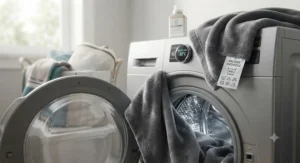
For maintenance, most micro-plush and fleece blankets are machine washable on a gentle cycle with cold water, but skip the fabric softener — it coats synthetic fibres and actually reduces loft and softness over repeated washes. Down or NanoLoft-insulated blankets like the Rumpl Travel Puffy Blanket need a low-heat dryer cycle with a couple of clean tennis balls to redistribute the fill evenly; skipping this step leads to lumpy, cold spots forming in the insulation over time. A common first-30-days mistake is clipping the blanket’s pouch to the outside of a checked bag rather than a carry-on — checked-bag handling is rough, and exterior straps are exactly the kind of thing that gets torn off en route. Keep it in your personal item, not your checked luggage, and it’ll outlast several trips longer than it otherwise would.
One more optimization trick worth knowing: layer your travel blanket over your own scarf or a thin base layer rather than directly against bare skin on very long flights. It reduces the amount of washing the blanket itself needs and keeps things more hygienic between trips, since these blankets typically don’t get laundered as often as bedding does at home.
Real-World Scenarios: Matching the Blanket to the Traveller
Specs only tell half the story — the other half is who’s actually going to be using this thing and how. Consider a university student flying home for the holidays on a tight budget, checking one bag and carrying a backpack stuffed with textbooks. For them, the Cabeau Fold ‘n Go 4-in-1 or EverSnug 2-in-1 makes the most sense: low cost, minimal packed volume, and functionality that covers both the flight and the inevitable four-hour layover in Calgary.
Now picture a consultant flying transcontinental twice a month for client meetings, someone who’s genuinely tired of being cold on every single Air Canada flight to Halifax. Cost-per-use math flips entirely in their favour toward the Rumpl Travel Puffy Blanket — paying more upfront but avoiding the annual replacement cycle that cheaper blankets often need once the fill flattens or the fabric pills.
Finally, imagine a family of four road-tripping to a cabin, then flying home from a regional airport with variable weather. The Oceas Travel Blanket‘s waterproof backing solves problems the others simply weren’t built for — a damp picnic table at a rest stop, a wet bench at the gate during a ground delay. Matching blanket to travel pattern, rather than chasing the “best” blanket in the abstract, is genuinely the smartest way to spend this money.
How to Choose an Airline Travel Blanket
Picking the right one comes down to weighing a handful of criteria against your actual travel habits, not just whichever option has the flashiest packaging photo. Here’s the expert-reasoning breakdown:
- Packed size versus your carry-on space. If your bag is already tight, prioritize compressed dimensions over blanket size — a blanket you leave home because it doesn’t fit is worth zero comfort.
- Fabric type for your typical cabin temperature. Plush microfleece suits cold-running cabins; breathable jersey knit suits warmer flights or travellers who overheat easily.
- Attachment system durability. Carabiner clips generally outlast basic strap loops, based on the aggregated review patterns across every product above.
- Multi-use functionality. A pillow-convertible pouch adds real value if you also nap during layovers, not just during the flight itself.
- Flight frequency and cost-per-use. Occasional flyers should weight upfront price heavily; frequent flyers should weight durability and insulation retention instead.
- Washability and maintenance. Machine-washable fleece is more practical for frequent trips than blankets requiring hand-washing or dry cleaning.
- Weather crossover needs. If you’re combining air travel with outdoor stops, a waterproof-backed option like the Oceas Travel Blanket solves a problem plush fleece simply can’t.
Airline Travel Blanket vs Airline-Provided Blankets
Let’s address the obvious question: why buy one at all when some flights still hand out blankets for free? The honest answer is that airline-provided blankets have become both scarcer and, frankly, less trustworthy. Budget carriers frequently don’t offer them at all, full-service carriers increasingly charge for premium bedding kits in economy, and hygiene concerns around shared airline linens are well documented — a University of Guelph food science researcher was consulted for a CBC Marketplace investigation into cabin cleanliness that tested airplane blankets among other high-touch surfaces, with mixed results depending on the airline and cleaning schedule.
| Factor | Airline-Provided Blanket | Personal Travel Blanket |
|---|---|---|
| Cost | Sometimes free, sometimes a paid add-on | One-time purchase, reused indefinitely |
| Hygiene | Varies by airline’s laundering schedule | Fully within your control |
| Warmth | Often thin, minimal insulation | Ranges from adequate to genuinely warm |
| Availability | Not guaranteed, especially on budget carriers | Guaranteed — it’s in your bag |
| Best For | Very short flights, occasional flyers | Regular flyers, cold sleepers, red-eyes |
The analysis here is straightforward: a personal blanket removes the uncertainty entirely. You know exactly how clean it is, exactly how warm it is, and you’re never left shivering because your specific flight happened to run out of blankets before boarding finished. For anyone flying more than a couple of times a year, the math clearly favours owning one over gambling on what the airline provides.
Packable Airline Blanket vs Travel Blanket With Pouch: What’s the Real Difference?
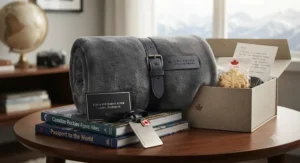
These two terms get used almost interchangeably in product listings, but there’s a subtle distinction worth understanding before you buy. A packable airline blanket generally refers to how small the blanket compresses relative to its unfolded size — this is about insulation type and fabric weight, and it’s where products like the Rumpl Travel Puffy Blanket and PAVILIA Travel Blanket with Pouch genuinely separate themselves through denser, more compressible fill and thinner shell fabric.
A travel blanket with pouch, on the other hand, is about the accessory system — whether the storage bag doubles as a pillow, includes a luggage strap, or offers a carabiner clip. The BlueHills Travel Blanket Pillow with Carry Bag and Lewis N Clark Micro Plush both compete more on pouch functionality than on raw packed volume. Practically speaking, the most packable option isn’t always the one with the most useful pouch, and vice versa — which is exactly why this guide evaluates both dimensions separately rather than treating “small” and “convenient” as the same thing. If your priority is squeezing every last cubic centimetre out of your carry-on, chase packed size first. If your priority is one-item convenience with pillow functionality built in, chase pouch design instead.
Long-Haul Comfort: What to Expect at 35,000 Feet
Specs are one thing; what actually happens to your body on an eight-hour flight is another. Cabin air typically sits at humidity levels far below what’s comfortable indoors — often in the same range as a desert environment — which is part of why a blanket alone doesn’t solve everything, but it does address the temperature half of the discomfort equation directly. Airlines generally keep cabins cooler than most homes, partly for genuine physiological reasons related to passenger safety at altitude, which means the “it’s always freezing on planes” complaint isn’t just anecdotal.
This is also where circadian disruption compounds the discomfort of a cold cabin; anyone dealing with the effects of jet lag on a transatlantic or transpacific route already has a harder time regulating sleep, and a genuinely warm, familiar blanket measurably improves the odds of actually dozing off rather than just closing your eyes and hoping. Reviewers across nearly every product in this guide mention improved sleep quality as a benefit, which tracks with what sleep researchers generally note about temperature regulation and rest quality. What most buyers overlook until their third or fourth long-haul flight is that a slightly-too-warm blanket is nearly as disruptive as a cold cabin, since overheating triggers its own sleep interruptions — which is exactly why breathable options like the PAVILIA Travel Blanket with Pouch earn a place on this list alongside heavier plush options.
Budget Travel Accessories: Getting Comfort Without Overspending
Not every travel upgrade needs a three-figure price tag, and travel blankets are a great example of a category where budget options genuinely compete with premium ones on comfort, even if they lose ground on long-term durability. If you’re building out a broader kit of budget travel accessories, the trick is prioritizing spend on items you’ll touch every single flight — a blanket qualifies, a fancy luggage tag doesn’t.
Among the options here, the Cabeau Fold ‘n Go 4-in-1 and EverSnug 2-in-1 both deliver comfort that’s genuinely comparable to blankets costing twice as much, provided you’re not flying often enough to stress-test their long-term fabric durability. The trade-off is straightforward and worth stating honestly: cheaper blankets tend to pill, flatten, or fray sooner, but for a traveller flying once or twice a year, that timeline can stretch to several years of use regardless. Total cost of ownership only tips toward premium picks once flight frequency climbs into the “several times a month” range — below that threshold, the budget picks on this list represent genuinely smart spending rather than a compromise.
Carry-On Packing Tips for Your Travel Blanket
Fitting a blanket into an already-full carry-on is a real logistical puzzle, and a few packing habits make it noticeably easier. First, know your airline’s carry-on dimension limits before you pack — CATSA’s screening guidelines govern what passes through security, but actual bag size and weight limits are set by individual airlines, and they vary enough between carriers that it’s worth double-checking before your specific trip. A compressed blanket pouch rarely triggers any issue at screening, but an oversized bag stuffed past capacity absolutely will slow you down at the gate.
Second, pack your blanket pouch as one of the last items into your bag, nestled into whatever irregular gap remains near the top — most travel blanket pouches are semi-rigid enough to compress slightly further under light pressure, unlike hard-sided items. Third, if your chosen blanket includes an external luggage strap, use it sparingly on checked bags (where it risks catching and tearing) and more confidently on carry-on bags, where handling is gentler. Finally, resist the urge to remove the blanket from its pouch “to save space” — loose fabric actually takes up more room unfolded in a bag than compressed properly in its designed pouch, and you’ll spend more time repacking than you saved.
Common Mistakes When Buying an Airline Travel Blanket
A handful of buying mistakes show up repeatedly across review platforms, and most are easy to avoid once you know to look for them. The first is buying based on packed size alone without checking unfolded dimensions — a blanket that compresses beautifully but only covers your torso isn’t actually solving the cold-cabin problem it was bought for. The second is ignoring fabric type relative to your own temperature preferences; someone who runs warm buying a heavy plush fleece is setting themselves up to kick the blanket off within an hour.
The third common mistake is underestimating attachment hardware quality, which several products on this list flagged as their weakest point in aggregated reviews — a blanket with beautiful fabric and a strap that snaps off on trip two isn’t the bargain it initially appeared to be. Finally, buyers frequently skip checking washability before purchase, then discover their new blanket requires hand-washing or dry cleaning — a genuine inconvenience for anyone who travels often enough to actually need regular cleaning. Reading the care instructions before buying, not after, avoids this entirely.
Safety, Hygiene & Airline Regulations Guide
Travel blankets themselves aren’t a regulated item — you won’t find CSA certification requirements or Transport Canada rules specifically governing personal blankets the way you would for car seats or life jackets. That said, a few practical regulatory touchpoints are worth knowing. Personal blankets pass through security screening as part of your carry-on without special declaration, since they contain no liquids, batteries, or restricted materials.
Where regulation does matter is around flight disruptions themselves, since a personal blanket becomes far more useful during an unexpected delay. Under Canada’s Air Passenger Protection Regulations, airlines flying to, from, or within Canada must meet certain standards of treatment during lengthy delays, but those standards don’t guarantee comfort items like blankets will be provided or that tarmac temperatures will stay pleasant. Packing your own blanket is effectively a personal contingency plan for exactly the kind of disruption these regulations acknowledge happens regularly. On the hygiene side, since shared airline linens have documented cleanliness variability, a personal blanket you control and wash yourself is the more predictable option for anyone with allergies or sensitive skin.
Features That Actually Matter (And Those That Don’t)
Marketing copy for travel blankets loves to lean on buzzwords, so it’s worth separating genuine value from filler. Packed volume matters — it’s the single biggest factor in whether you’ll actually bring the blanket at all. Attachment hardware quality matters, since it’s consistently the first point of failure across nearly every product reviewed here. Fabric weight relative to your personal temperature tolerance matters more than most buyers initially realize.
What matters less than the packaging suggests: colour and pattern variety, which have zero bearing on comfort or durability; “hypoallergenic” claims on standard polyester microfleece, since synthetic fibres are broadly low-allergen by default regardless of marketing language; and elaborate multi-function claims (seat cushion, lumbar support, eye mask, and so on) that sound impressive but rarely get used beyond their primary blanket function in practice. Focus your comparison shopping on the first category, and treat the second as a tiebreaker at best.
Frequently Asked Questions
❓ What is the best airline travel blanket for cold flyers?
❓ Are travel blankets allowed in carry-on luggage?
❓ How do I wash a packable travel blanket?
❓ Is a travel blanket with pouch worth the extra cost over a basic throw?
❓ What size travel blanket is best for airplanes?
Conclusion
Choosing an airline travel blanket really comes down to being honest about how you actually fly. Occasional travellers get excellent value from the Cabeau Fold ‘n Go 4-in-1 or EverSnug 2-in-1 — both deliver real comfort without asking much of your wallet or your carry-on space. Travellers who split the difference between comfort and packed size will find the BlueHills Travel Blanket Pillow and PAVILIA Travel Blanket with Pouch hit a genuinely useful middle ground, while the Lewis N Clark Micro Plush and Oceas Travel Blanket solve more specific problems — hands-free wearability and weatherproofing, respectively.
For frequent flyers who’ve made peace with paying more upfront to avoid replacing gear every year, the Rumpl Travel Puffy Blanket earns its premium price through insulation retention and build quality that the aggregated review data consistently backs up. Whichever one lands in your cart, the underlying logic stays the same: match packed size, fabric weight, and attachment durability to your actual travel pattern, not to whichever option has the best product photography. A cold, cramped flight is miserable regardless of your itinerary — a properly chosen blanket is one of the cheapest, most reliable fixes available.
✨ Ready to stop shivering through every flight?
Compare current prices on these picks and pack the one that actually fits your travel style — your future self, somewhere over the Rockies, will thank you. 🧳✈️
Recommended for You
- 7 Best Quick Dry Beach Blankets in Canada 2026
- Waterproof Beach Blanket: 7 Top Picks for Canadian Summers (2026)
- Best Beach Blanket Under $40 CAD: 7 Sand-Proof Picks for 2026
Disclaimer: This article contains affiliate links. As an Amazon Associate, I earn from qualifying purchases. If you purchase products through these links, we may earn a small commission at no additional cost to you.
✨ Found this helpful? Share it with a fellow cold-flight survivor! 💬🤗
